



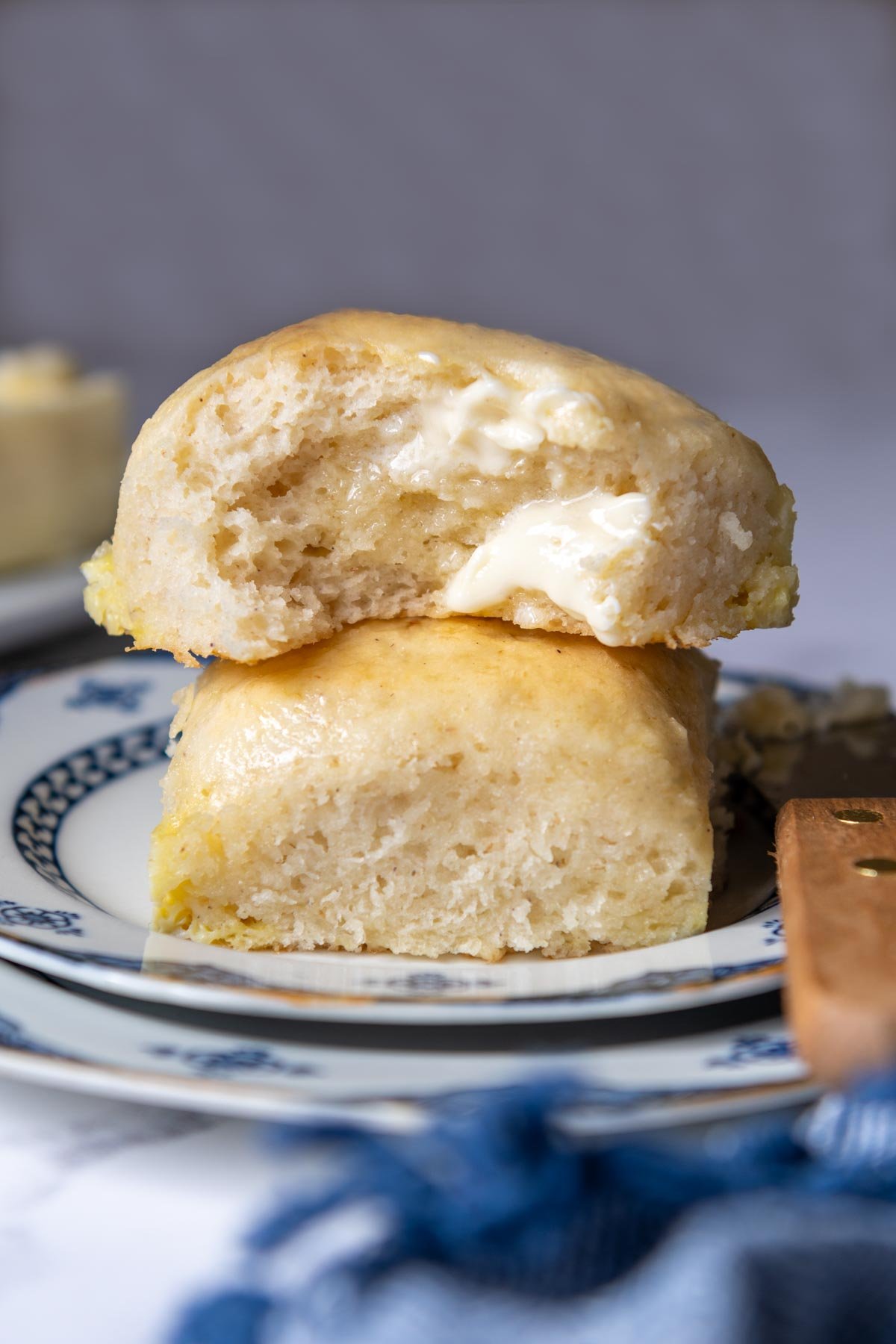
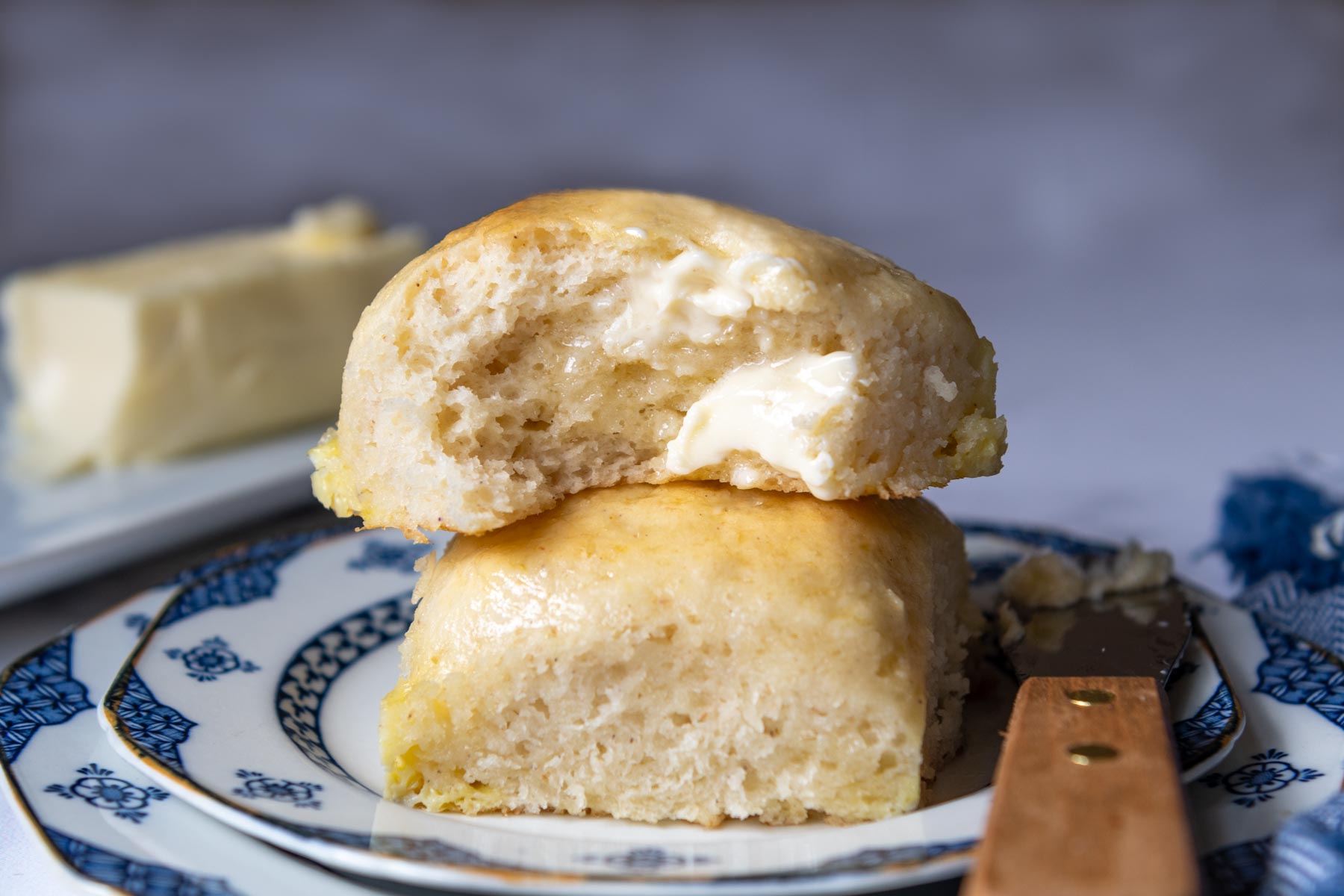
Look no further for the best gluten-free rolls recipe. These fluffy, airy, soft dinner rolls not only have a superior texture, but are easy to make, and ready to serve in one hour! Learn the secret trick to making the best gluten-free yeast rolls ever.
Want to Save This Recipe?
Enter your email below & we'll send it straight to your inbox. Plus you’ll get affordable and easy gluten-free recipes delivered each week!
Best Recipe for Gluten-Free Dinner Rolls
Making soft gluten-free rolls has earned a special place in my GF bread Hall of Fame (right up there rivaling copycat Olive Garden gluten-free breadsticks). Not only were there delectable oohs and ahhs from me, enjoying these buttery, golden pillows, but my non-gluten-free family couldn’t stop singing the praises as well!
These easy gluten-free yeast rolls meet an unprecedented taste and texture standard, similar to this 5-Star viral gluten-free bread recipe. To meet that level, it had to incorporate all these criteria:
- Easy to make! It mixes together in one bowl, has one short rise, and bake.
- Simple ingredients I have stocked and ready at all times
- Quick and effortless – No one wants to spend all day making yeast rolls. These are ready to enjoy in one hour.
- Most important – Tastes BETTER than any gluten-free roll recipe out there. Seriously.
These homemade rolls have not only won me over, but have earned hundreds of raving reviews and testimonials across the website and Pinterest. They are going up there with one my proudest moments of creating gluten-free bread recipes that fool the toughest critic. 😎
My daughter was diagnosed with Celiac a year ago, and I have been attempting to make edible gluten-free bread for this entire year. As an experienced baker, it has been humbling to see (and taste…blech) the abject failures I have created during this time. Then I discovered this recipe, and EUREKA!!! Everyone at the table raved–even the gluten eaters! We couldn’t believe how spongy and delicious these rolls were! The texture was just like regular bread, and for the first time, there was no gritty aftermath. Just wonderful, comforting bread.
—Kate
These were absolutely amazing. My little family loved them and they were super easy to make. I have tried tons of different recipes from lots of the other popular gluten free websites and these were by far the softest and fluffiest rolls I’ve made.
—Lisa
Free Guide! 5 easy tips for baking like a gluten-free pro!
Simple hacks for fail-proof gluten-free dishes every time!
Ingredient Tid Bits
- Gluten-free flour – Using a good gluten free flour makes or breaks the quality of dinner rolls. Cup4Cup gluten-free flour is what I recommend in my GF cookbook and for for all my baking.
- Potato Starch (not flour) – Secret ingredient to making rolls soft and fluffy. Instead of relying on additional flour to structure the dough, I substituted another gluten-free starch. Use for best results, but tapioca starch or additional GF flour may be substituted.
- Psyllium Husk Powder – Helps maintain moisture and prevents the rolls from becoming crumbly. It also mimics gluten, allowing pull-apart rolls to be shaped. I recommended the linked brand because it will keep the rolls light colored instead of dark or even purple. Weird, I know…
- Instant (Rapid Rise) Yeast – I would suggest buying this is bulk and storing in your refrigerator. It doesn’t require mixing with warm liquids to proof and can be mixed right into dry ingredients.
- Butter – Melted butter flavors the dough and is brushed on before and after baking. I typically buy unsalted butter, so I add salt to the butter before brushing.
- Milk – Used to elevate taste, especially when mixed with butter and salt. For dairy-free dinner rolls, substitute non-dairy milk, such as almond or soy milk.
Let’s Make This Together!
(Below shows step-by-step photos and modified instructions. For the complete recipe, along with ingredient amounts, scroll down to the recipe card.)
How a roux (AKA tangzhong) changes everything!
Since GF flours do not absorb liquids as well, the roux helps pre-saturate some of the flour, helping absorb more liquid. This makes the texture soft and fluffy, rather than dense and gummy.
Even though the word sounds fancy, it’s easy to make. Combine 2 tablespoons flour with milk and water in a small saucepan. Whisk constantly over medium heat, until a trail separation appears at the bottom of the pan. That’s it. It takes a minute of your life.

Mixing the dough
Now we just dump everything in and mix. First, add the dry ingredients to the bowl. Use a paddle attachment to combine. Follow up with the wet ingredients – the slightly cooled roux, warm milk, egg, and melted butter. Mix on low speed to combine, then increase speed and beat for 5 minutes, stopping to scrape down the bowl once or twice. The dough will be stiff, but still sticky.

Time to shape the rolls
This is where rolls made with gluten-free flour have a massive advantage! They are really easy to shape. If you want to get technical about it, you could portion out the dough into 2 ounce portions using a food scale with a greased piece of plastic wrap on top. However, I just spray a 1/4 measuring cup with non-stick spray and scoop out slightly less than the cup size.

Quick shape and rise
Take the scooped dough and dump it out onto slightly greased hands. Smooth into a ball and then place in a greased 8X8-inch baking pan.
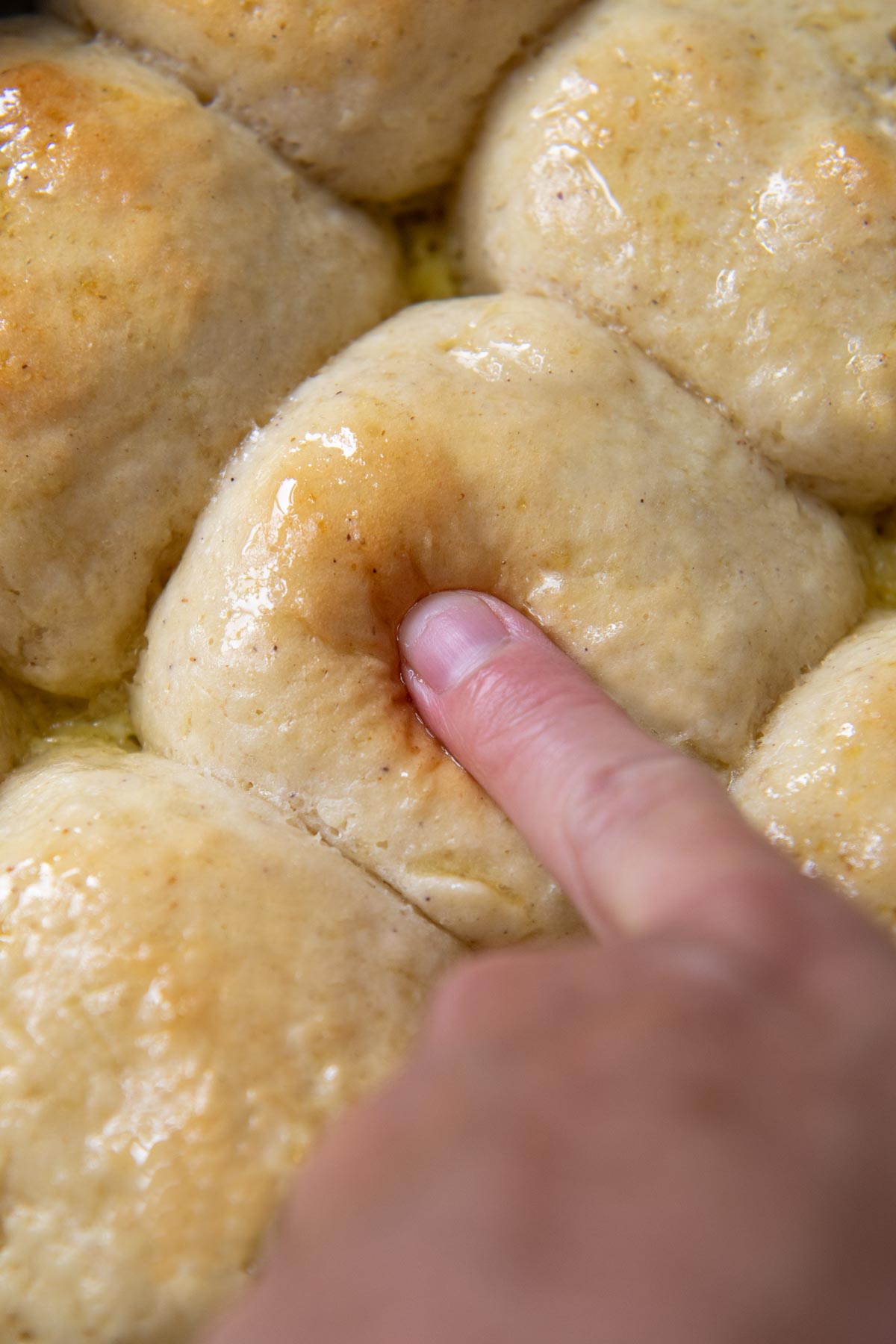
The rolls only need 30 minutes to rise because first they are placed in a slightly warmed oven for 10 minutes, then taken out to rise at room temp for 20 minutes while the oven preheats. Also, the baking powder in the recipe helps give them a nice loftiness while baking.
The pictures below show what they will look like before rising and after. Brush them with salted butter (Parker house rolls vibes!) and then more when they come out. Enjoy the most seriously heavenly GF recipe ever!


Trick To Shaping GF Yeast Rolls
When making gluten-free rolls, there is a balance between adding enough GF flour blend to make the dough elastic and easy to shape, yet still a yield fluffy, airy texture.
As to not toughen crumb, I add less flour than other gluten free dinner rolls recipe and rely on nonstick cooking spray and a measuring cup to shape the buns. This is similar to the technique used in some of my most popular recipes, like gluten-free hamburger buns and these soft gluten-free slider buns.
Spray a measuring cup liberally with cooking spray, along with your hands. Scoop out a little less than 1/4 cup, which yields about a 2 ounce dough portion. Dump the dough into greased hands and roll into a smooth ball.
Alternatively, use a greased silicone baking mat or parchment paper to dump the dough onto, flatten, then pinch up into a ball. Smooth the top and place pinched ends down in a greased baking pan.
Which GF All Purpose Flour Works Best?
I had already rigorously tested the best-performing gluten-free flour blend through many baking and bread recipes. Therefore, when making dinner rolls I reached for my preferred brand, Cup4Cup.
As far as taste, Cup4Cup was the clear winner. There was nothing “gluten free” tasting about the bread. It was soft, squishy, and slightly sweet. (By the way, it works with their new formula too.)
Although a lot of gluten-free bakers work with Bob’s Red Mill 1-to-1 GF Flour, I find it to have an unpleasing aftertaste and a denser crumb. If you are wondering about another brand, read through the comments below and see what others have used. This recipe has had success across a variety of brands!
Save this recipe to your pinterest board!
Let’s be friends on Pinterest! I’m always sharing great recipes!
Did you make this recipe? I love hearing from you! Leave a star rating and comment below the recipe card. It helps others when searching for recipes and I appreciate feedback from our community. You will always hear back from me! -Melissa

Squishy Soft Gluten-Free Rolls Recipe (1 Hour)

Ingredients
Roux
- 2 tablespoons (18 g) gluten free all purpose flour, I recommend Cup4Cup brand
- 3 tablespoons (45 g) water
- 3 tablespoons (45 g) milk
Rolls
- 1 ½ cups (214 g) gluten free all purpose flour, Cup4Cup gluten free flour highly recommended – see recipe notes for optional milk powder addition
- 3 tablespoons (31 g) potato starch
- 3 tablespoons (38 g) granulated sugar
- 1 tablespoon (11 g) psyllium husk powder, (what is psyllium husk?)
- 1 packet (7 g) (2 ¼ tsp) instant rapid rise yeast, see recipe notes for active dry yeast
- 1 teaspoon baking powder
- ½ teaspoon salt
- ¾ cup (184 g) warm milk (110°F), microwaved for 30-45 seconds
- 1 large egg, room temperature
- 2 tablespoons (28 g) melted butter, slightly cooled
Instructions
- Before you begin making the roux, turn oven to 200ºF. Start to make the roux, but turn it off once it reaches temperature. This will serve as an extra warm place for the rolls to initially rise. Grease a 8X8-inch baking pan. Set aside.2 tablespoons gluten free all purpose flour, 3 tablespoons water, 3 tablespoons milk
- As the oven is preheats, make the roux. Combine 2 tablespoons flour with milk and water in a small saucepan. Whisk constantly over medium heat, until a trail separation appears at the bottom of the pan. Remove from the heat and set aside.
- In a large mixing bowl of a stand mixer, combine the GF flour, potato starch, sugar, psyllium, yeast, baking powder and salt using a paddle attachment on low speed.1 ½ cups gluten free all purpose flour, 3 tablespoons potato starch, 3 tablespoons granulated sugar, 1 tablespoon psyllium husk powder, 1 packet (2 ¼ tsp) instant rapid rise yeast, 1 teaspoon baking powder, ½ teaspoon salt
- Add the warm milk, egg, melted butter, and roux. Combine on low speed until well blended. Increase to high speed and beat for 5 minutes, stopping to scrape down the bowl once or twice. The dough will be stiff, but still sticky.¾ cup warm milk (110°F), 1 large egg, 2 tablespoons melted butter
- Grease a silicone baking mat or parchment paper with cooking spray. Liberally spray ¼ measuring cup with cooking spray, along with your hands. Scoop out a little less than ¼ cup, which yields about a 2 ounce dough portion. Dump the dough onto greased hands and roll into a smooth ball. Alternatively, dump the dough onto the baking mat, flatten with fingers, then pinch up into a ball. Smooth the top and place pinched ends down in prepared baking pan.
- Cover with plastic wrap and place in the warmed, turned off oven for 10 minutes. Remove the pan from the oven and let sit at room temperature for 20 more minutes while the oven preheats to 350°F.
- Melt the additional 2 tablespoons butter with salt. Remove the plastic and gently brush the tops with the salted butter mixture. Reserve the remaining butter for after baking.2 tablespoons butter, ¼ teaspoon salt
- Bake for 20-22 minutes, or until tops are lightly browned and internal temp measured with an instant read thermometer reaches 195-200ºF. Immediately brush tops with remaining butter and serve warm.
Notes
Adding Milk Powder
This is a new addition to the recipe, so it’s completely optional, but adds moisture to the bread. Recently Cup4Cup removed milk powder from their formulation, so now I remove 1 ½ tablespoons GF flour and replace it with 1 ½ tablespoons gluten-free certified milk powder. You can do this with any GF flour blend, it doesn’t have to be C4C.Important Note About Serving
If pulling from the freezer and serving at room temp, thoroughly defrost the rolls first. If they are chilled slightly they will become crumbly when eating. For best taste and texture, warm slightly in the microwave before enjoying again!Using Active Dry Yeast
If you only have active dry yeast on hand, activate it by mixing in the warm milk (110ºF) and letting it sit for 5 minutes before adding to the dry ingredients.Dairy-free modification
You will need to make substitutions for the milk and butter. Substitute non-dairy milk, such as almond or soy milk. For the butter, use plant-based vegan butter. Since dairy-free butter contains more salt, cut the amount of salt in the dough and used for brushing in half.Expert tips to remember
- If you forget to warm the eggs to room temperature, place the whole egg in a bowl of hot water for 5 minutes.
- To make a double recipe, double all the ingredients and place the dough balls in a 9X13-inch pan to rise.
- An instant read thermometer is helpful for measuring the correct temp of the milk to activate yeast and take out the guesswork of when the rolls are done. The interior should ready 195-200ºF when ready to be pulled from the oven.
Serving, storing, and freezing tips
They may be wrapped tightly and left at room temperature up to 24 hours, but will lose optimal taste and texture quickly. For best results, freeze rolls after they completely cooled (at least 2 hours). Pull from the freezer to defrost at room temperature.This post contains affiliate links. My opinions are always my own. If you purchase a product through an affiliate link, I make a small commission – at no cost to you. Read full disclosure policy here.


Could I use a 9×13 if im doubling the recipe?
Yes, Rebecca. Enjoy your rolls!
Best,
Melissa
They don’t rise maybe it’s the yeast I just bought
Hi Sandy,
Did you put them in the warm oven to kick off the rise? Also, you added the baking powder? I know sometimes I forget that step! Was it active dry or instant yeast that you used? I apologize for any frustrations!
Best,
Melissa
Hello, we recently found out my son can’t have eggs, gluten or dairy. Would an egg replacement be okay in this?
Hi Rebecca,
I haven’t personally tried this, but community members on Pinterest and I believe in some of the comments below have said it works with an egg replacer!
Best,
Melissa
I made these with an egg replacer. I also used tapioca starch in place of potato starch since I had that on hand I also used Pamela’s gf flour. Also did df butter and milk. They were so flavorful and fluffy 10/10! The only problem I had is I used my hand mixer because I don’t have a stand mixer. Started over heating I think because of how thick the batter was. Would this work in a food processor with dough attachment.?
Hi Rebecca,
Glad you enjoyed the recipe and thanks for the follow up notes! Yes, this is a little thick for a hand mixer. I think the dough attachment would do the trick! Let me know how that works!
Best,
Melissa
Just wanted to come here and say that these are AMAZING!!! My daughter has Hasimoto’s and was recently told that she needed to cut out gluten. I made these rolls and served them to her while still warm and she said that you couldn’t even tell they were GF! My husband said the same thing. They both just kept saying “Mmmmm, these are so soft and fluffy”. The only thing I did different was substituting lactose free milk for regular milk since we are all lactose intolerant. Thank you so much for this recipe. I can’t wait to try more of yours!
Oh gosh, thank you so much, Crystal! This makes me immensely happy to hear!
Best,
Melissa
Melissa, THANK YOU!! These are AMAZING, soft, fluffy, yeast rolls, just like a Parker house roll. My family has missed my yeast rolls on holidays. Changes I made, used what I had on hand: Potatoe starch subbed Tapioca starch, Psyllium Husk subbed Konjac Root powder and they turned out wonderful.
I’m going to try another batch without egg, we are all GF but daughter can’t have eggs. I saw someone else made without an egg and it turned out.
Or I could use aquafaba or flax egg? Anyone tried it with these?
Again many thanks for doing the hard work and getting these perfect rolls!
So lovely to hear, Pamela! I would suggest a flax egg or egg replacer, like Neat Egg. This is what I seem to get the most comments about in other recipes when they make recipes egg-free. Thanks for making my day!
Best,
Melissa
Melissa, can I make these day before, let final rise in refrigerator and bake following day?
Trying to prep much as I can day before, so not All day in kitchen cooking.
Thanks
Hi Pamela,
Unfortunately I have never tried this. I have tried freezing before baking, letting it come to room temp, rise and bake. I wasn’t really happy with that, they didn’t get as fluffy. However, your plan might work. I’m going to try this next time I make them. You could do a test batch? If you want to play it safe, I just make them, cool, freeze, and warm up the day I’m serving.
Best,
Melissa
I don’t have potato starch can I use tapioca starch?
Yes, Mauri, that shouldn’t be a problem!
Best,
Melissa
I just made these for the first time. They turned out great. My husband loved them. I have a couple of questions. Does it matter if the pan is metal or glass? Do the rolls have to go into the oven right after the raising process or can they sit out for a while before they go into the oven.
Hi Kay,
I usually make them in a glass pan, but if you’d like a little crisper bottoms, I would use metal. As far as rising, they should sit out about 30 minutes before putting in the oven to bake. I preheat the oven to 200, turn it off, then start making the recipe. After the rolls are shaped, the oven is still warm (I’m guessing around 125 degrees?) and I stick the rolls in for 10 minutes. I don’t want them to rise that whole time in the oven because it has to preheat. So after 10 minutes, take them out to finish rising on the counter while the oven preheats. Hope that helps!
Best,
Melissa
Can I use tapioca starch instead of potato starch? I just have that at home and not potato starch that’s why I’m asking. 🙂
If so what would the measurement amounts be for that?
Also, will it alter the texture in a bad way?
Hi Kirsten,
Since it’s such a small amount, it shouldn’t be a problem! You would use the same amount as called for the potato starch.
Best,
Melissa
I understand the Roux’s concept and purpose. However, I am curious why only a small portion of the GF flour is used in the Roux, rather than more GF flour. Thank you.
Great question, Sheree. If we used more flour in the roux, a larger portion of the dough would be “wet” and we would have to add additional flour to absorb that wetness and help make the dough shapeable. When I create gluten-free bread recipes I find they work best if I use the least amount of flour, while still having it be shapeable. The more flour, the drier the breads will be after baking. So, a smaller amount of flour used in the roux serves its purpose of pre-saturating the starches and also means we don’t have to add as much flour in to make it less sticky.
Hope this helps!
Best,
Melissa
Yes. I appreciate the quick reply. I am going to give this method a try. 😀
These are wonderful! Finally a delicious gf dinner roll! I was wondering if these can be prepped the day before and then cooked on Thanksgiving Day. Thanks!
Thank you Danielle! For best results, I would make before you are serving them, cool completely and freeze. Then thaw on Thanksgiving. If reheating the whole pan, cover securely with foil and reheat in a 325 oven for about 5-10 minutes. Otherwise, you can also reheat individually. They are best slightly warm!
Best,
Melissa
Has anyone tried this with the new cup 4 cup formulation!
How to make ahead for thanksgiving? Shape and freeze, thaw and bake?thanks!
Hey Lisa,
I’ll do some investigation on this. I’m not sure if I have any of the new bags or not because I get it from Amazon subscribe and save. Do you know when their newer formula would have gone into circulation? I haven’t noticed any difference with recent things I have made.
Best,
Melissa
It’s already out. You can see if there is any milk in the ingredients, if not it is the new formulation! It has no dairy in it.
Hey Lisa,
I checked the bags I have now and they all still have milk powder listed. I’m about to get another bag sent so I will be on the lookout and be sure to test a few of my bread recipes with it and note if there needs to be any changes.
Best,
Melissa
I just did today and it turned out amazing! Nothing to worry about with using the new Cup4Cup blend without milk powder. The texture was just as good after baking, and I think even easier to shape before they were baked. Phew!
Best,
Melissa
These were absolutely amazing. My little family loved them and they were super easy to make. I have tried tons of different recipes from lots of the other popular gluten free websites and these were by far the softest and fluffiest rolls I’ve made. I especially appreciate the way you write the recipes and how you list out each ingredient with measurements in the steps. Thank you so much for the great recipe!!
Thanks for bringing a smile to me today! This makes me so happy. I appreciate you taking the time to share!
Best,
Melissa
My daughter was diagnosed with Celiac a year ago, and I have been attempting to make edible gluten-free bread for this entire year. As an experienced baker, it has been humbling to see (and taste…blech) the abject failures I have created during this time. Then I discovered this recipe, and EURKA!!! Everyone at the table raved–even the gluten eaters! We couldn’t believe how spongy and delicious these rolls were! The texture was just like regular bread, and for the first time, there was no gritty aftermath. Just wonderful, comforting bread. Normally with GF bread you can expect it to crumble into oblivion the next day, but the final win was that these rolls were still delicious and soft 24 hours later!
I have made this recipe twice, and the first time I didn’t use Cup4Cup. The consistency was nearly liquid, and it ended up looking something like foccacia bread. Still delicious, tasty, but kind of a mess. So the second time I used C4C flour and it was so, so much better. It was still too wet to work with my hands at all, so I used a cookie scoop. They ended up looking “artisanal” rather than the pretty rolls pictured on this recipe. Not sure what went wrong with the consistency. Any thoughts?
Thank you again for your recipe. After posting this, I’m heading straight to Amazon to order your cookbook!
Oh, this really made my day, Kate! Thank you so much for taking the time to share. I hope you find all the bread recipes in the cookbook and on the site the be just as a success. I know what you mean about transitioning to an “accomplished” baker to a gluten-free one. It’s humbling for sure! After many years, now I feel such more pride with my GF recipes. They are more of a challenge to create for sure, but once figured out, I hope people like you have those EUREKA moments 🙂
Best,
Melissa
I’ve been around the block with vegan recipes and this was by far the best rolls recipe ever! I made them vegan by using egg replacer and added a little more milk to balance but I was so pleased with the result. I make them again and again and even used the base with some sugar for cinnamon rolls.
Love this, Vanessa! I couldn’t be more pleased to hear these work with an egg replacer as well. Thanks for sharing!
Best,
Melissa
I just finished mixing these up and they were so sticky I couldn’t roll them in a ball and just had to scrape the dough off my hands. I followed the recipe to the letter, so what might have gone wrong? Thanks for any pointers!
Dawn
Hi Dawn,
Oh no! What GF flour did you use? It sounds like whatever mix of starches in it might not absorb the liquids as well. Next time I would cut back 1/4 cup liquids. Cutting back liquids, instead of increasing flour amount, is always preferred with GF breads so they don’t become dry and crumbly. Hopefully we can figure this out!
Best,
Melissa
I used the Cup4Cup flour. Yes, it was very moist and they didn’t rise very well. They taste good but there was no way I could roll them out. I did everything according to the recipe. So I’ll see about reducing some of the liquid. Thank you.
Yes, try that, Dawn. I’m confused if you used Cup4Cup (and I’m assuming added the potato starch too?) why you would have gotten such a different consistency. Please report back if you give them a try again!
Best,
Melissa
Cup4Cup recently changed their ingredients by taking out the milk powder and have white rice flour as the main ingredient instead of corn starch. Many gf bakers say they do not like or get the same results from the new version. That might be where the issue came in here.
I made these today with Bob’s red mill gluten free baking flour. I didn’t have any psyllium husk powder so I used an extra Tbls of potato starch. They were really good.
Glad to hear, Susan! Thanks for sharing!
Best,
Melissa
These truly are the best yeast rolls! I followed the recipe exactly but used Bob’s Red Mill 1 to 1 baking flour. They turned out better than any other GF yeast roll I’ve ever tried. Thanks for the delicious recipe.
I was so hopeful as I followed this recipe. It was turning out just as indicated. However using my thermometer to check internal temperature the rolls took twice as long to bake and they were very dense. In fact they still appeared to be underdone. The texture was good to look at and broke apart just like regular bread but to eat texture was very doughy. I used King Arthur’s 1:1 flour, I have King Arthur’s bread flour; I wonder if that would improve result? I also used tapioca flour instead of potato starch.
Hi Elisabeth,
I’m sorry this was a frustrating experience for you. My goal in this next week is to go through all my bread recipes and add grams along with the cup measurements. I use Cup4Cup, which has a little consistency. I’m guessing from what you are saying, perhaps there was too much flour. If using KA or Bob’s Red Mill, and you don’t want to weigh it, I recommend sifting the flour before measuring it. I hope you don’t give up on this recipe! I’m here if you have any other questions.
Best,
Melissa
I used Bob’s Red Mill Gluten free flour and followed the recipe exactly. My rolls were a bit dense. Any suggestions how to make them lighter and fluffier? They tasted okay otherwise.
Hi Jean,
Bob’s Red Mill is easy to work with because the starches in it absorbs more moisture, something GF flours have a hard time doing. Unfortunately that also makes baked goods drier and denser. I would recommend using a different flour. Cup4Cup will give you the softest results, King Arthur is more affordable and also produces good results. The reason I like Cup4Cup better than KA, though, is a better taste. Hope this helps!
Best,
Melissa
Hello! I made these for Thanksgiving using King Arthur flour. The individual rolls just spread into one giant roll by the end of the baking time. The texture was way off but they still tasted delicious. I’m going to attempt again this weekend for a Christmas party. Any thoughts on what I did wrong? The only other change I made to the recipe was using vegan butter. Any thoughts would be appreciated! Thank you for the recipe!
Hi Anna,
Hmm, that is a first! When you rolled the balls, did the dough look like the picture. Was it a little sticky, but stiff enough to roll with greased hands? Also, was it vegan butter sticks or spread butter. If you do use vegan butter, I recommend Earth Balance butter sticks. Also, if you used DF butter, did you use DF milk as well, or just the butter? Sorry, none of this is wrong, just trying to troubleshoot! If the dough was a lot stickier, then next time you make them I would cut back on the milk a little, maybe start with 1/2 cup and add a little more if the dough is too dry.
Best,
Melissa
One thing I forgot to mention in my comment. I used a 1/4 cup icecream scoop – the kind with the squeeze handle trigger – to scoop out the dough into my baking pan. It worked beautifully. I typically use it for cookie dough and thought it would work for this dough since it’s a similar consistency.
Thanks for adding that, Steve! Great tip 🙂
Best,
Melissa
Made these a couple times & amazing buns!!
Best I’ve made over 10 years gluten free.
Thanks so much for sharing this !!
Joanne
Thank you so much, Joanne! This makes me so happy and I’m grateful you took the time to let me know!
Best,
Melissa
I made these for Thanksgiving dinner. I used America’s Test Kitchen GF flour blend and these were delicious! Unfortunately my wife liked them so she at them as well so now I have to make more! I also used them to make an egg and bacon sandwhich which was also delicious. Now I’m going to have to try your GF cinnamon rolls – I think you’ve some magic with that roux!
Thank you so much, Steve! I hear you about the other (non-GF) family members devouring them as well. I have to hide them from my kids because I like to freeze the leftovers to have them on hand when they are enjoying things I can’t have!
Best,
Melissa
These are amazing! I tried a different recipe for Thanksgiving but wanted to do this one, so I made them today and just about died. The texture is fantastic especially when warm. The salted butter for the top enhances the bread flavor nicely. All around a delicious roll.
I used a hand mixer because I don’t have my big one right now and it worked just fine. I’m at 7300 feet, so I reduced the yeast to 2 tsp and upped my oven temp to 365. Baking took about 5-8 minutes longer to reach 195 internal temp.
Thank you for this recipe. So much. I finally get to feel the immense pride I felt when I used to make kickass gluten bread. Wonderful recipe and tips.
Hi Jo,
So glad to hear! Your comment means a lot and I appreciate you taking the time to let me know! Thank you so much for sharing the high altitude adjustments.
Best,
Melissa