



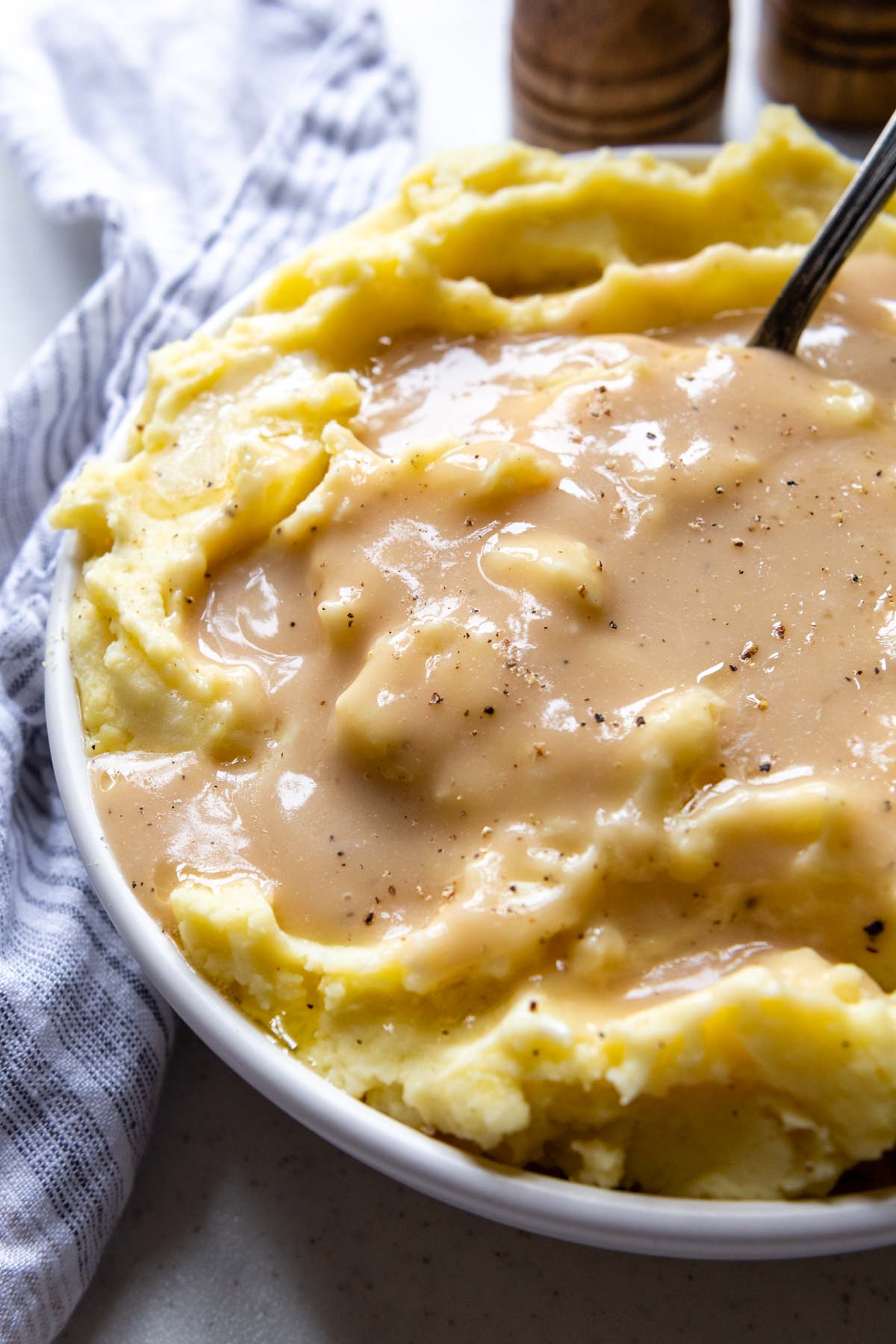
Learn how to make gluten free gravy with this easy and adaptable recipe! Choose between making with or without drippings, discover the best gluten-free thickener to use for gravy, and simple swaps to make turkey, brown, chicken, beef and more! Serve with extraordinarily fluffy gluten-free mashed potatoes for the perfect meal!
Want to Save This Recipe?
Enter your email below & we'll send it straight to your inbox. Plus you’ll get affordable and easy gluten-free recipes delivered each week!
Easy Gluten Free Gravy – Our Back Pocket Recipe
Whether you are looking for the best homemade gravy to complete your collection of gluten-free Thanksgiving dinner recipes or looking for a rich sauce to drizzle on mashed potatoes, many turkey, chicken, or beef dinners would not be complete without this essential classic recipe.
My no-fail gluten free gravy recipe comes together in five minutes and be made with or without pan drippings. As for which is the best gluten-free thickener to use, I tested three GF options and came out with a clear winner. Making gravy with three different gluten-free thickeners – sweet rice flour, gluten-free flour, and cornstarch yielded some interesting results.
Check out all the pics and testing notes below to see what I mean, but if you want to cut straight to the chase…drumroll…hands down, using sweet rice flour to make GF gravy produces a velvety smooth texture, rich flavor, plus freezes and reheats just as good as the day it was made!
Below you will find easy tips to make a smooth sauce without no lumps, the best way to store, freeze, and reheat, and how to transform this versatile, homemade recipe into gluten-free brown gravy, beef, chicken gravy, on of course, GF turkey gravy! Enjoy poured over roasted turkey, GF biscuits, beef, gluten-free Thanksgiving stuffing, or to serve on the fluffy mashed potatoes.
Free Guide! Receive a Free Gluten Free Dinners Cookbook
TOP 5 Highest Rated Recipes!
Ingredient Tid Bits
While only three basic ingredients are required, there is a lot of flexibility within this recipe. See below for suggested ingredient substitutions and modifications, depending on what you will be serving with it.
- Butter and/or Pan Drippings – To thicken gravy, a roux is generally made with fat and flour. You will need a total of 4 tablespoons of fat, which may come from all pan juices or a combination or butter and drippings. If the drippings are from leaner meat, such as turkey breast, I recommend adding some butter for a richer flavor.
- Broth – The type of broth used depends on what kind of gravy you are serving. Chicken or turkey broth makes a sauce to serve with poultry, while beef broth or stock makes a brown or mushroom gravy. Be sure to read ingredient labels to make sure they are safe for a GF diet.
- Sweet rice flour or Gluten free flour blend – Sweet rice flour (not the same as white rice flour, more on that below) is the most forgiving thickener, creates the smoothest consistency, and doesn’t add any off-putting flavors. An equal amount of GF flour blend also works, but be sure there aren’t any strong-tasting starches in the blend, like teff or sorghum.
- Seasoning – Add salt and pepper after the sauce has thickened. The amount needed will depend on the seasoning from the broth and meat or turkey drippings. For a flavor boost, add 1/4 tsp onion powder or poultry seasoning to white, chicken or turkey gravy, or 1/2-1 teaspoon gluten-free Worcestershire sauce to brown gravy.
Just made my first batch of real GF gravy. I’m stunned and amazed! This is just as good as my best wheat-based gravies. Thanks for a keeper recipe.
—Lisa
Watch The Recipe
Let’s Make This Together!
(Below shows step-by-step photos and modified instructions. For the complete recipe, along with ingredient amounts, scroll down to the recipe card.)
Magic lump preventer
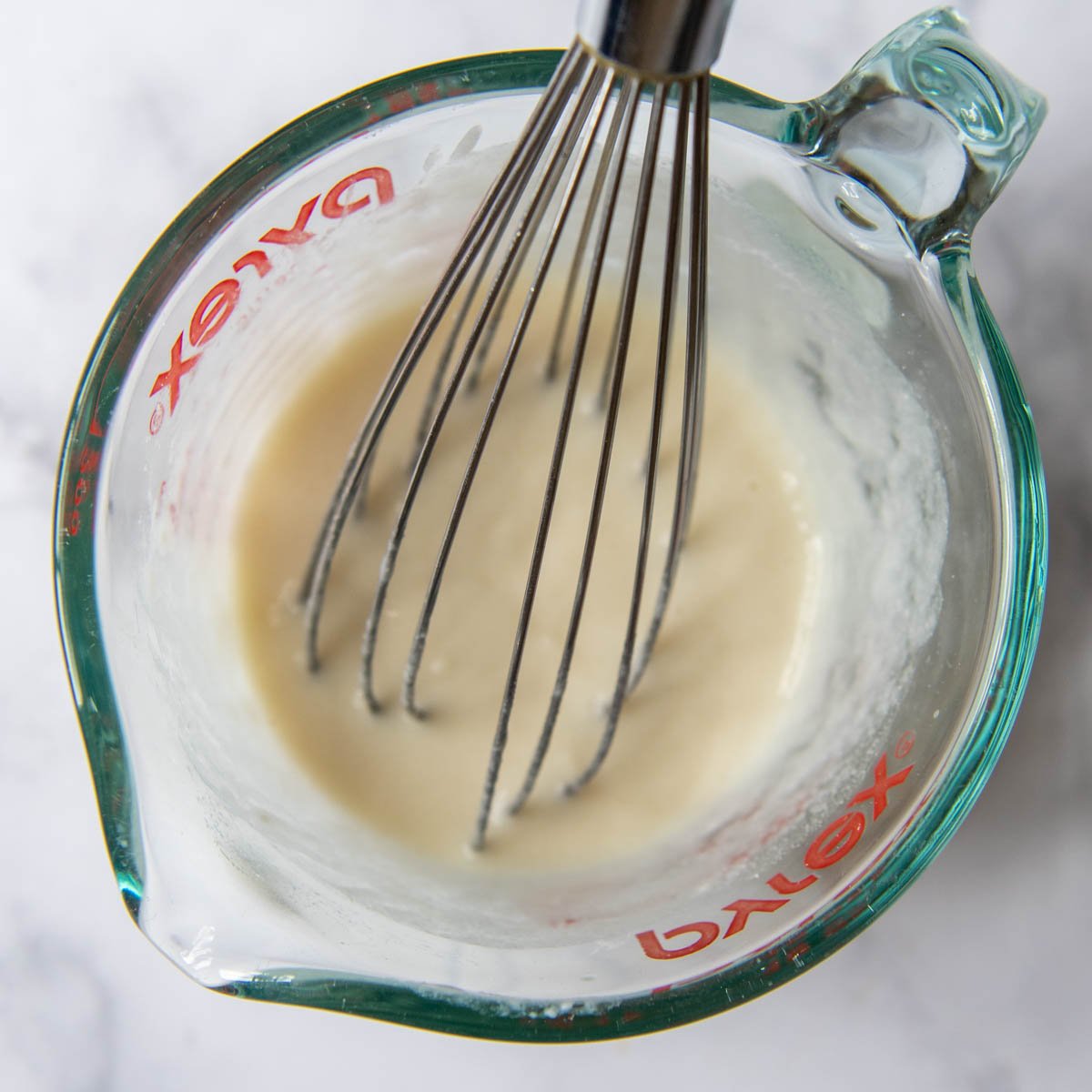
We all want gravy without lumps, right?? If using pan drippings, strain first for a smooth, silky sauce. You will need 4 tablespoons total pan juices or butter melted in a small saucepan. In a separate small bowl whisk together the sweet rice flour with 1/2 cup broth.
Make the paste
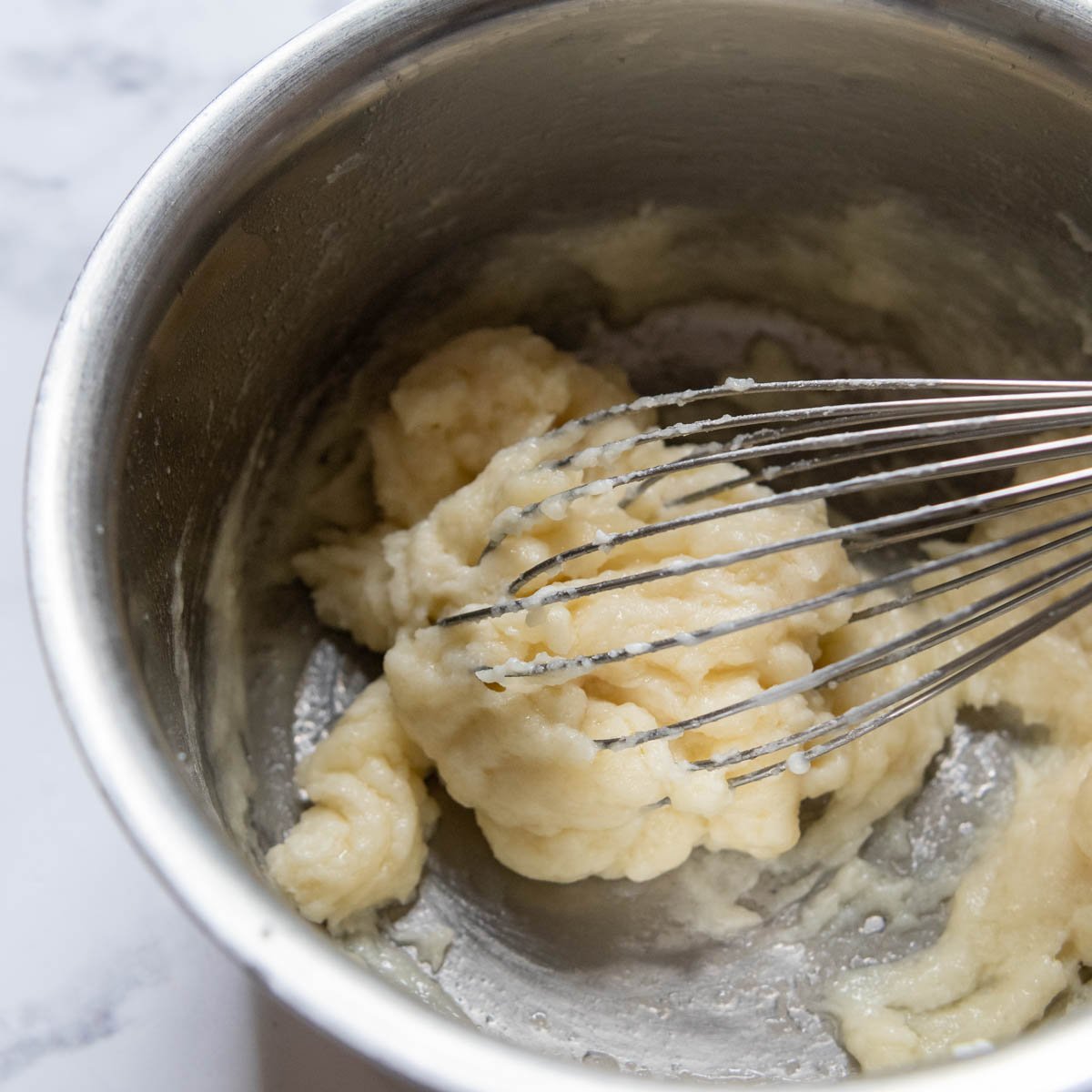
Whisk that thickener / broth combo into the saucepan over medium heat. It will be thick. Trust the process.
Step aboard the GF gravy train
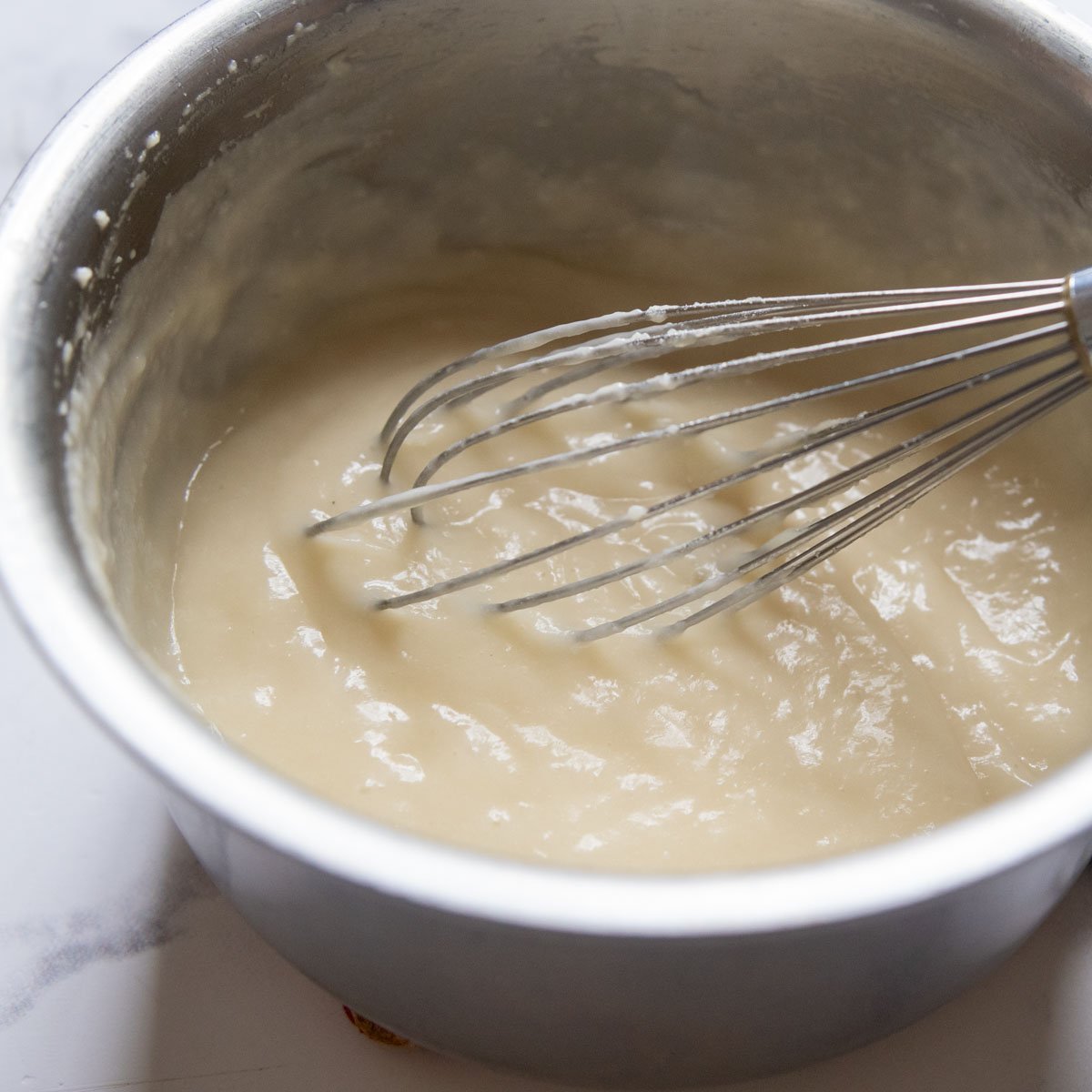
Now are when things loosen up. Continue to add in the rest of broth, gradually, while you whisk. The gravy will start to bubble and thicken. If it’s too thick, add additional stock or a splash of cream. Lastly, season to taste. Start with 1/4 tsp salt or sea salt and 1/8 tsp black pepper, and add more as needed.
Also, when I shot this recipe it was before I had my game changing flat gravy whisk. If you want to ensure your gravy is lump-free, I highly recommend grabbing one of these inexpensive kitchen utensils. It works the sides of the pan in, where the starch has a tendency to hide out and clump up.
Best Gluten-Free Thickener for Gravy
Using a good gluten-free thickener for gravy is how you take a traditional recipe and make it safe for a GF diet. Different recipes call for gluten-free flour, cornstarch, or rice flour. How do you know which one is the best to use for gravy?
- Cornstarch – This fared the worst for me. The color was more translucent, like a thickened sauce, rather than creamy gravy. Plus I could really taste the starch. It over powered the stock, dripping, and butter flavor. Cornstarch (or cornflour) has a lot thickening power, but while it does a great job initially thickening the sauce, it may “break” (become thinner) upon reheating and doesn’t freeze well. Overall, use cornstarch as a GF thickener for sauces, but I wouldn’t recommend for a good homemade gravy.
- Gluten-free all-purpose flour – Gravy made with gluten-free flour thickened nicely and tasted good, as long as you use a GF flour with neutral-tasting starches (stay away from blends that use teff, buckwheat or sorghum). It also held up well when reheating, even after being frozen. The drawback? It has a tendency to clump and not be completely smooth. You really have to work hard at whisking the bejeesus out of it, but using a gravy whisk definitely helped.
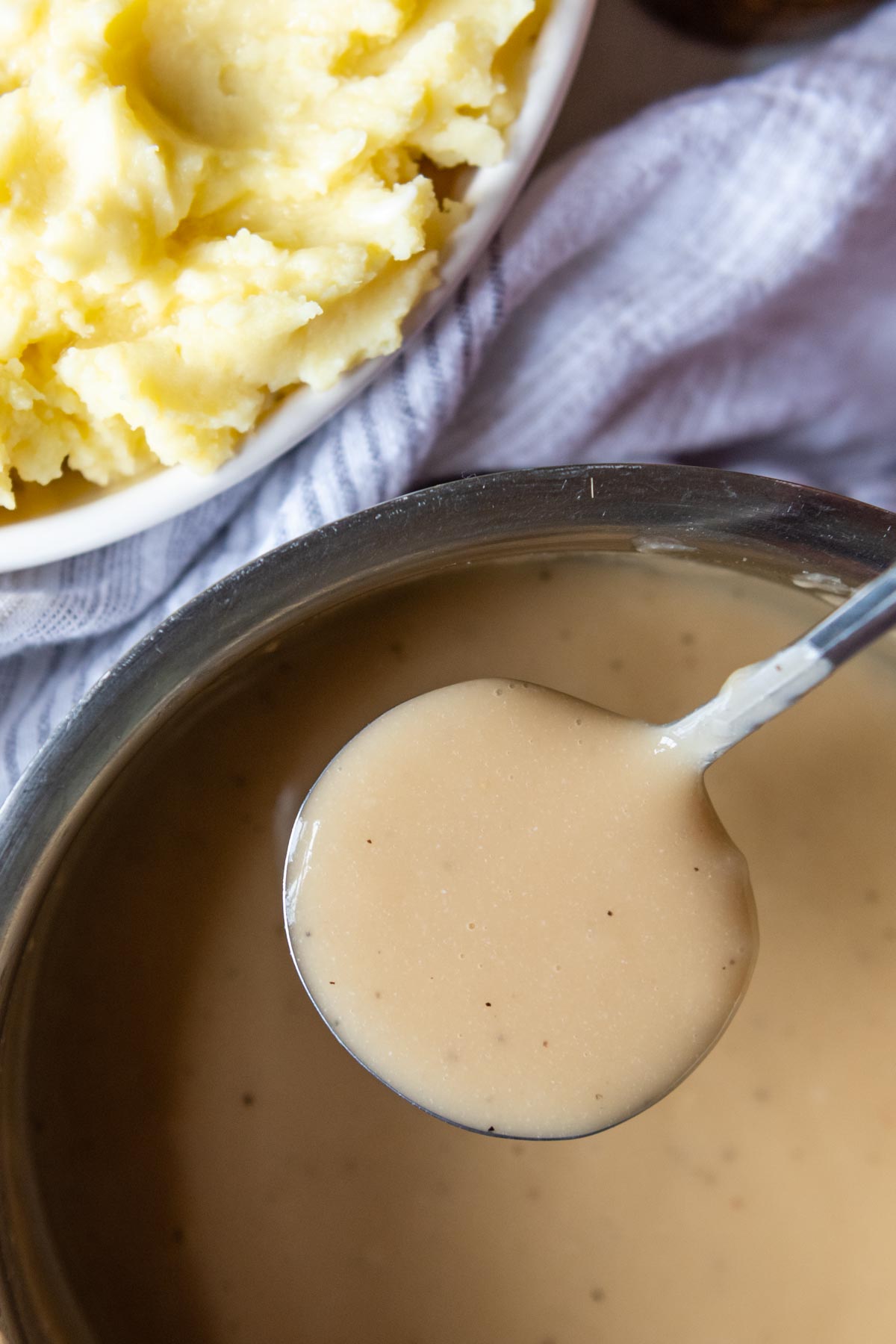
- Sweet rice flour – Winner, winner chicken dinner! The taste? Amazing. Just like mama’s gravy, nothing gluten-free tasting about it. The consistency was really creamy, smooth, and a lot more forgiving with the lumps. The thickener melded into the stock magically. Reheating was just as good the day it was made, even after freezing.
Sweet rice flour can also be called glutinous rice flour, but is not the same as white rice flour. White rice flour is made from long grain rice, where as sweet rice flour is made from “sticky” short grain rice, which has a higher starch content.


Making Different Types of Gravy
Turkey Gravy – Ideal for a Thanksgiving meal! Use turkey broth or stock, but if you cannot find it, make your own turkey broth or substitute chicken stock or broth.
Brown Gravy – This is great for roasts or gluten-free hamburger steaks. Use beef stock or broth. If you do not have drippings to flavor the sauce, garlic powder, onion powder, beef bouillon granules, or Worcestershire sauce enhances the taste. Read labels carefully to make sure the additions are gluten-free.
Dairy-Free Option – Instead of butter, use pan drippings, dairy-free butter, or a combination to reach 4 tablespoons. If you can tolerate ghee, it may also be substituted.
Save this recipe to your pinterest board!
Let’s be friends on Pinterest! I’m always sharing great recipes!
Did you make this recipe? I love hearing from you! Leave a star rating and comment below the recipe card. It helps others when searching for recipes and I appreciate feedback from our community. You will always hear back from me! -Melissa

Gluten Free Gravy Recipe (No Drippings, Best Thickener)

Ingredients
- 4 tablespoons butter, pan drippings, or combination of both
- ¼ cup sweet rice flour, highly recommended, can sub GF all purpose flour
- 2-3 cups gluten-free broth or stock,, turkey, chicken, or beef
- ¼-½ teaspoon salt
- ⅛-¼ teaspoon pepper
- optional seasonings: ¼ tsp onion powder, ¼ tsp poultry seasoning, ½-1 teaspoon gluten-free Worcestershire sauce
Instructions
- Whisk together the sweet rice flour (or GF flour) with 1/2 cup broth until smooth. Set aside.¼ cup sweet rice flour
- If using pan drippings, strain first for a smooth sauce. Melt the butter or heat the drippings in a small pot over medium heat. Whisk in the rice flour / broth mixture until a thick paste forms.4 tablespoons butter, pan drippings, or combination of both
- Pour in an additional 1 cup broth in a steady stream, whisking continuously (I highly recommend using a flat whisk to prevent lumps) and vigorously. The mixture will gradually smooth out and loosen. Whisk until smooth before adding additional broth.
- Gradually add the remaining broth over medium-low heat until the gravy starts to bubble and the desired thickness is reached.
- Stir in seasonings. Start with 1/4 tsp salt or sea salt and 1/8 tsp black pepper, and add more as needed. If desired, stir in additional optional seasonings. Serve immediately.
Notes
make ahead, reheating, and freezer tips
Store leftovers in an airtight container up to 3 days in the refrigerator. To make ahead of time, be sure the gravy has completely cooled before storing. To reheat, place in a small saucepan and whisk over medium-low heat until hot. Alternatively, I have reheated in the microwave as well. Gravy may also be frozen for longer storage, up to 3 months. Transfer to a freezer ziplock bag and freeze laying flat. Thaw overnight in the refrigerator before reheating gently on the stovetop.expert tips to remember
- I don’t recommend making this directly in a roasting pan because it’s too big of surface to whisk and prevent lumps. For best results, use a small saucepan.
- For lump-free gravy, I highly recommend using a flat whisk because it incorporates all the thickener from the sides of the pan.
- Did you accidentally make lumpy gravy? No worries! Blend until smooth in a blender or use an immersion blender.
- If the gravy needs more flavor, add a pat of butter, a splash of heavy cream, more salt, pepper, or season with onion powder, poultry seasoning, or gluten-free Worcestershire sauce.
- For dairy-free gravy, use vegan butter, ghee, or all pan drippings.
This post contains affiliate links. My opinions are always my own. If you purchase a product through an affiliate link, I make a small commission – at no cost to you. Read full disclosure policy here.


Can you just start with a roux with the butter and sweet rice flour then add the broth and seasonings?
Hi Julie,
Yes, that wouldn’t be an issue. It’s actually pretty hard to mess up this recipe. I’ve made it so many ways!
Best,
Melissa
I made this last night and I haven’t stopped thinking about it so I had to come back and review it. Seriously amazing and so easy. I’ve failed gravy many times and this was incredible, I’ll be using it every time now. I did use regular gf flour cause that’s all I had, but wow! Thank you!
I really appreciate you coming back and leaving a review, Shayla. Thank you!
Best,
Melissa
I appreciate the effort that was made in comparing various gluten free flours. This gravy was fabulous, so smooth and delicious. I feel I can go ahead and use this gravy for the whole family. I have been making 2 gravies up to now, one for my son-in-law (gf) and one for the rest of us. Thank you for this excellent recipe!
Thank you, Linda. I appreciate this so much! My mom now only makes this gravy. She prefers it over “regular” flour gravy. Win for gluten-free folks!
Best,
Melissa
Just made my first batch of real GF gravy. I’m stunned and amazed! This is just as good as my best wheat-based gravies. Thanks for a keeper recipe.
So amazing, Lisa! Thanks so much for sharing!
Best,
Melissa
I’ve always struggled with making a really good gravy, not to mention how intimidating it always seemed to make a really good one. I just made this recipe and it was super easy and delicious! This will definitely be my “go to gravy recipe” from now on. Thank you!
So glad to hear, Holly! I appreciate you taking the time to let me know!
Best,
Melissa
Loved this recipe. My first time making gravy from drippings and this had great flavor!
So glad to hear, Tammi! Your comment means a lot and I appreciate you taking the time to let me know!
Best,
Melissa
This is the most delicious gravy I have made. Very Candida friendly and gluten free. I used Casava flour instead but be warned. Only use half of what’s called for on flour if you use Casava. It is thick enough to use as brick glue. I added some thyme and garlic powder for added flavor. Good on everything
Thanks for all the tips, Deborah! That is so helpful and I’m so appreciative you took the time to share!
Best,
Melissa
Very good! Have gluten free gravy now without ordering it. Thanks Deb
You’re so welcome, Deb!
Best,
Melissa
Thank you so much for this recipe! When my sister was alive, she always made gluten-free gravy for me on Thanksgiving, but I have never tried it. Until now. It’s delicious and easy.
Oh, thank you so much! You have no idea how happy this makes me feel! Happy Thanksgiving, Anne!
Best,
Melissa
I’m making it again for New Year’s dinner! It’s a keeper. Happy New Year to you!
Aww, thanks Anne! Have a wonderful New Year’s!
Best,
Melissa