


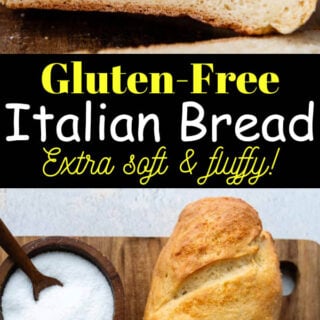
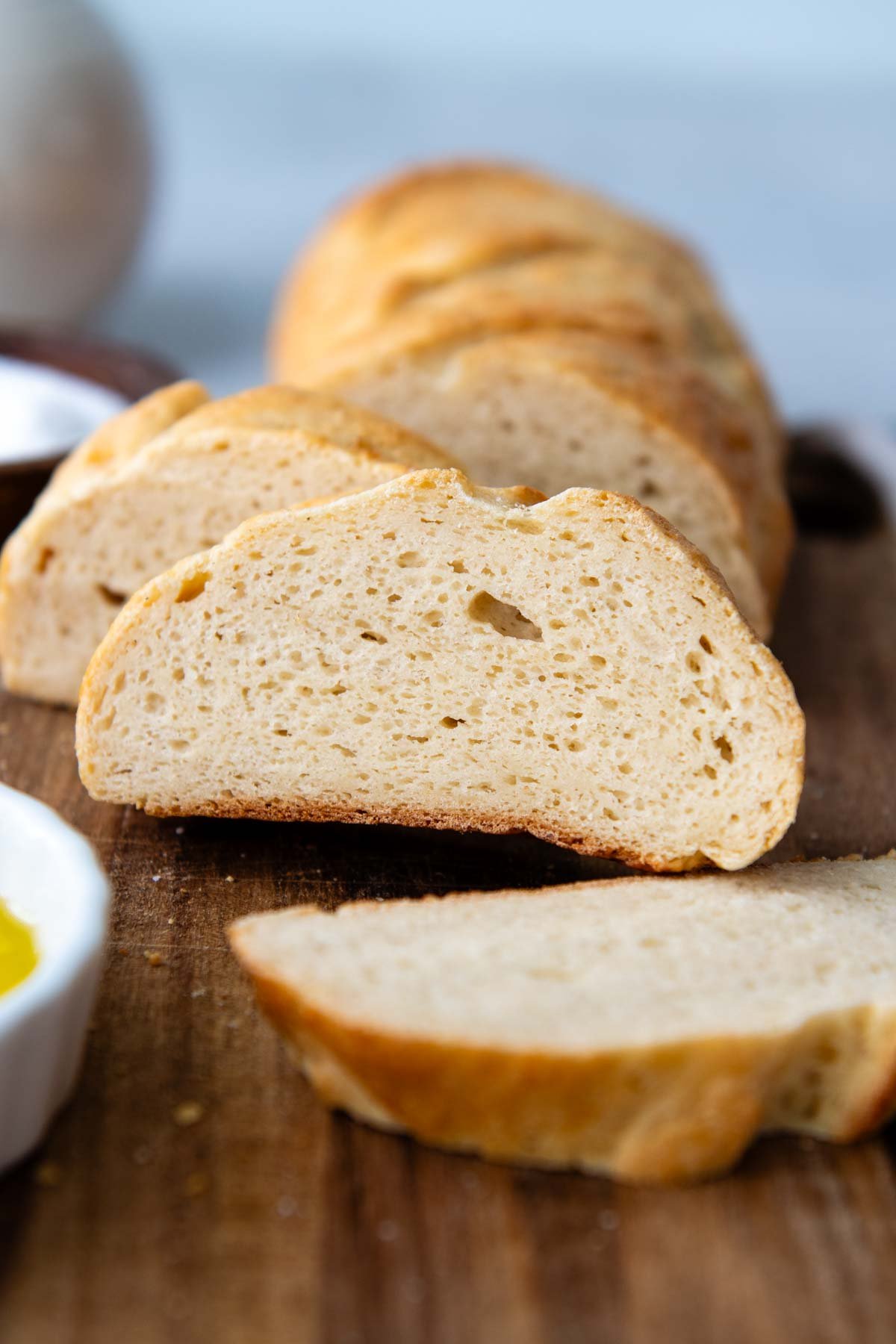
As an experienced baker, I’ve perfected many techniques for making tons of gluten-free bread recipes with fabulous, consistent results. This easy gluten-free Italian bread recipe is no exception. Learn the secret to a soft, airy Italian loaf, but without complicated steps. It only takes few minutes of mixing, one rise, and easy, fuss-free shaping to enjoy an artisanal masterpiece of your dreams!
Want to Save This Recipe?
Enter your email below & we'll send it straight to your inbox. Plus you’ll get affordable and easy gluten-free recipes delivered each week!
Gluten-Free Recipe for Soft Italian Bread
It has been my mission to transform all the beloved Italian family recipes I grew up with into gluten-free versions, Gramma and mother-approved! A crusty, yet soft and porous, gluten-free Italian bread was the next missing component after accomplishing another sorely-missed must have, thick, soft GF pizza dough.
Plus, I couldn’t resist creating a fresh, homemade Italian loaf after exhaustively testing the high-hydration GF bread dough used for soft, crusty gluten-free baguettes. Artisan breads generally require more moisture to create an open, airy crumb. But, it’s a delicate balance because more moisture can also lead to disappointing gumminess.
After many rounds of testing (and including the Mamagourmand community in the process!), I landed on the ideal wet to dry ratio for stellar gluten-free bread. To transform the dough into a classic GF Italian version only required simple adjustments in shaping and baking.
Because the loaf is shorter and plumper, it also required additional rise time. This assists the loaf to be become taller, making it ideal for sandwich slices or the other suggested Italian bread uses, with diving into a bowl of warm spinach and artichoke dip with sour cream being one of my faves!
I also wanted the outer crust to be not quite as crisp or deeply colored. Therefore, the baking starts at a slightly lower oven temp (400ºF versus 450ºF with French bread). Ice cubes are still used on the oven floor, though, to create a steamy environment for a chewy exterior.
Start to finish the bread is ready to enjoy in less than 90 minutes, with a small fraction of requiring hands-on time. The ingredients are mixed together, shaped into a log, and then rested for 40 minutes to rise. A slightly longer baking time, 35 minutes, allows time for the increased moisture to evaporate.
Free Guide! 5 easy tips for baking like a gluten-free pro!
Simple hacks for fail-proof gluten-free dishes every time!
Ingredient Tid Bits
These ingredients are pretty standard in my gluten-free bread recipes so I also have them on hand to make a quick loaf.
- Gluten-Free Flour – Using a good gluten free flour makes or breaks the GF bread quality. I highly recommend Cup4Cup gluten-free flour for the best texture and flavor.
- Potato Starch (not flour) – Secret ingredient to make GF bread soft. Instead of relying on additional flour to structure the dough, I substituted another gluten-free starch. Use for best results or additional GF flour may be substituted.
- Psyllium Husk Powder – Helps maintain moisture and prevents the baguettes from becoming dry. It also mimics gluten, allowing the dough to be shaped.
- Instant Yeast – I prefer to use instant rapid rise dry yeast because it doesn’t require proofing in water before adding to the bread dough. It is simply added with the dry ingredients. If you only have active dry yeast, pour it in the water with 1 tsp granulated sugar and let it sit for 5 minutes before adding to the dry ingredients with remaining liquids. If you are looking for a yeast-free loaf, I suggest checking out my crusty, soft GF sourdough bread.
- Eggs – Although this is a unconventional for Italian bread, it bulks the protein in the bread. The starches in GF flour don’t add any protein, which prevents the crumb from opening up. An egg white is also brushed on the exterior before baking to create a shiny crust.
- Apple cider vinegar – For an open, airy crumb, the dough also needs an acidic environment. Although other vinegars could be substituted, apple cider vinegar really does work the best.
- Baking powder – I like to couple baking powder with yeast to assist the rise and make a light, airy texture, which is harder to achieve in gluten-free breads.
- Olive oil – For added flavor and incorporates a little fat to coat the starches.
Let’s Make This Together!
(Below shows step-by-step photos and modified instructions. For the complete recipe, along with ingredient amounts, scroll down to the recipe card.)
Seriously easy dough. Seriously.
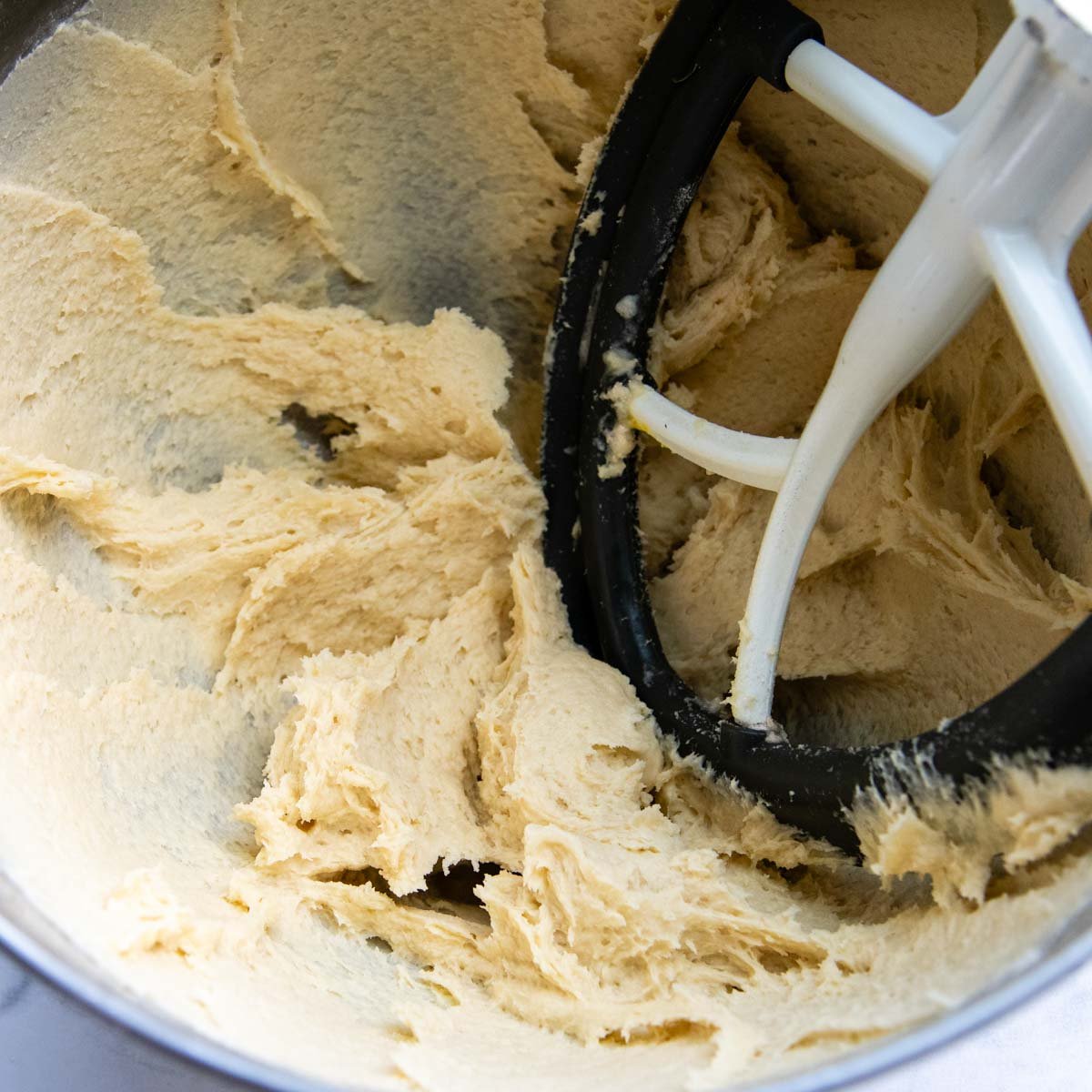
In a bowl of a stand mixer, first blend together the dry ingredients using a paddle attachment. Add the wet and beat to combine. Then bump up the speed a little and mix for 5 minutes. The batter will be very stiff, but still sticky and clinging to the sides of the bowl. See, that was easy, wasn’t it??
Shaping time.
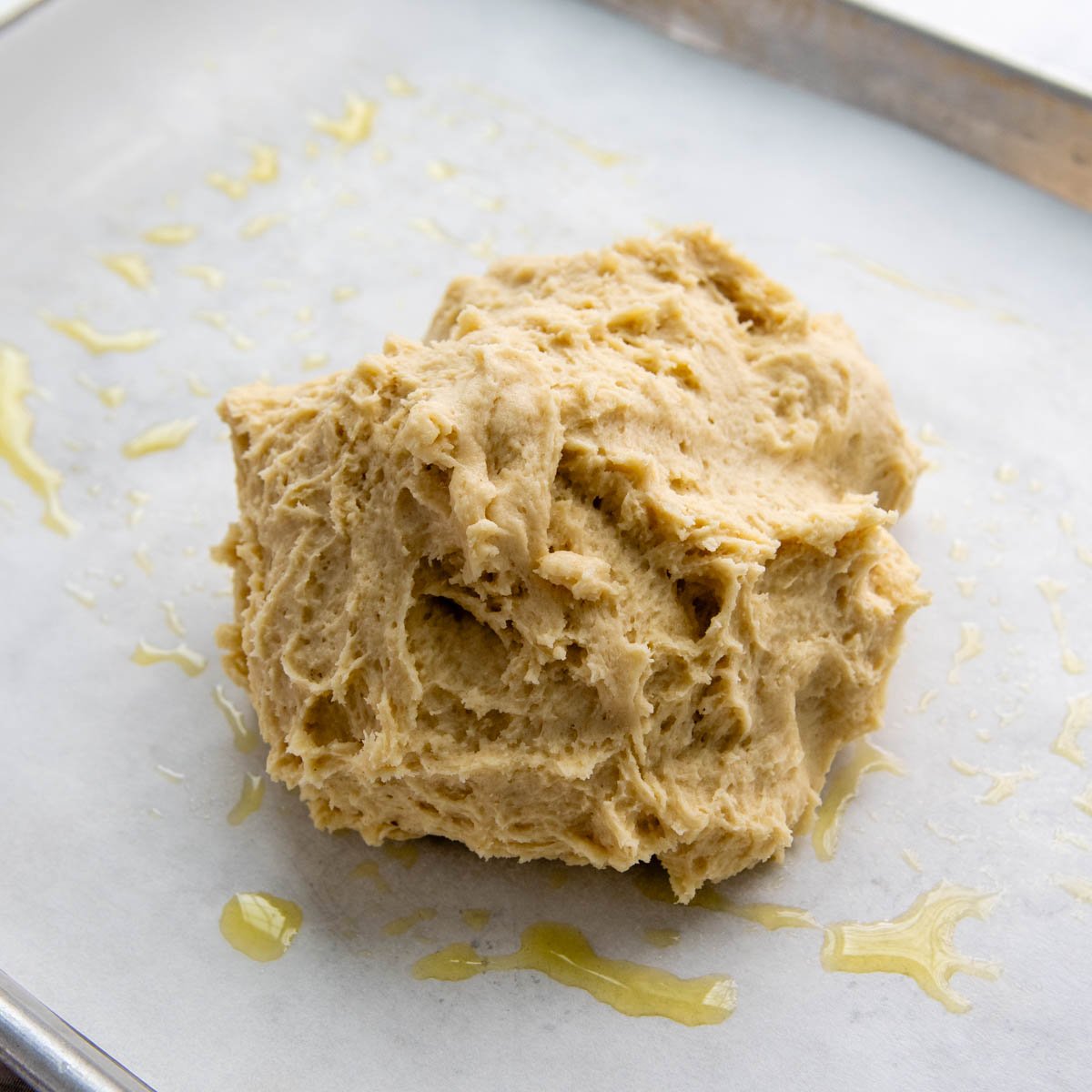
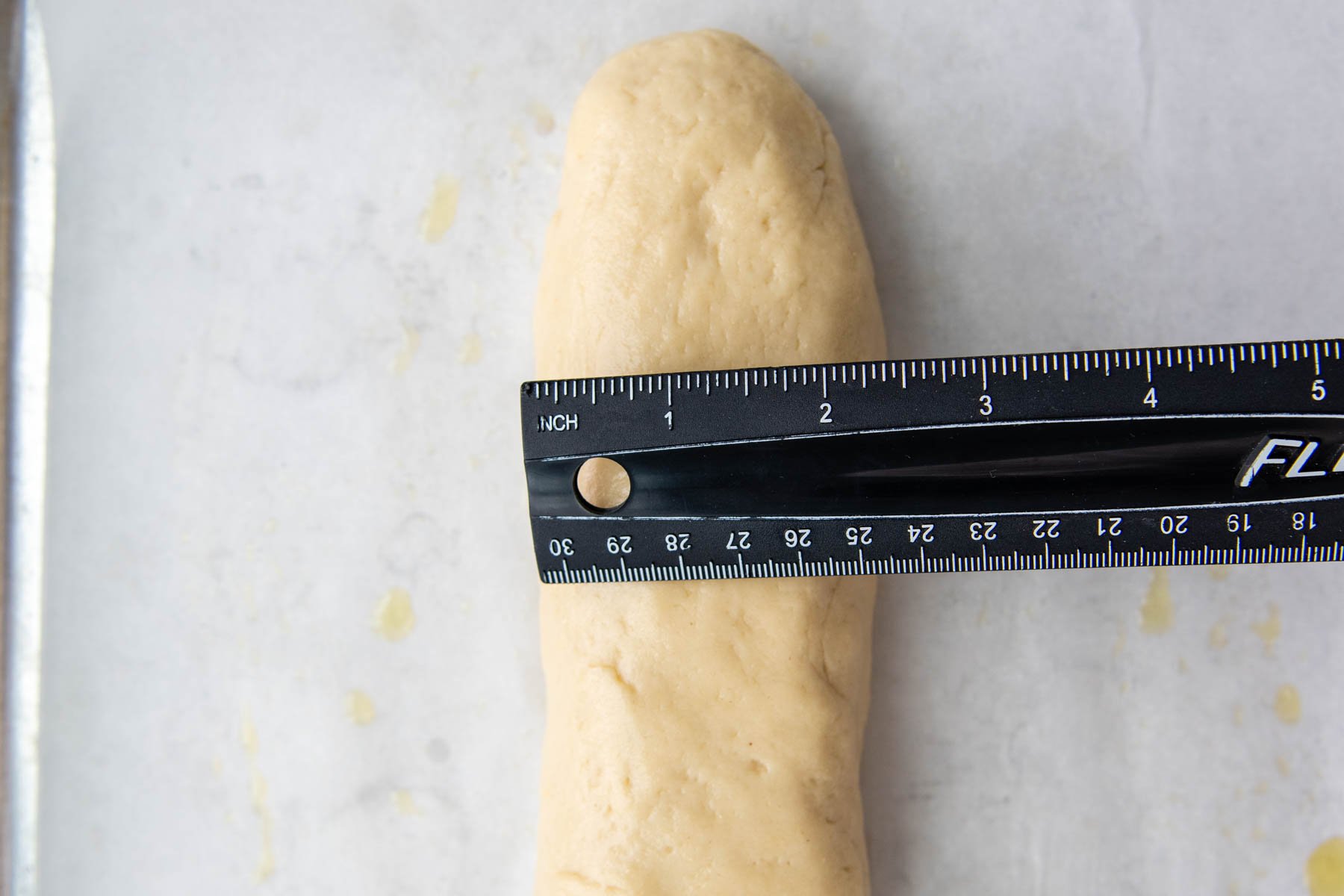
Dump the dough onto a greased parchment-lined baking sheet. You will use greased hands to shape because the dough will be a little sticky. Shape it into a smooth 12 X 2 ½-inch log using greased hands. The smoother it is the less dimply it will be after it bakes.
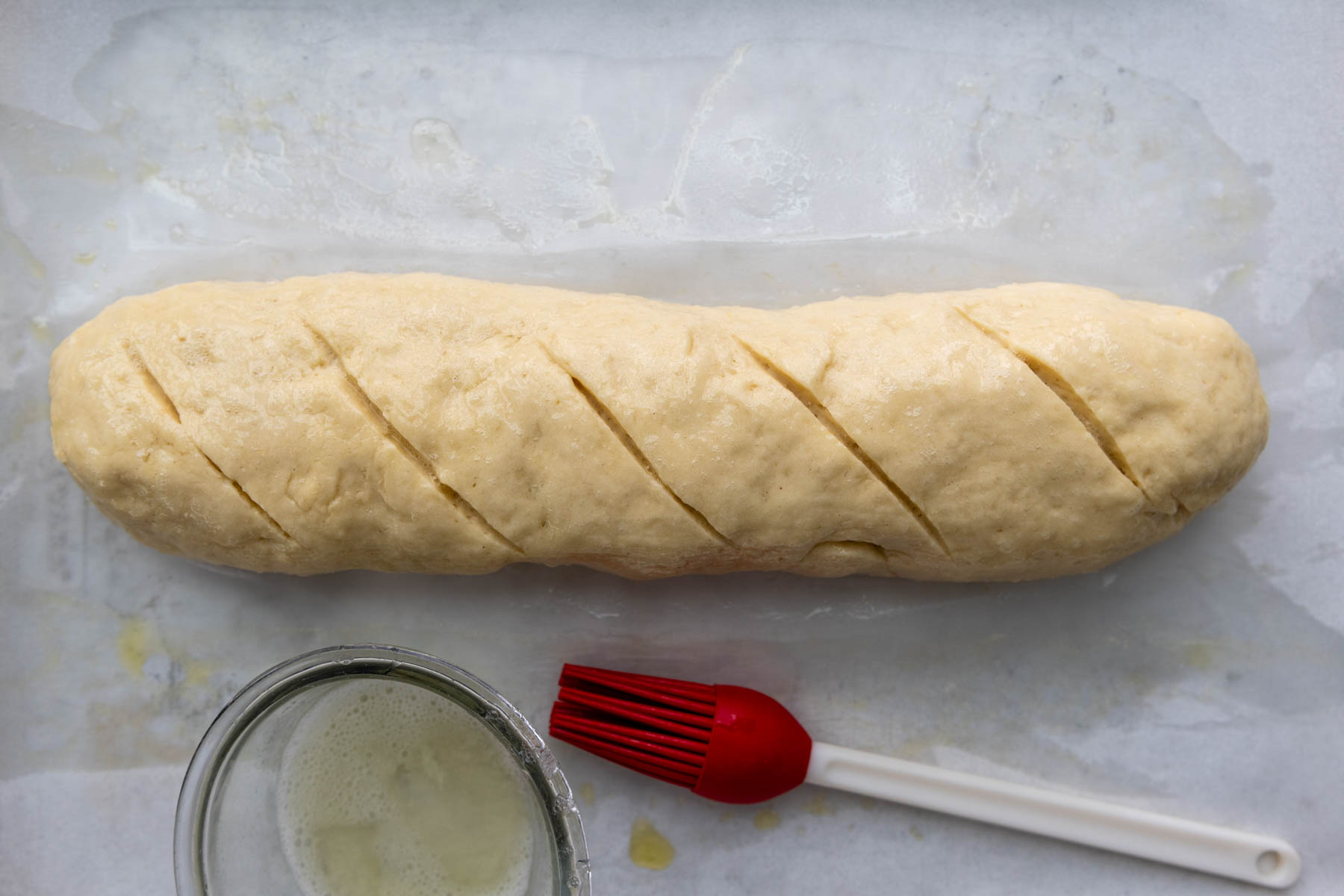
Use a sharp knife to slash 5-6 diagonal slits on top, about ¼-inch deep.

Finishing shiny touches and baking.
Cover with a piece of greased plastic wrap and let it rise for about 40 minutes. To get a nice, shiny outer crust, brush a beaten egg white over the top and sides before baking.
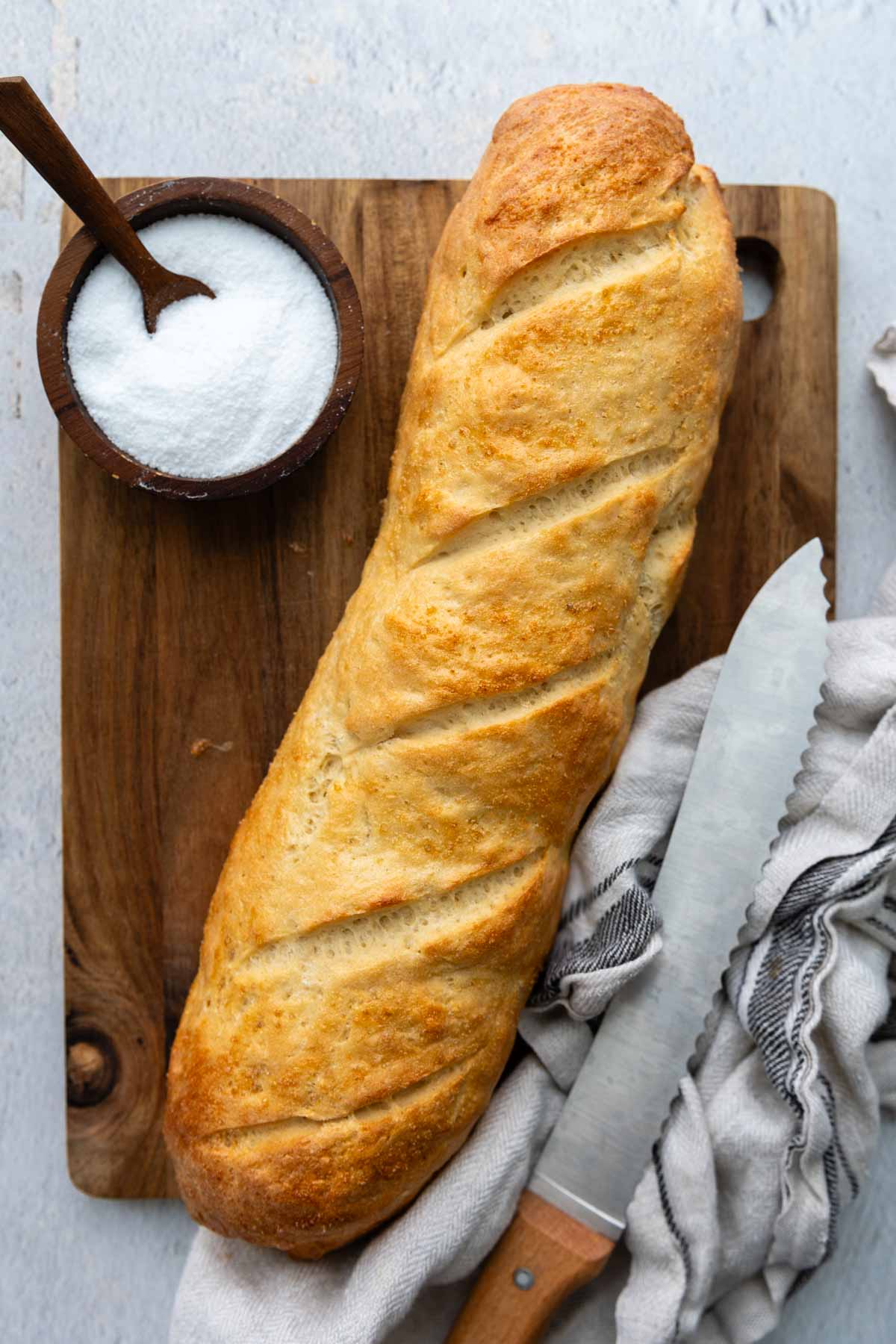
Throw 5-6 ice cubes at the bottom of the oven to create a steamy environment for a crisp outer crust. Bake for 15 minutes. Loosely tent a large piece of foil over the baking sheet (to prevent the bread from over-browning) and reduce the oven temp to 350℉. Bake for 20 minutes longer. Buon appetito! 🇮🇹
Tastiest Ways To Use Italian Bread
Our favorite way to enjoy an Italian loaf is sliced for sandwiches, or even better, as toasty, buttery paninis. However there are many other ways to enjoy a fresh bread, especially when you want to turn traditionally hands-off recipes into miraculously gluten-free. If you have leftovers and want to put them to good use, you can also whip up a batch of these zesty seasoned gluten-free croutons.
- Bread pudding
- French toast or this make-ahead French toast casserole with cream cheese filling
- Paninis
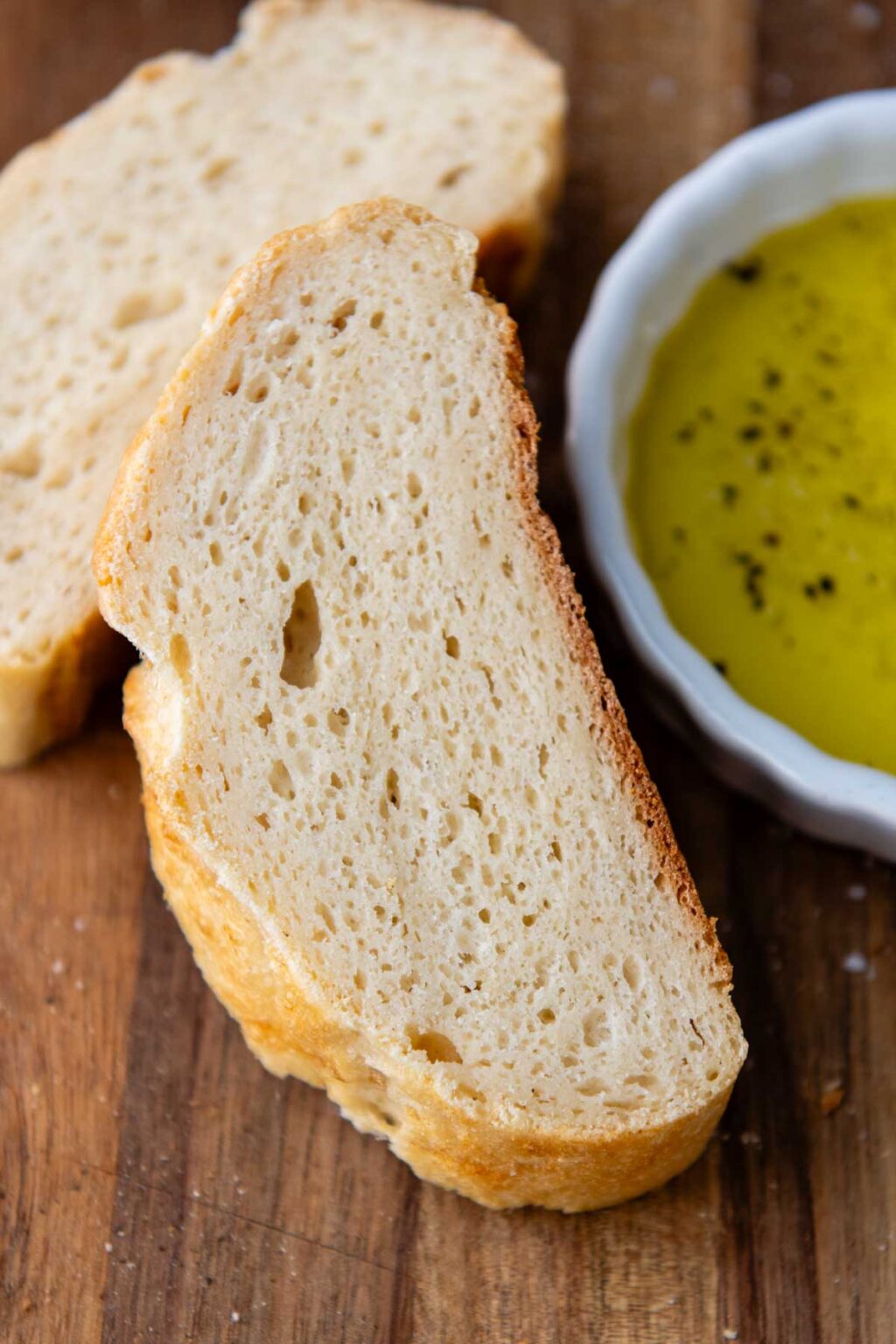
- Dipping in flavored olive oil – My favorite combo – olive oil, kosher salt, ground pepper, fresh rosemary, sun dried tomatoes, balsamic, and freshly grated parmesan
- Cubed and toasted for salad or soup croutons or make a panzanella salad with toasty garlic bread cubes.
- Our most popular choice – The world’s best homemade gluten-free garlic bread
Save this recipe to your pinterest board!
Let’s be friends on Pinterest! I’m always sharing great recipes!
Did you make this recipe? I love hearing from you! Leave a star rating and comment below the recipe card. It helps others when searching for recipes and I appreciate feedback from our community. You will always hear back from me! -Melissa

Easy, Homemade Gluten-Free Italian Bread (Failproof)

Ingredients
- 1 ½ cup (213 g) gluten free all purpose flour, I highly recommend Cup4Cup gluten-free flour blend
- 3 tablespoons (31 g) potato starch, see recipe notes for substitution
- 2 tablespoons (20 g) psyllium husk powder, helps with bread moisture & structure (what is psyllium husk?)
- 1 (9 g) packet (2 ¼ tsp) instant rapid rise yeast
- 1 teaspoon (5 g) baking powder
- 1 ½ teaspoon (6 g) salt
- ½-¾* cup (180 g) warm water (112°F), *see recipe notes for amount
- 2 large eggs, room temperature
- 1 tablespoon (16 g) apple cider vinegar
- 1 tablespoon (21 g) honey
- 1 tablespoon (15 g) olive oil
- egg white, for brushing on before baking
Instructions
- Using a stand mixer with paddle attachment, mix together gluten free flour, potato starch, yeast, psyllium husk powder, baking powder, and salt on low speed until combined.1 ½ cup gluten free all purpose flour, 3 tablespoons potato starch, 2 tablespoons psyllium husk powder, 1 packet (2 ¼ tsp) instant rapid rise yeast, 1 teaspoon baking powder, 1 ½ teaspoon salt
- Add warm water (see recipe note below), eggs, apple cider vinegar, honey, and oil. Mix on low speed to let the dough come together, about 1 minute. Increase the speed to medium and beat for 5 minutes (this helps thicken the batter), scraping down paddle and bowl halfway through. The batter will be thick and stiff, but still slightly sticky.½-¾* cup warm water (112°F), 2 large eggs, 1 tablespoon apple cider vinegar, 1 tablespoon honey, 1 tablespoon olive oil
- Place a large sheet of parchment paper on a baking sheet and grease lightly with olive oil. Transfer the dough onto the parchment. Use greased hands (spray nonstick cooking spray on them or rub with a little bit of olive oil) to knead and shape into a smooth ball.
- Shape the ball into a smooth 12 X 2 ½-inch log using greased hands. (See images in the recipe post.) Use a sharp knife to slash 5-6 diagonal slits on top, about ¼-inch deep.
- Place a large piece of greased plastic wrap over the shaped bread and let rise in warm, draft free place for 40 minutes. The bread will not be fully risen, but will rise more as it bakes due to the baking powder. Meanwhile, preheat the oven to 400℉.
- When ready to bake, remove the plastic wrap. Whisk the egg white in a small bowl until frothy. Brush all over the exterior of the bread.egg white
- Throw 5-6 ice cubes at the bottom of the oven (this creates a steamy environment for a crisp outer crust) and place the baking sheet on the middle rack. Bake for 15 minutes. Loosely tent a large piece of foil over the baking sheet (to prevent the bread from over-browning) and reduce the oven temp to 350℉. Bake for 20 minutes longer. The internal temperature should be 210℉.
- Transfer to a wire rack to cool slightly before slicing, about 30-45 minutes.
Notes
*Water Amount
Some readers have written in saying their batter has been too thin. As to not risk the recipe potentially not turning out, I would recommend starting with 1/2 cup water and gradually adding more until the dough looks like the image in the recipe post. My bread always takes the full 3/4 cup. It should be stiff, yet still be able to be moved around by the paddle attachment, and a little sticky. Also make sure it mixes for a couple minutes before determining if the water needs to be adjusted. It thickens as it mixes. I also tested the recipe with Caputo gluten-free flour and that required a little less water, about 1/2 cup + 2 tbsp.Potato Starch Substitution
Use potato starch for best results, but additional GF flour may be substituted.Storing, Freezing, and Reheating
Gluten-free breads lose moisture quickly, so I recommend serving the day they are made. To make ahead of time, cool the bread completely then wrap in plastic wrap and transfer to a ziplock freezer bag or a double wrapping of foil. Freeze up to 2 months. When ready to enjoy again make sure the bread is at room temperature and not chilled. If the bread is cold it will not be soft and have a drier texture. For best taste and texture, warm briefly before serving. Either wrap in paper towel and microwave for a few seconds or Italian bread can also be warmed in the oven. Wrap it completely in foil and place in a 350ºF oven for 10-15 minutes.This post contains affiliate links. My opinions are always my own. If you purchase a product through an affiliate link, I make a small commission – at no cost to you. Read full disclosure policy here.


Can you substitute guar gum fir the psyllium powder?
Hi Kathy,
I haven’t tried this, but if you were going to use guar gum, I would start with 2 tsp first to check the structure of the dough. It should be sticky, yet shapeable with greased hands.
Best,
Melissa
Hello! Can I use GF bread flour and leave out the potato starch?
Hi Lisa,
I haven’t tried this, but I don’t see why not. You would need to replace the potato starch with an equal amount of bread flour. Also if your bread flour has psyllium in it, I would cut back to 1/2-1 tablespoon psyllium.
Best,
Melissa
Would this work to bake as a dough ball and in a bread oven? Like artisan bread style?
Yes, for sure, Ruthie! I based my gluten-free sourdough recipe off of this one. You could use those baking instructions if you’d like.
Best,
Melissa
I have a question regarding the amount of water if using king arthur measure 4 measure flour. The recipe calls for 1/2 – 3/4 cup total and in a reply to a similar concern you stated use less water and said 1 cup and add another 1/4 if necessary. I am confused and don’t want to mess up this bread that I’m anxious to make per the reviews. I love your other recipes so I follow your site. Thank you so much
Hi Sandra,
Good catch! Looking back on that response, I must have accidentally opened up another recipe and was referring to that water amount. Follow my directions in the recipe card. I’m glad you asked!
Best,
Melissa