


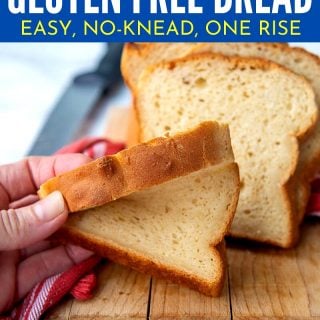
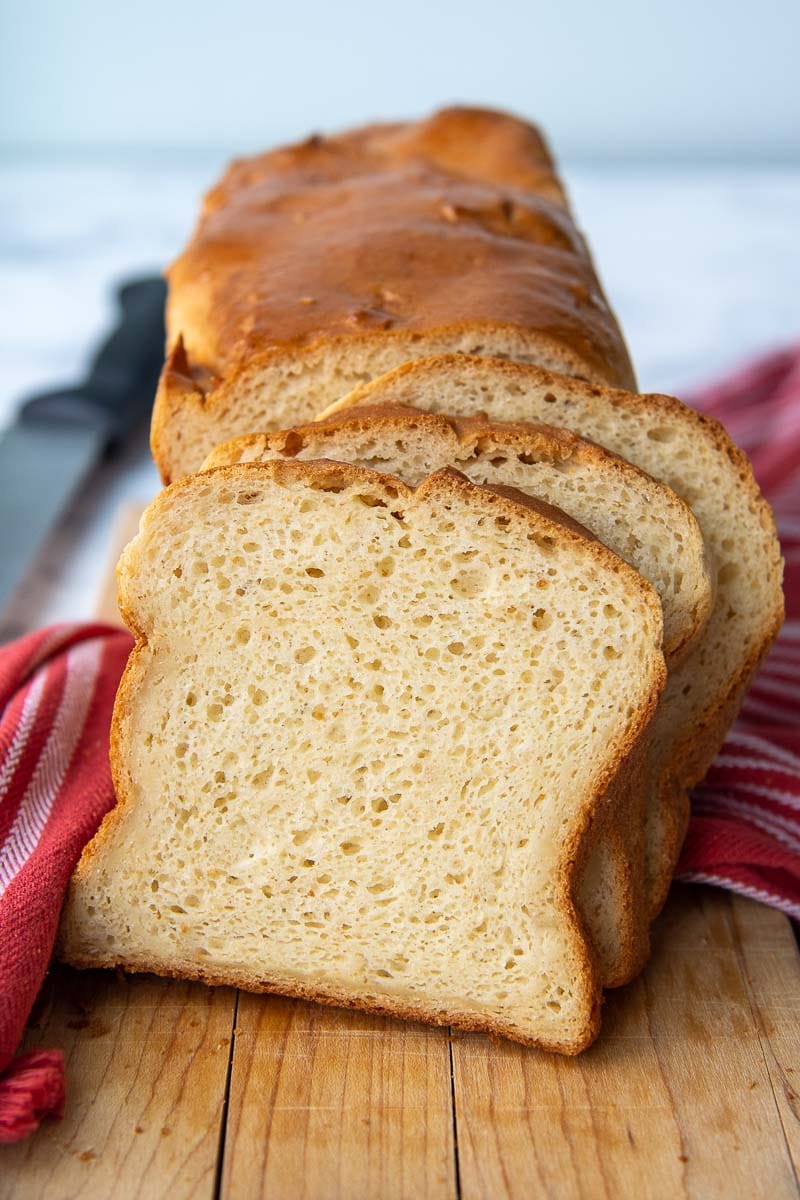
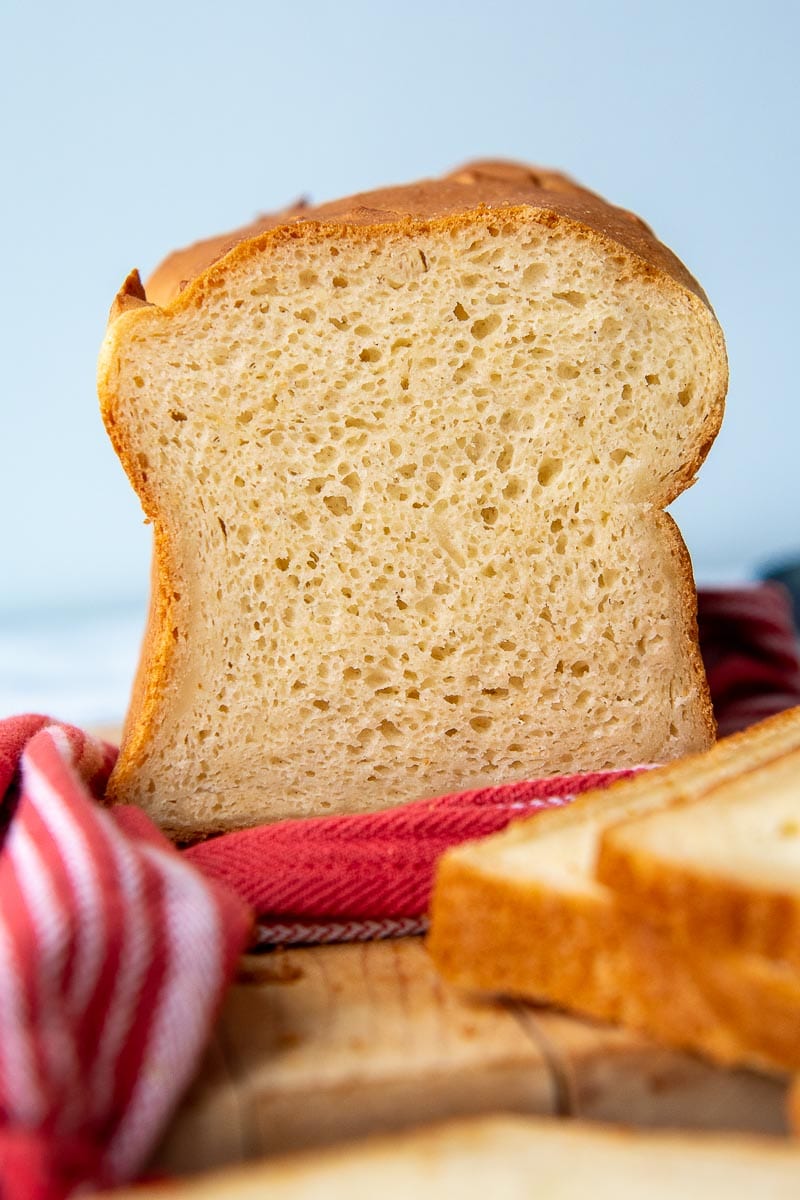
Learn how to make the best squishy soft gluten free bread easily from scratch! My homemade sandwich bread is made using *for real* simple ingredients, requires just a dump and mix, one rise, and, honestly, will be the end-all for GF bread searches. If my word isn’t good enough, read the hundreds of 5-star reviews below, or better yet, make this easy loaf today and let me know what you think!
Want to Save This Recipe?
Enter your email below & we'll send it straight to your inbox. Plus you’ll get affordable and easy gluten-free recipes delivered each week!
Hands-Down Best Gluten-Free Bread (SERIOUSLY!)
It has taken me years to fully stand behind a gluten-free bread recipe. Every homemade recipe I tried was difficult, time consuming, and yielded the most disappointing results. For the longest time, buying expensive, subpar store-bought gf bread sufficed because at least I was saving time.
So many readers, though, have asked for a great-tasting gluten-free bread. Just like when testing squishy-soft gluten-free dinner rolls or a tender, fluffy gluten-free biscuit, there have been a lot of trials, but I finally landed on a recipe that exceeds my essential criteria.
- Easy to make! It mixes together in one bowl, has one short rise, and bake.
- Simple ingredients I have stocked and ready at all times
- Quick and effortless – No one wants to spend all day making a loaf of bread.
- Most important – Tastes BETTER than any gluten free bread out there. Seriously. Read the comments below!
I wouldn’t stand behind this recipe if I didn’t feel it 100% met all these crucial elements. I know what it feels like to waste precious time and expensive ingredients, and I wasn’t about to add another recipe to that vortex!
I truly hope this recipe makes all your gluten free dreams come true, just as much as it has for me! Take a look to see how this magical bread recipe has transformed our community members’ lives, and I hope you will be so convince to start working through the rest of our highly-reviewed gluten-free bread collection!
Delicious, easy bread! I have been gluten free for over 15 years and have tried countless bread recipes. This by far is the easiest AND best tasting 👍🏼
—FancyMom
I never comment on things like this, but oh my god….I’ve tried so many gluten free recipes and none fitted me properly. But this one? AMAZING!
—Ana
Free Guide! 5 easy tips for baking like a gluten-free pro!
Simple hacks for fail-proof gluten-free dishes every time!
Ingredients Tid Bits
Since sandwich bread is an everyday staple, the ingredients should be simple, affordable, and ready to go whenever. This recipe also works perfectly for toast, grilled cheeses, or I like to use leftover slices to make homemade gluten-free bread crumbs (freeze a batch to have on hand for recipes).
- Gluten-free flour – Using a good gluten free flour (I highly recommend Cup4Cup GF flour) makes or breaks the quality of the bread. I tested the recipe with different flours to make sure it consistently turns out, but some performed handedly better than others. See below for alternative GF flour recommendations.
- Psyllium Husk Powder – I’ve made the bread multiples with and without the psyllium husk powder. It doesn’t affect the taste, but it does help maintain moisture and prevents the bread from becoming crumbly. Want to know more? Learn why psyllium helps gluten-free baking.
- Honey – Granulated sugar may be substituted, but I like the moisture the honey adds. Some readers have asked about reducing the amount of sugar, and that is fine.
- Oil – Use any preferred oil. I usually use canola, but whatever floats your boat! Or substitute the same amount of melted butter, but not for gluten-free dairy-free bread.
- (Optional) Milk Powder – This is a new addition to the recipe, so it’s completely optional, but adds moisture to the bread. Recently Cup4Cup removed milk powder from their formulation, so now when I make the bread I remove 2 tablespoons GF flour and replace it with a gluten-free milk powder. Works fabulously!
Watch The Recipe
Let’s Make This Together!
(Below shows step-by-step photos and modified instructions. For the complete recipe, along with ingredient amounts, scroll down to the recipe card.)
Mix dry and then wet – easy enough?
For best results use a stand mixer with a paddle attachment. Add all the dry ingredients – gluten-free flour, instant yeast, psyllium husk, salt, and baking powder. Once that’s combined together, add the wet ingredients – room temp eggs, oil, honey, and water.

Time to beat the dough
Now you just mix everything together on low speed. Once it’s combined, increase the speed to medium and beat for 5 minutes. This gives time to hydrate and relax the starches so your bread is soft instead of gritty. When you’re done your dough will be slightly runny and almost pourable. You’re on the right track!

Rising, but how much?
Scrape the dough into a greased bread pan. I recommend using a small pullman loaf pan because you won’t risk the bread overflowing as it bakes and it makes a nice, tall sandwich style loaf (no dinky bread slices here!) Spray a large piece of plastic wrap with nonstick spray and lay over the top of the pan. Set the pan in a warm place while the oven preheats to 350ºF, about 30-40 minutes. The bread should rise about two-thirds to the top of the pan.

How to know when it’s done and cooling tips
Remove the plastic wrap and bake the bread for 40-50 minutes, tenting a piece of foil loosely over the bread for the last 20 minutes or until the internal temperature reaches 205ºF.
I highly recommend using an instant read thermometer (the linked one is my fave!) before pulling the bread. GF breads often “look done” before they are cooked through inside, means not enough time for moisture to evaporate and a dense, gummy crumb.
If you use the recommended pullman loaf pan, you may even want to lay the loaf on its side to cool, since the loaf is a lot taller. That way you won’t risk the bread sinking in the middle as it cools. Voila, now you have the most legit, soft and squishy sandwich bread ever!

Most Important Part – Quality Gluten-Free Flour
Once the recipe was perfected, it was tested with different gluten free flours to make sure the results were consistent. This is the process I use with many of my bread recipes, including my signature artisanal GF sourdough loaf.
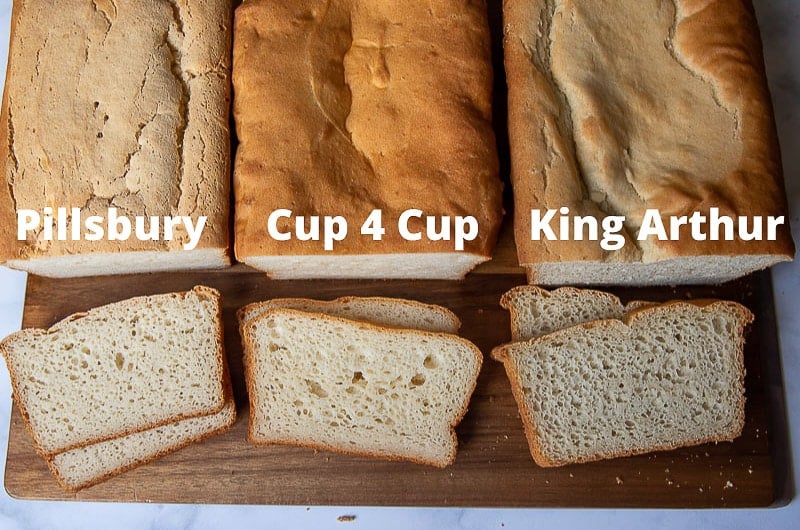
Initially I tested withCup4Cup, which rates as the top gluten free flour, King Arthur Measure-for-Measure, Bob’s Red Mill, and Pillsbury gluten free flour because some readers have been asking about its performance. However, as new blends have been introduced and formulas changed, I have expanded my tests.
From an ease and baking standpoint, they all performed well. Pillsbury had the most solid structure, which turned out to be a not very good thing. Cup4Cup was the softest, with King Arthur in between.
As far as taste, Cup4Cup was the clear winner. There was nothing “gluten free” tasting about the bread. It was soft, squishy, and slightly sweet. Since King Arthur has came out with their bread flour formula, I also found this to work very well.
King Arthur Measure-For-Measure and BRM absorbs liquid at different rates. Since I want this recipe to be accessible to many flour blends, I added some recommended adjustments to the recipe below yielding great results!
Sadly the bread made with GF Pillsbury flour went straight into the trash. It tasted like dry cardboard and was inedible. Pillsbury GF flour might work for other recipes, but definitely did not work well with this one!
If you have a question about using a different flour, other than mentioned here, I encourage you to read the comments below. A lot of readers have written in with which brands they used, and I have added my notes in the recipe card below.
Important Note About Serving
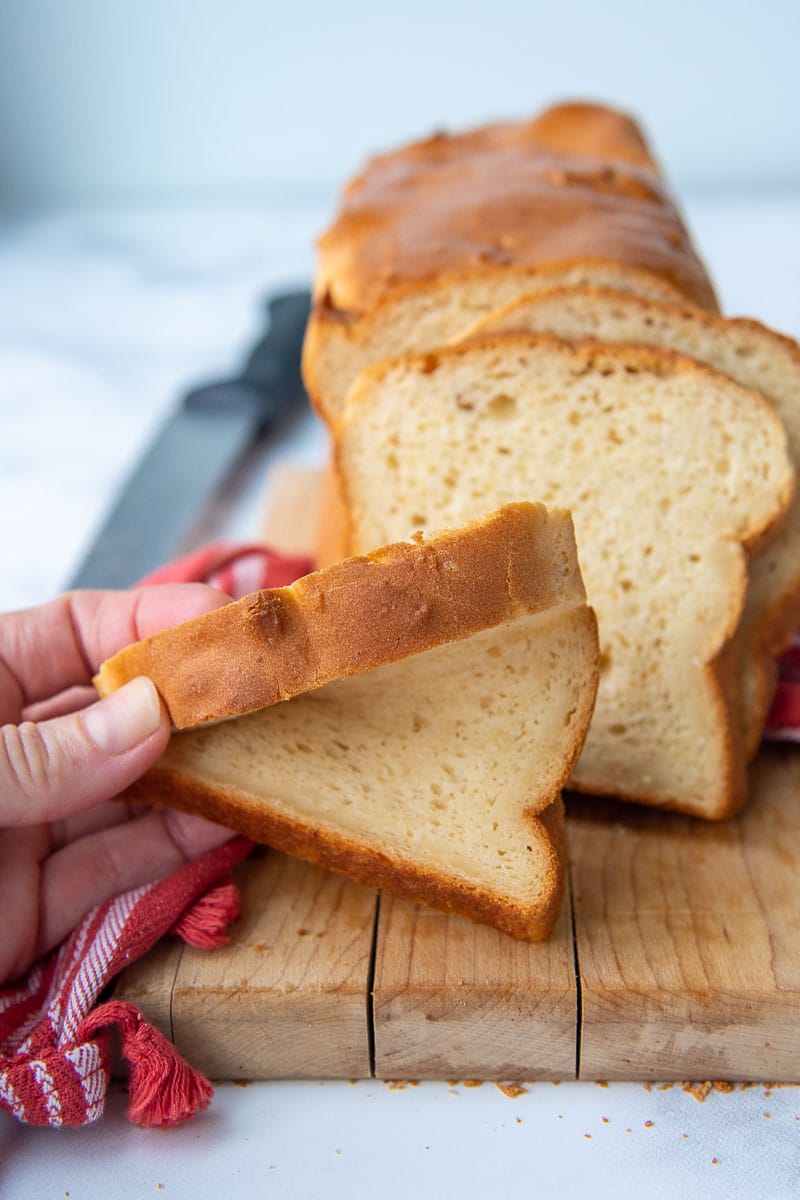
Generally GF bread requires toasting or a buttered griddle to taste good, but not with this GF bread (another reason why it’s the cat’s meow). Room temperature bread is exceptionally soft and fluffy.
However, please note, if pulling from the freezer and serving at room temp, thoroughly defrost the bread first. If it is chilled slightly it will become more crumbly.
Do I Need a Stand Mixer?
Yes and no. It definitely makes the sandwich bread recipe easier to throw together. It may be done with a hand held mixer, but since it uses a large amount of flour, it will be a lot more taxing on the mixer and yourself.
If you don’t want to invest in a stand mixer (although don’t get me started on how obsessed I am with mine!), a gluten-free bread machine would be a cheaper option and just as easy!
Save this recipe to your pinterest board!
Let’s be friends on Pinterest! I’m always sharing great recipes!
Did you make this recipe? I love hearing from you! Leave a star rating and comment below the recipe card. It helps others when searching for recipes and I appreciate feedback from our community. You will always hear back from me! -Melissa
Legit Squishy-Soft Gluten Free Bread Recipe

Ingredients
- 3 cups (438 g) gluten free all purpose flour, Cup4Cup gluten free flour highly recommended – see recipe notes for optional milk powder addition and alternative flour notes
- 1 (9 g) packet (2 ¼ tsp) instant rapid rise yeast
- 1 tablespoon (11 g) psyllium husk powder (optional), helps with bread moisture & structure (what is psyllium husk?)
- 1 teaspoon baking powder
- 1 teaspoon salt
- 1 ½* cups (338 g) warm water (110°F), *see recipe note if using alternative flour
- 2 large eggs, room temperature
- ¼ cup (85 g) honey
- ¼ cup (55 g) oil , any preferred
Instructions
- Using a stand mixer with paddle attachment, mix together gluten free flour, yeast, optional psyllium husk powder, baking powder, and salt on low speed until combined.3 cups gluten free all purpose flour, 1 packet (2 ¼ tsp) instant rapid rise yeast, 1 tablespoon psyllium husk powder (optional), 1 teaspoon baking powder, 1 teaspoon salt
- Add warm water, eggs, honey, and vegetable oil. Mix on low speed to let the dough come together, about 1 minute.1 ½* cups warm water (110°F), 2 large eggs, ¼ cup honey, ¼ cup oil
- Increase speed to medium and beat for 5 minutes, scraping down paddle and bowl halfway through. The batter will be stiff, but sticky.
- Grease a 9X4 baking pan (recommended). Pour into the pan and smooth top evenly with a spatula. Spray a large piece of plastic wrap with nonstick cooking spray. Lay the plastic, greased side down, over the pan.
- Set in a warm, draft-free place to rise until the bread reaches two-thirds to the top of the pan (do not let it go over this point because it rises more in the oven). This should take about 30 minutes. Meanwhile preheat oven to 350°F.
- Remove plastic and bake bread on middle rack for 40-50 minutes, tenting a piece of foil loosely over the bread halfway through. The internal temperature of the bread should read 205°F.
- Allow the loaf to cool for 5 minutes in the pan and then remove to a cooling rack. Allow bread to cool completely, at least 2 hours, before slicing. For best results, serve the bread at room temperature, toasted, or grilled. Chilled, cold bread has an adverse effect on texture.
Notes
Adding Milk Powder
This is a new addition to the recipe, so it’s completely optional, but adds moisture to the bread. Recently Cup4Cup removed milk powder from their formulation, so now I remove 2 tablespoons GF flour and replace it with 2 tablespoons gluten-free certified milk powder. You can do this with any GF flour blend, it doesn’t have to be C4C.Alternative Gluten-Free Flour Adaptations
KA Measure-For-Measure – I find this flour to be more absent of flavor and moisture, so adding an additional ¼ tsp salt, as well as modifying with milk powder (use method explained above) can help. I also recommend cutting the water to 1 ¼ cup + 2 tbsp (305 g) to build out the structure and prevent the bread sinking during cooling. King Arthur Gluten-Free Bread Flour – I recently tried this and loved the results! It has a great taste and nice soft texture. My only recommendation would be to cut back on the psyllium husk powder to 1/2 tbsp since it’s already in the flour’s blend. Bob’s Red Mill Gluten Free 1-To-1 Baking Flour – I worked with this flour quite a lot to try to mimic the texture with C4C. To counteract a “spongy,” wet crumb I recommend omit milk powder, cutting water to 1 ¼ cups (295 g), and adding ¼ cup cornstarch to the dry ingredients.Psyllium Husk Powder
I’ve made the bread multiples with and without the psyllium husk powder. It doesn’t affect the taste, but it does help maintain moisture, prevents the bread from becoming crumbly, and makes it softer. Psyllium husk powder is very affordable to buy, lasts a long time, and greatly improves GF breads texture because it helps absorb moisture. I recommend the psyllium listed in the ingredients because the lighter color doesn’t affect the bread. Some powders are darker, which will make GF baked goods a grayish, purple color.How to Make in a Bread Machine
Although I have not personally tried making this recipe in a bread machine, several readers have written in and said they’ve had great results using one! You will need a bread machine with a gluten-free setting. Add all the wet ingredients to the bottom of the bread baking pan. Then add the dry ingredients over that. Start the bread machine and set it to the “gluten-free” setting.Freezing / Storing
Gluten-free bread does not have the shelf life like normal bread. Refrigerating will dry it out, and is not recommended. It may be wrapped tightly and left at room temperature, but will lose optimal taste and texture quickly. For best results, slice and freeze the bread after it has completely cooled (at least 3 hours). Pull slices as needed from the freezer to defrost or toast from frozen. Generally GF bread requires toasting or a buttered griddle to taste good, but not with this recipe. Room temperature bread is exceptionally soft and fluffy. However, please note, if pulling from the freezer and serving at room temp, thoroughly defrost the bread first. If it is chilled slightly it will become more crumbly.This post contains affiliate links. My opinions are always my own. If you purchase a product through an affiliate link, I make a small commission – at no cost to you. Read full disclosure policy here.


Could I make 2 regular loaves out of this one large loaf pan that I do not have? What do you suggest? Your help would be greatly appreciated 🙏❤️ Kory
Hi Kory,
What size pans would you be using? I’ve baked this recipe in one 9X5-inch loaf pan. It all fits!
Best,
Melissa
This is the best gluten free bread I’ve made! I did have to change a few things for my own dietary restrictions. I used gluten free flour w/out gums and I used pure maple syrup instead of honey. Because of the changes, I had to let the dough rise for 60 minutes. But it baked up beautifully in 40 minutes and tastes amazing! Thank you for this recipe!!
I’m glad you adjusted for your own needs! Thank you for sharing, Leah!
Best,
Melissa
This is for real miracle bread. I have never had such good gluten free bread anywhere. I think it tastes better than wheat bread even! I have been thinking of trying sourdough and wondering if it could somehow be adapted to that…
Reading this makes my day, Patsy! Thank you so much for taking the time to share this. I appreciate it.
Best,
Melissa
Thank you for such a wonderful recipe. I’ve learned the past few years that if it’s from Melissa it’s gonna be good.
What an incredible compliment, Pat! Thank you for taking the time to leave me this note. I appreciate it!
Best,
Melissa
My usual loaf always needed to be toasted . I baked your recipe with Doves Farm Free and used 2 tablespoons of sugar as substitute. Put in bread maker on gluten free setting. Wet ingredients in the bottom, dry on top. Worked brilliantly. I have missed having a simple sandwich. Thankyou so much for the recipe.
I’m so glad you enjoyed it, Emma! Thanks so much for taking a second to let me know.
Best,
Melissa
Hi Mellissa, I am just thrilled to let you know I just made bread again with less water and SUCCESS!
I also use sugar instead of honey. And I make my own C4C flour, which does have the powdered milk included.
I did have another question regarding your hamburger bun recipe. Can this dough be rolled out to about an inch thick and cut into bun shapes? I also have big bun rings that I’ve never used. Could the dough be pressed into these rings and baked?
Thank you for any help.
Keep doing what your doing – You’re the best!
Sandy
Oh, I’m so happy Sandra! And that it works with your C4C homemade substitute is wonderful. Yes, you can use the rings, but it can be easier then rolling out the dough. I would spray the inside of the rings, drop the dough in and use greased fingers to flatten the dough inside. Cover with greased plastic wrap and let rise. Let me know how it turns out!
Best,
Melissa
Finally a gluten free bread that is tasty!!! I did bake it in the bread machine and it came out fantastic. I must admit, I sliced a piece right off and ate it with butter. It was so good. The rest is cooling now. Happy to not have to eat cardboard bread ever again!!!
Love to hear this. Thanks for sharing your experience using the bread machine, Carole!
Best,
Melissa
Hey there, I still have a problem with my bread sinking. I was just looking on line the the instant yeast measure in grams – they say 7 g. Should I stick to the 9g in your recipe? I absolutely love this bread. I don’t really mind if the slices look like cat heads, haha! Just would really like to get it right once.
Thx for all your hard work. Your the best!
Sandy
Hi Sandy,
My measurements are 9 g for the instant yeast, so I would go with that. I’d love to help you, though, I don’t think the yeast measurement in the problem. If the bread is sinking I would try cutting back the water a build to hopefully build out the structure. Are you making any other changes to the recipe, such as sugar instead of honey, or using a different GF flour?
Best,
Melissa
Do I need to do anything for 4300 feet above sea level and dry climates. I want gluten free fresh bread so bad. Super excited to try this.
Hi Kristi,
Gosh, I wish I knew more about this. I did some research on how you can tweak this recipe, though. I would preheat the oven to 375, then when the bread goes in, turn it down to 350. You might have to bake slightly longer as well for all the moisture to evaporate to get a soft crumb, instead of dense or gummy. If you experiment with this and it still needs tweaking, don’t hesitate to reach back out and we can troubleshoot.
Best,
Melissa
Thank you. I appreciate you checking on it. I will make it and let you know !!
Hello, I am so excited to try this recipe, I am curious if coconut oil can be used in this recipe?
Hi Lacy,
Yes, that wouldn’t be a problem!
Best,
Melissa
This turned out very good. I used King Arthur flour and a hand mixer and had no issues. To help use up some of the different flours I had on hand, I used 1/8 cup each of buckwheat, sorghum and chickpea flour and 2 5/8 cups of King Arthur flour. It needed about 45 mins to rise and about 10 extra minutes to get to 205 degrees. Waited until the next day to slice easily. Delicious!
Love that you shared the different flour mix, Sharon! This will be helpful for others that may not be able to use GF all purpose flour blends.
Best,
Melissa
Oops! I should have said that I used King Arthur Measure for Measure GF flour – and just substituted 3/8 cup of that with the 3 different flours.
Firstly I love love love this bread. So easy to make. Wondering about other sweetness. Honey hi Fodmap for me. So if replace with sugar do I need extra moisture. What about maple syrup. Thank you.
Hi Barb,
If you use have pure maple syrup, that would work as a substitute. You would still use 1/4 cup and wouldn’t have to change anything else in the recipe.
Best,
Melissa
Great recipe and yummy bread! I used all the recommended ingredients and it came out perfectly.
Very easy with a stand mixer and dough paddle.
Thank you for sharing! It’s appreciated you took the time to share!
Best,
Melissa
This works great using the Bob’s Red Mill red label gluten free all purpose flour and a heaping tablespoon of xanthan gum. I also replaced the psyllium husk with flaxseed meal. Softest gluten free bread I ever made! I definitely need to split between two pans though…my loaf pans are too shallow for doing the full rise on this one
Can I make it without using a stand mixer?
Hi Lorrie,
People have written in and said they’ve done it with a hand mixer. I think it may not be as easy, but they said it worked!
Best,
Melissa
5 star. This recipe turned out fantastic for gluten free. I did have to bake loaf alot longer to get to temp 205 degrees. Only thing I did differently. So excited for my husband to see this loaf, which looks like regular bread.
I’m so happy to hear this, Hiho! Thanks for taking the time to comment.
Best,
Melissa
Thank you for posting this. I made this with gluten free bread four and in a gluten free setting bread machine. While it tastes good, it wasn’t squishy. I am going to try it again with the cup4cup flour. Has anyone ever tried it in bread machine? Thank you.
Hi Denise,
Yes, I know many readers have done it in a bread machine, but I will suggest two things to make your next round more successful. Yes, I do think C4C yields the best texture, so if you are open to it, I would give it a try. Also, while you can mix it all together in the bread machine, I would recommending taking the dough out and transferring to a bread pan to let it rise and then bake. Hope this helps!
Best,
Melissa
Incredible recipe. I used King Arthur flour and it turned out perfect. No other changes! Super easy and not intimidating, perfectly soft but also holds up and slices nicely!
Thanks for sharing, Katie! I love that you said it wasn’t intimidating!
Best,
Melissa
This is one of the best GF loaves! I can now bake this for less than half the price of a bought GF one!
Yes! It’s the best when we can bake something we love for half the price. Thanks for commenting, Sue.
Best,
Melissa
This turned out very well. The Cup4Cup I have does have powdered milk in the ingredients. I needed to let it rise for a full hour and baked at 350 for 45 minutes.
Hi Harvey,
Glad you enjoyed the recipe! Thanks so much for taking the time to share. I imagine your next bag of C4C will not have the milk powder in it.
Best,
Melissa
Delicious! Even my very picky husband likes it who isn’t gluten free! That’s a high standard!
That is a high standard! So good to hear. Thanks, JcN!
Best,
Melissa
I have been able to buy the Original Cup4Cup in bulk. I’m so thrilled to have it back! I’m excited to try this recipe!
Wow, where did you score that??
Best,
Melissa
Hi Melissa, have you ever let this rise slowly in the fridge or overnight? My oven is in use often and trying to see if I could do the dough in the fridge and bake next day. Thank you!!
Hi Julie,
I have not, but I would be curious about this. If you give it a try please let me know how it turns out!
Best,
Melissa
I’m going to give it a try! I did name a loaf yesterday and it was great! Simple to do, no fussy ingredients. I forgot to swap in the milk powder but it turned out delicious. We had it for sandwiches the next day after being left wrapped at room temp and we enjoyed it. I was able to slice it thinly without it falling apart. Definitely going to keep making it and I’m really loving your recipes and I can see the work you’ve put in. Thank you! I’ve been looking for gf recipes that aren’t fussy but still delicious.
Yay! This is exactly what I’m always shooting for so I’m so happy it’s coming through in the recipes!
Best,
Melissa
Did you used a gf yeast? And what about baking powder. Is it just regular baking powder or do I need to look for a gf version?
Hello,
I use SAF instant yeast, which I personally have no issues with. You might want to double check with the manufacturer. As for the baking powder, I use Clabber girl, which is gluten-free. These can both be picked up at local grocery stores.
Best,
Melissa
Hello, thank you so much for this recipe!! it’s honestly the easiest and fail proof gluten free bread recipe out there and the bread is so yummy toasted!
I wanted to please ask, how long can the bread stay sealed in a plastic bag, room temperature before it is stored in the freezer? Will it be okay if it stays out for one day or do i need to freeze it the day of?
Hi Bemri,
One day should be fine, but any longer then that I would recommend freezing. GF breads really dry out quickly, so freezing them will keep them just as good as the day you baked them. When you are ready to eat again, just make sure it’s the tiniest touch warm.
Best,
Melissa
I did use Bob’s gluten free bread flour. Turned out pretty darn good and is indeed the best gluten free bread I have tasted in a long time. I didn’t use the psyllium husk or the milk powder. It did fall in the center slightly. But I did over proof it and didn’t turn it on it’s side. Didn’t affect the taste whatsoever. Definitely will be making this again.
Thanks for commenting and sharing these details, Mary!
Best,
Melissa
I made this bread yesterday and I’m over the moon! I used a pullman pan, king author 1:1, psyllium, olive oil, and left the powered milk out. It came out perfect and delicious! It’s the best GF bread I’ve ever had! Actually, it’s just good bread, period. I am so happy to have found your website Melissa! Thank you!!!
Oh, that makes me so happy, Regina! Thanks for taking the time to let me know how it turned out!
Best,
Melissa
For a dairy free version, can I use a dairy free creamer instead of milk powder? Would I have to adjust the water then (remove 2 tbsp of water)? Or can I use coconut powder? How about just oat milk? If yes, how do I adjust the recipe? Thanks!
Hi Lala,
Sure you can do that. Replace the powdered dairy-free cream for the 2 tablespoons flour. I’m not familiar with coconut powder and I haven’t tested the recipe using a non-dairy milk instead of the water. I’ve also made it plenty of times without the milk powder. This is just something I’ve been doing lately since C4C changed their formula.
Best,
Melissa
Awesome thank you! I’m thinking of testing with 2 tbsp of collagen peptides instead of milk powder and see how it goes 😉