


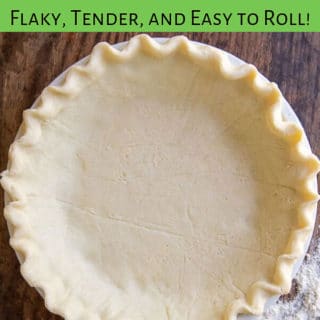
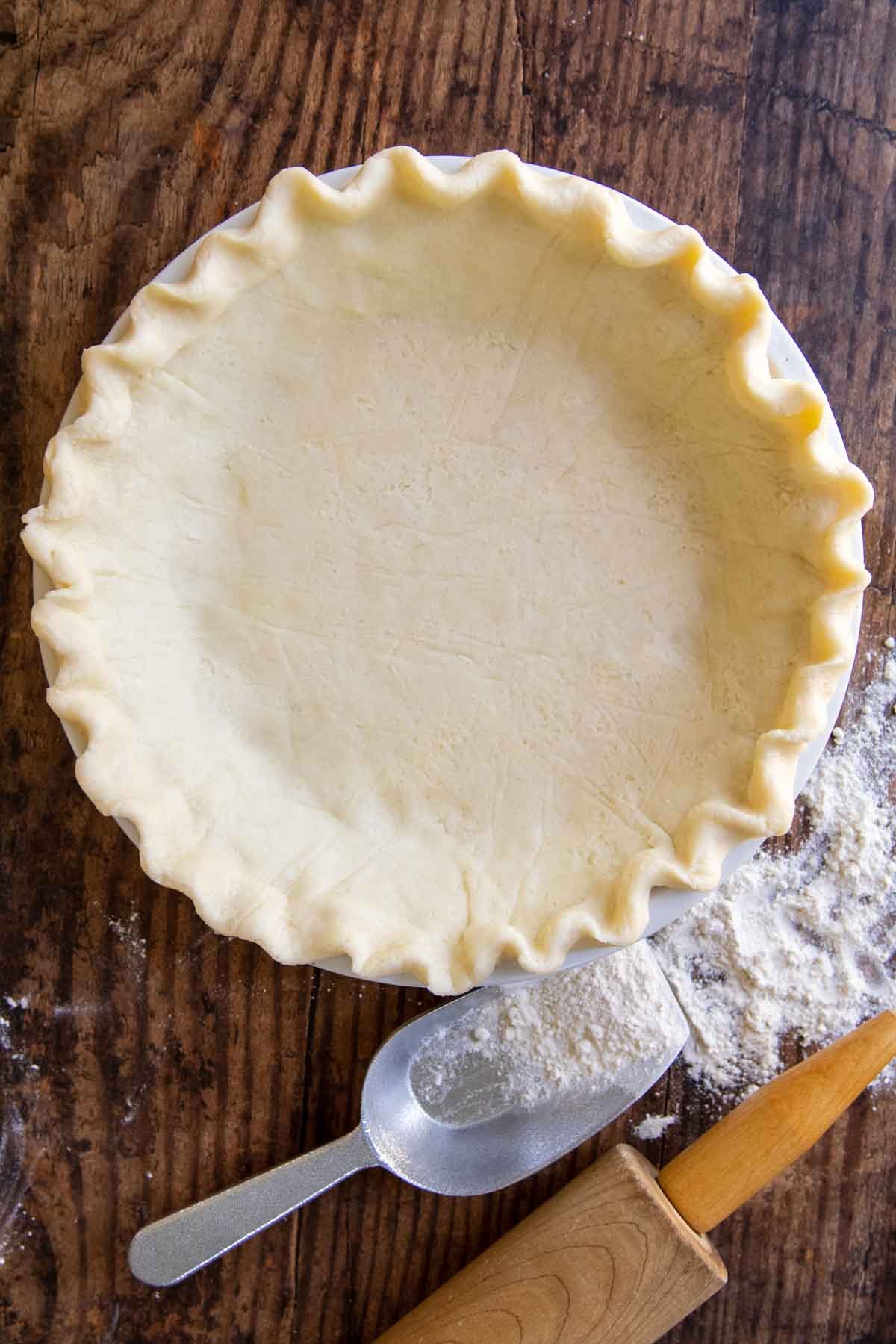
If you’re looking for a flaky, tender gluten-free pie dough (or pastry dough) that is fabulously easy to roll out, look no further. Not only is this the best tasting gluten-free pie crust, this detailed guide is also full of tips and tricks to help you make perfect GF crust at home. The secret? A tablespoon of sour cream! It tenderizes the dough to make it just as light as all butter pie crusts you grew up on.
Want to Save This Recipe?
Enter your email below & we'll send it straight to your inbox. Plus you’ll get affordable and easy gluten-free recipes delivered each week!
Legendary Gluten-Free Pie Crust Recipe – See Why!
I’ve always loved to bake, but the first time I tried making gluten-free pie dough I was in tears. What used to be so easy (pre-GF years), was now horribly frustrating with dismal results.
I had found other GF crust recipes to fill the void, such as press-in oatmeal pie crust that doesn’t require rolling or chilling. BUT, I was missing the perfect pie dough made gluten-free so I could finally enjoy the classics again, like an buttery, flaky crust to go with apple pie or a crisp bottom to pair with pumpkin filling.
Then a cookbook called America’s Test Kitchen: The How Can It Be Gluten Free Cookbook came along. Its revolutionary tips and tricks not only helped me enjoy beloved desserts again, but taught me to bake like a GF pro. It inspired this legendary soft, squishy homemade gluten-free bread recipe, and led me on a path of publishing my own gluten-free cookbook.
I learned making a gluten-free pie crust with sour cream and all butter was the essential ingredient I had been missing. It tenderizes the pastry dough by coating the starches, making a homemade GF pie crust that is light and flaky instead of dense and chewy.
Pie-making and I gladly reunited, and inspired me to create an entire gluten-free pie recipe collection I thought I would never enjoy again! I even use this recipe to make a from-scratch GF pot pie that has won over the toughest critics.
Not only is this crust the best tasting, but I also include many tips, hacks, the best flour to use, recommended equipment, how to make the dough using a food processor or by hand, and rolling tips. I’ll teach you have to make the best pastry dough with consistent results every time!
This is The Best GF Pie Crust Recipe!! My non-GF son-in-law raved about the crust & was shocked when I told him it was GF! I feel I have arrived in the baking world when I can make a beautiful pie! This. Is. It!! Thank you for a grand recipe!
—Julie
Free Guide! 5 easy tips for baking like a gluten-free pro!
Simple hacks for fail-proof gluten-free dishes every time!
Equipment To Make Your Life Easier
Technically it doesn’t require much to make a GF pastry crust. Basic requirements would be a bowl, fork, and rolling pin, so don’t the lack of “fancy” kitchen gadgets stand in your way!
However, if you have been frustrated with homemade pie crust recipes and are looking for consistent, easy results, some kitchen equipment can be a game changer! Below I explain why I recommend it for you to decide what is necessary, based on problems you may have experienced.
- Food Processor – If you find making homemade dough to be intimidating or complicated, using a food processor makes it extremely quick and easy. From start to finish, it takes about 10 minutes and the blade does a much better job working the butter into the dry ingredients than a fork or pastry blender would.
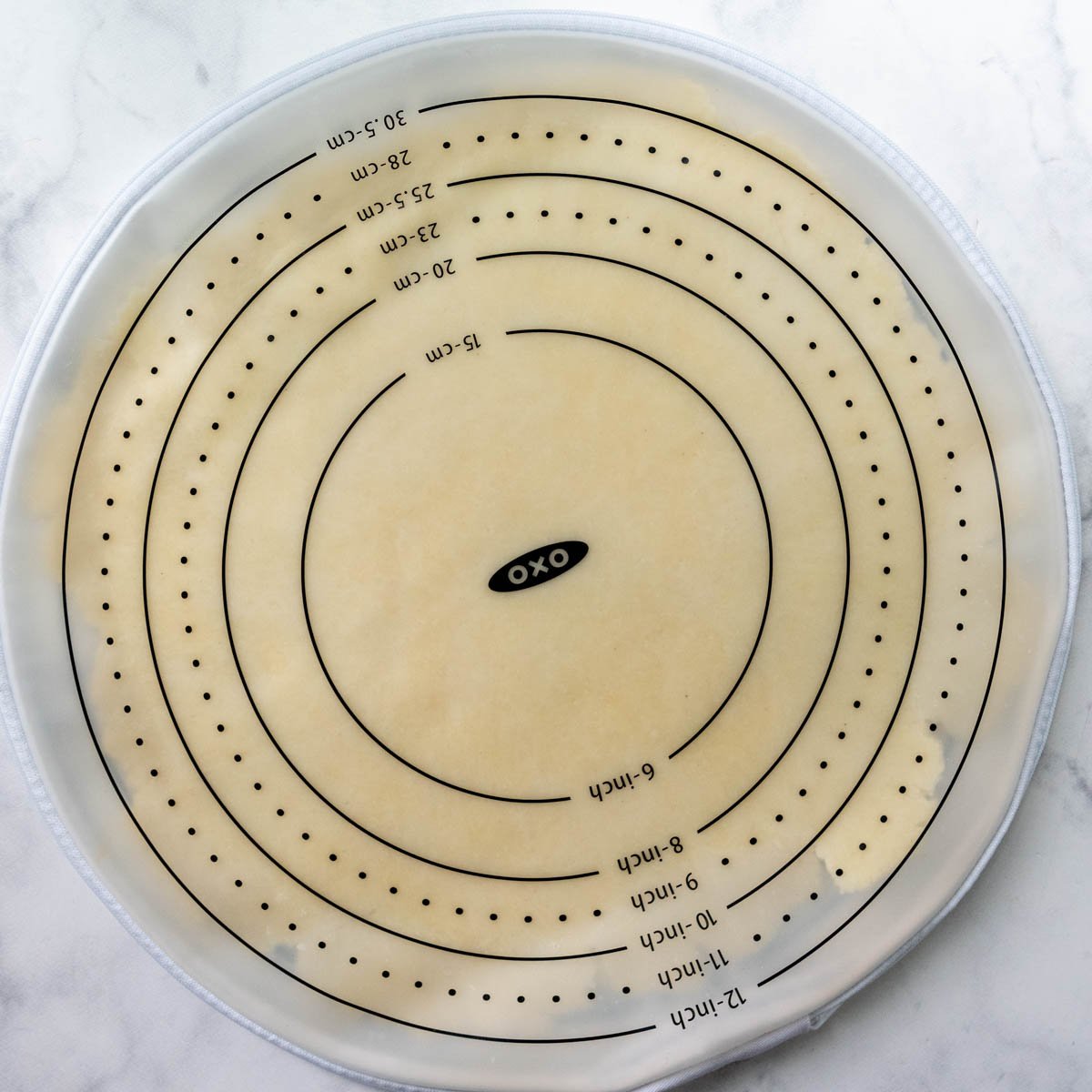
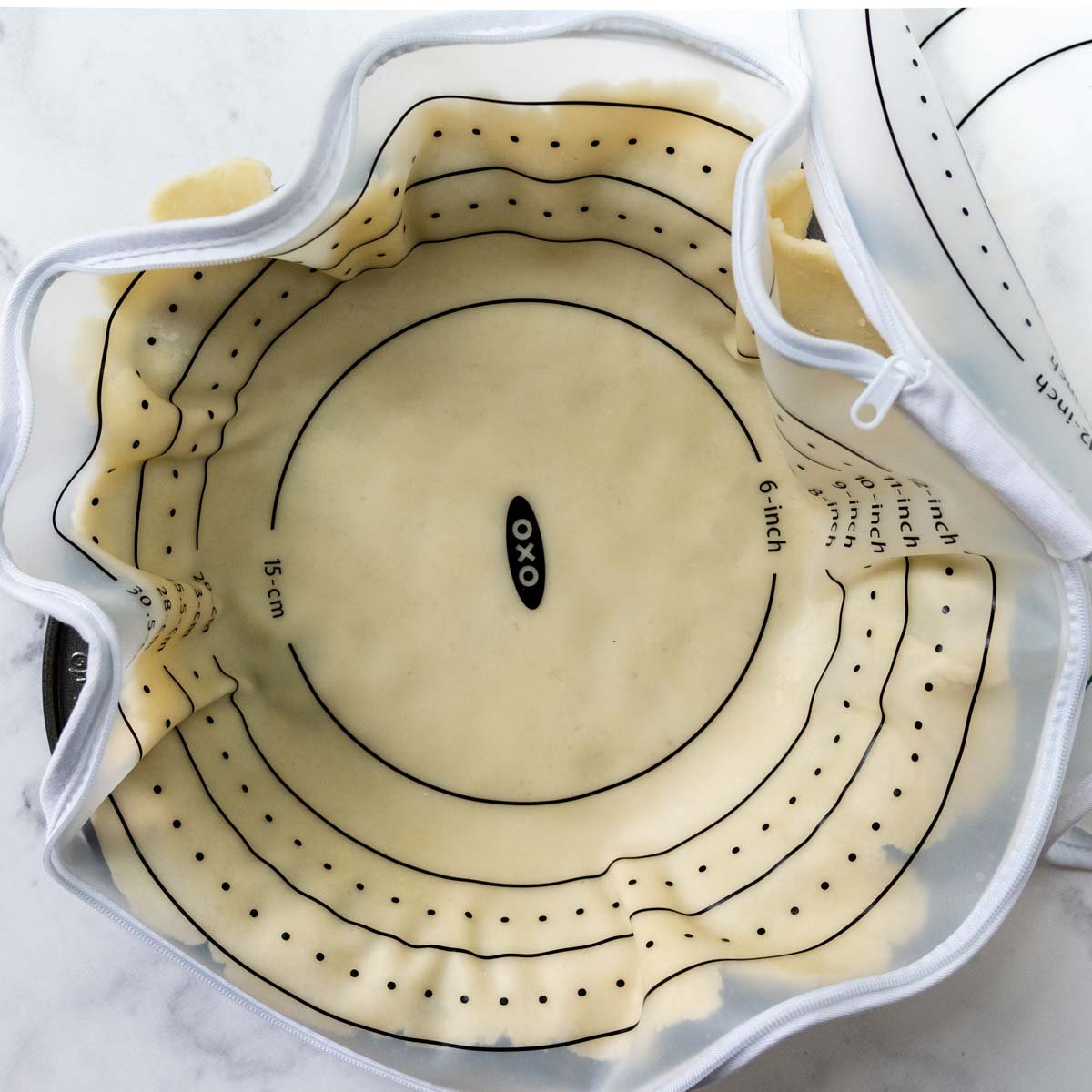
- Silicone Dough Bag – Struggle with rolling out dough? This affordable tool is a must! I used to roll out between two sheets of parchment or plastic, but it would consistently crease and the dough would get stuck in the ridges. (See rolling tips for how to fix this!) But, this bag makes it easy to roll, size correctly, and transfer to the pie plate.
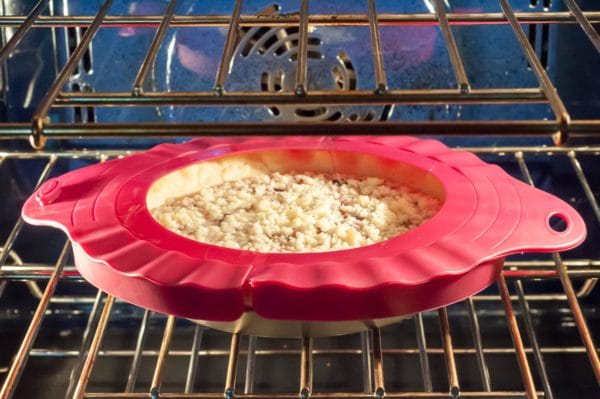
- Pie Shield – Since the edges are exposed during baking, they brown a lot faster than bottom crust. The cheap fix is using aluminum foil, but it hard to move the pie around to check on things. Using a pie shield really simplifies things.
- Metal Pie Pans – A common problem with GF pies is a soggy bottom crust. Fats have a harder time absorbing in GF starches, which often leads to a lack of flakiness or a soft bottom crust. Baking the crust in a metal pan conducts the heat better and faster, which guarantees the best results.
- Pie Weight – If you need to blind bake a pie (bake the crust without a filling first) or partially bake a pie (helpful for fillings with a lot of moisture), the crust should be weighted as it bakes. One way Place a piece of parchment on the bottom and fill with dried beans. However, I really like this pie weight because it doesn’t require parchment and it has holes so the heat can circulate to the bottom crust. Just put it on and bake.
Watch This Recipe
Let’s Make This Together!
(Below shows step-by-step photos and modified instructions. For the complete recipe, along with ingredient amounts, scroll down to the recipe card.)
Prep the ingredients
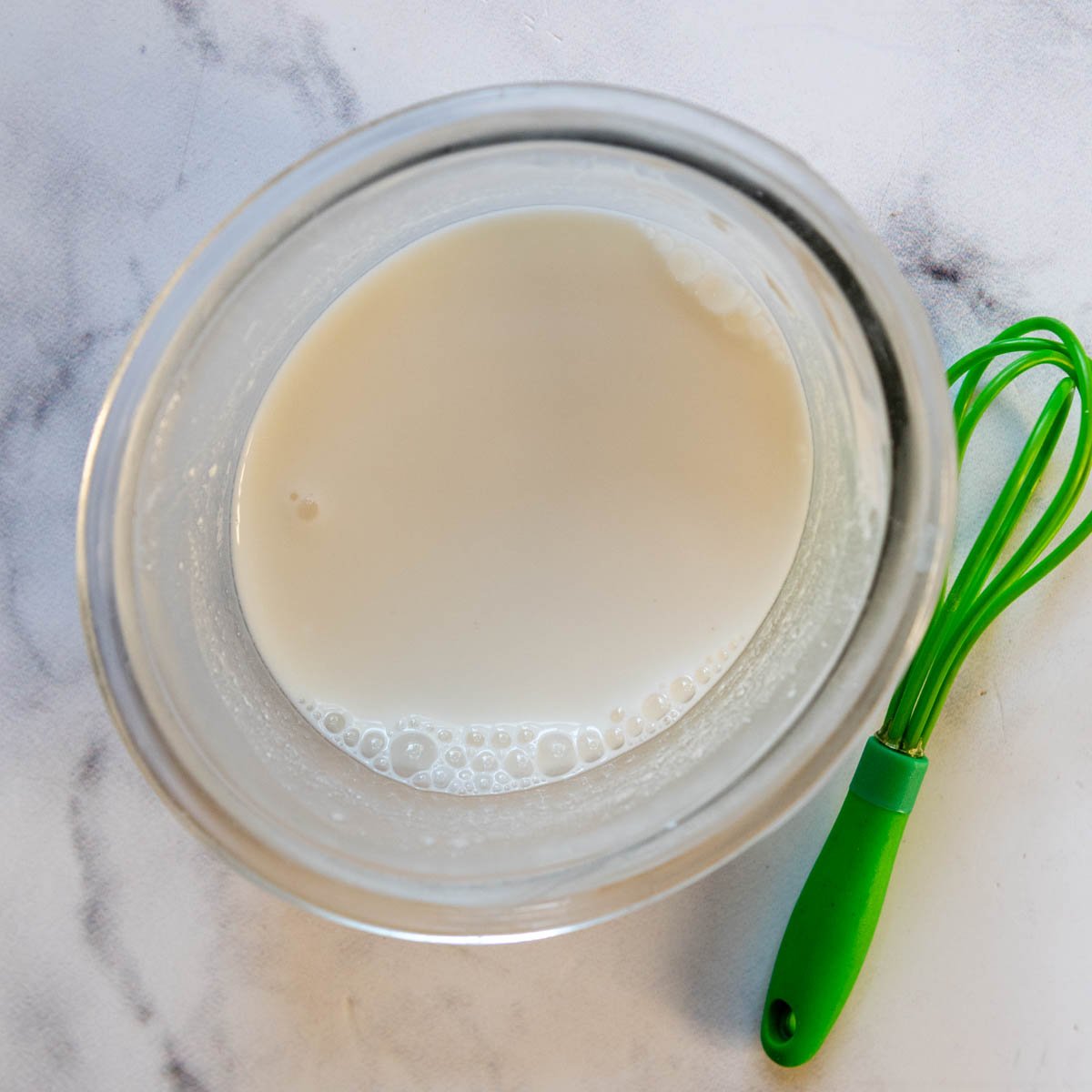
The key to a flaky, all-butter crust is very cold ingredients. Whisk together the cold water, sour cream, and vinegar in a small bowl and place them in the fridge until ready to use. Chop up the butter and freeze briefly, about 10 minutes.
Time to mix
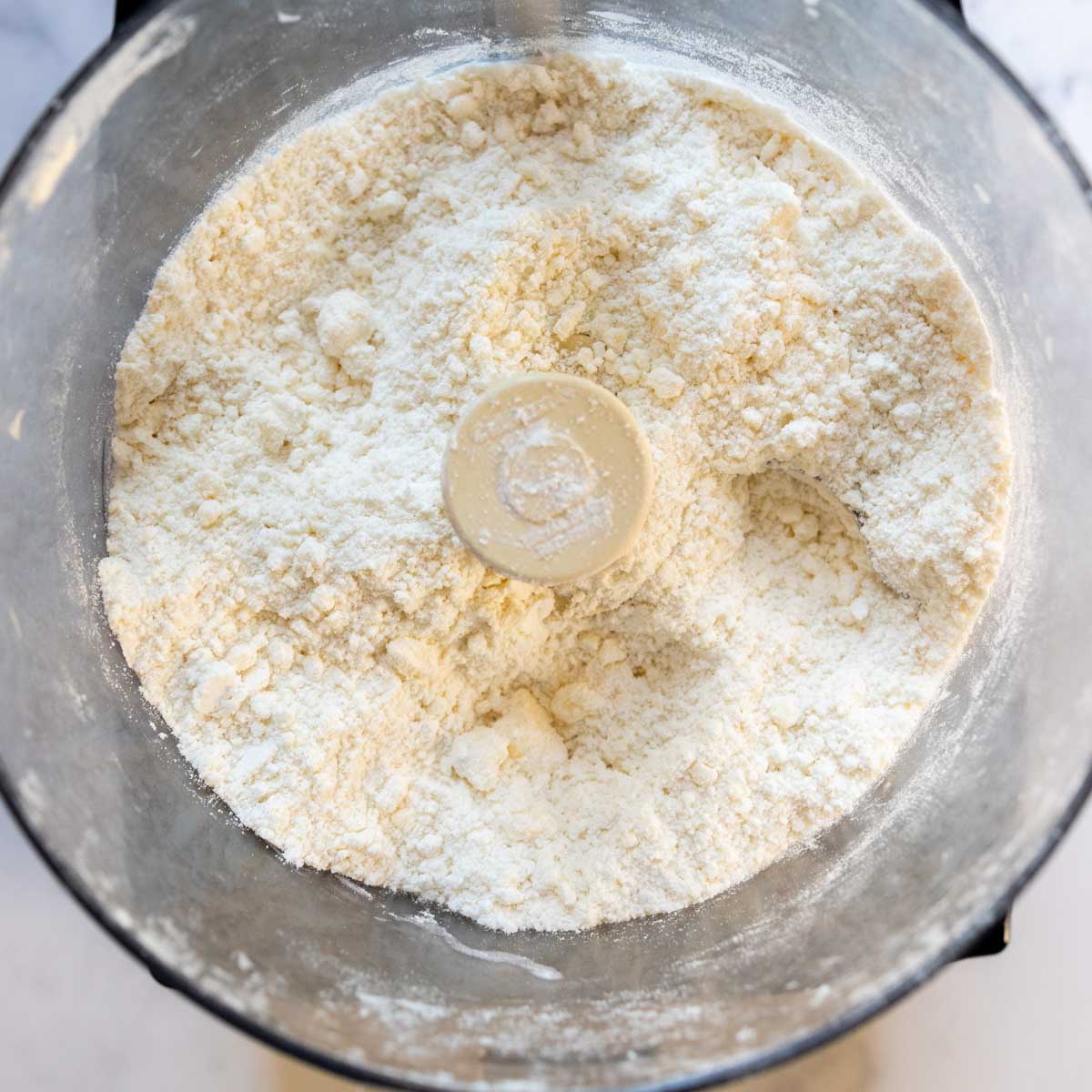
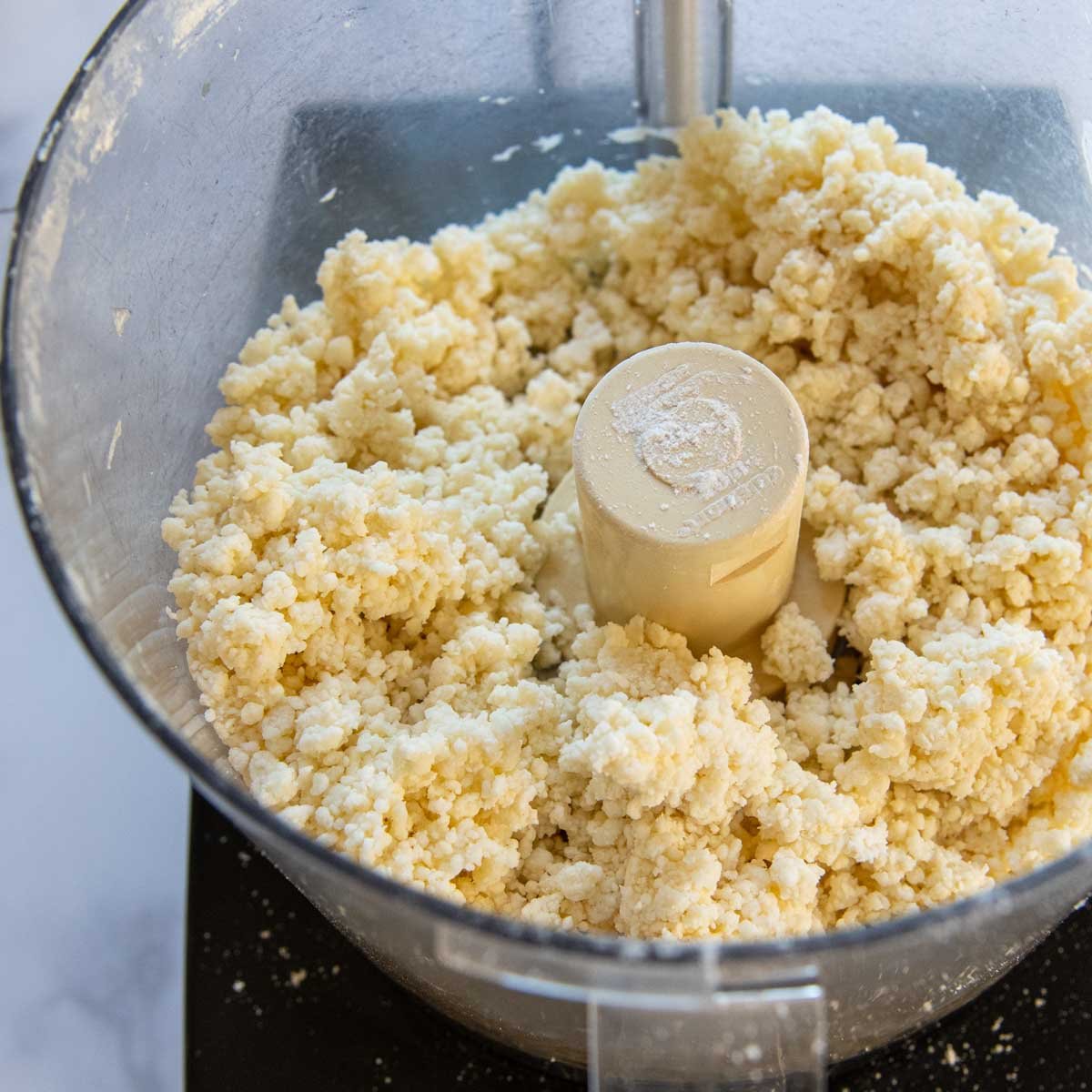
First put the dry ingredients in and mix together. Add the partially-frozen butter and work into the flour with a pastry blender or pulsing in a processor until it’s evenly incorporated and sandy looking.
Finish with wet ingredients
Finally, add the liquids and work in until the dough is moistened and small dough clumps appear.
Pro Tip: To check if you have enough liquid, clump and flatten a small bit of dough. If it doesn’t stick together, is crumbly, or breaks apart easily, add a small dash of ice water. Pulse a few times and recheck. If the dough is too wet or sticky, add a dash of flour. Pulse a few times and recheck.
Wrap and chill
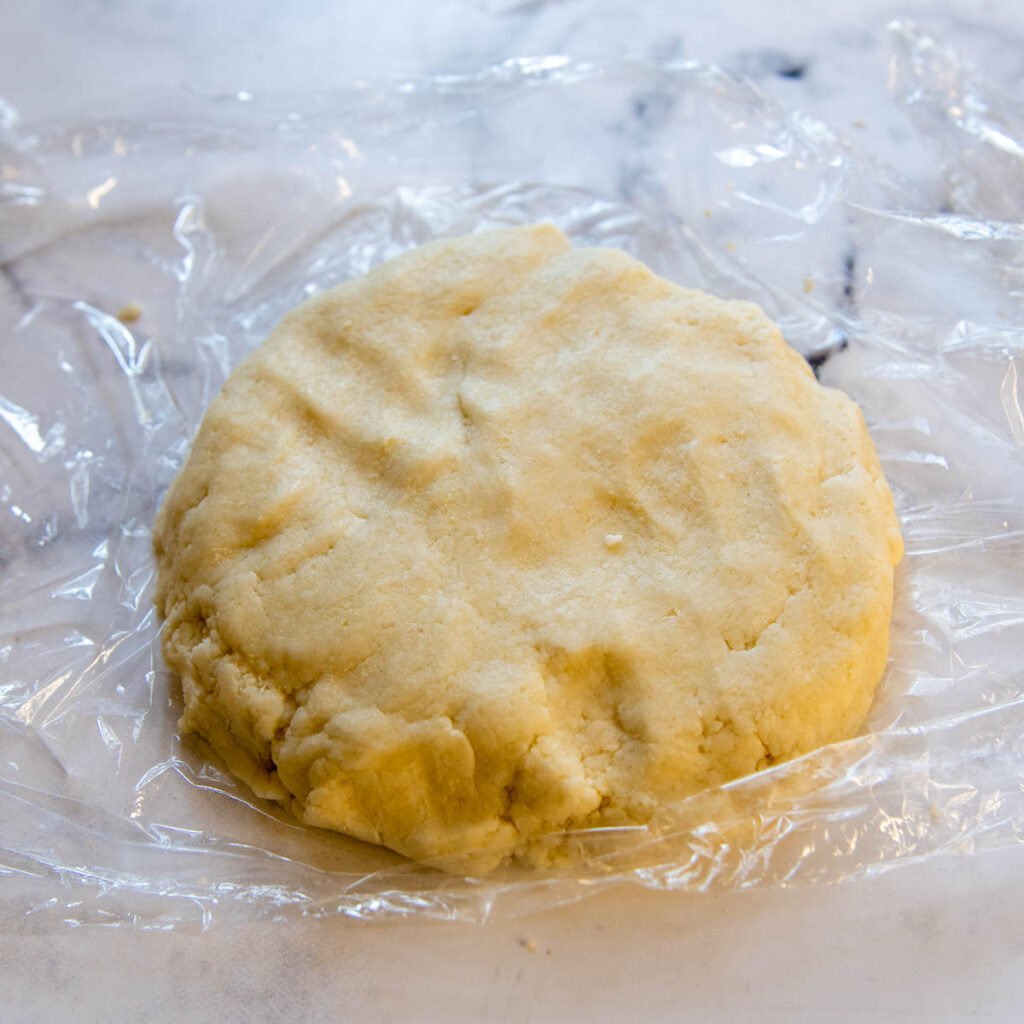
Now it’s time to chill and rest the dough before rolling. Lay a large piece of plastic wrap on the counter, transfer the dough onto it, and shape into a disc, about 1 inch thick. Wrap tightly and refrigerate for 1 hour or freeze for 30 minutes.
Pro Tip: Wrapped pie crust dough may be refrigerate for 1-2 days. If storing longer, place the wrapped disc in a freezer ziplock bag and freeze up to 1 month. Thaw in refrigerator overnight.
Easy Tips For Rolling With Success!
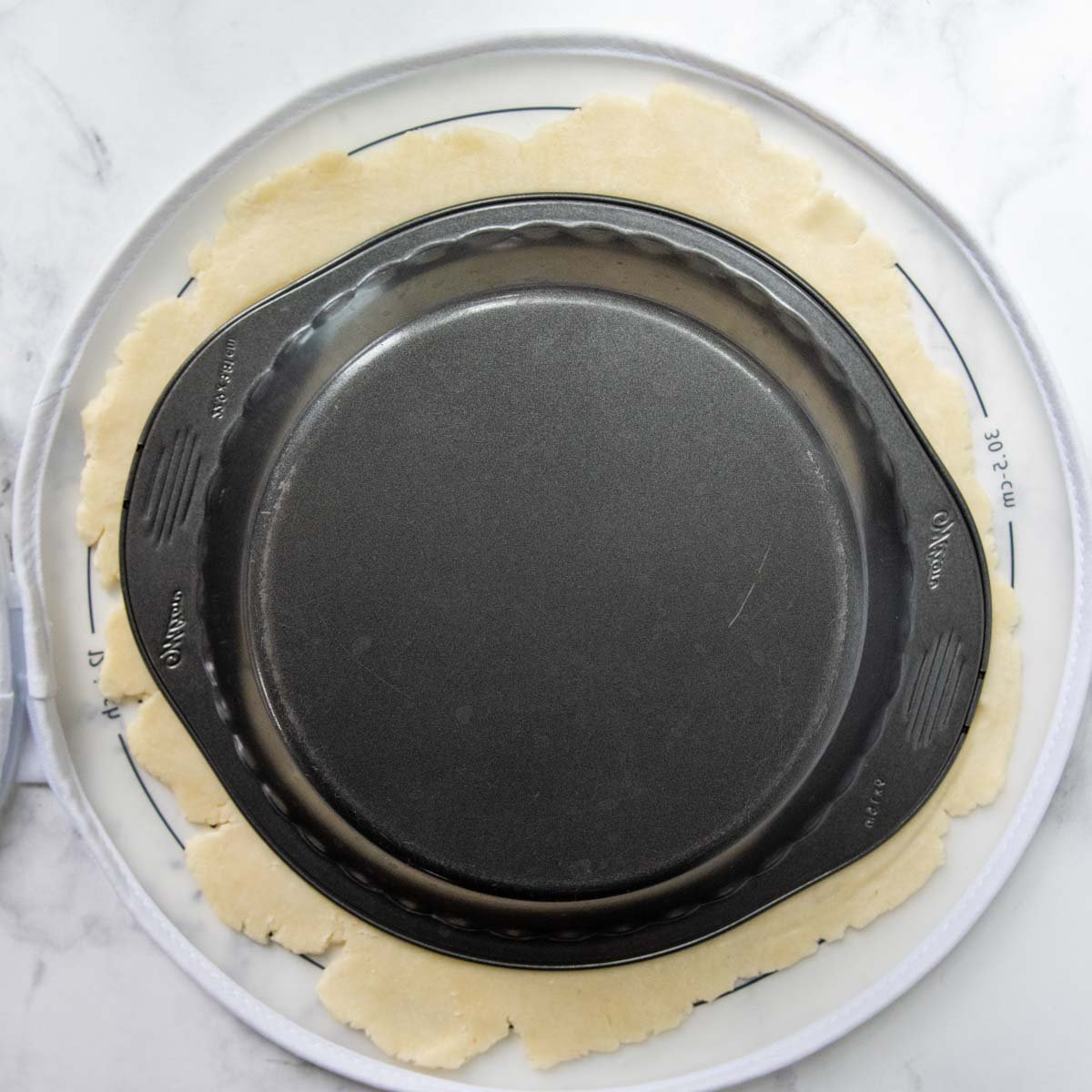
- I find rolling in a silicone pie bag works best because the dough doesn’t stick, no additional flour is needed, and it’s easy to shape. If you don’t have one, use two large pieces of parchment paper. Plastic wrap may be used, but it has a tendency to stick to the dough more.
- If the dough is too cold it will be hard to roll and break apart. Let it sit on the counter for 5 minutes and try again.
- When you are rolling, press down in the middle and push the dough out from center. This will ensure the middle not being too thick, while edges are too thin.
- Rotate the pie dough as you are rolling so it forms a perfect circle. If one side is bigger than the other, cut some dough off and add it to the smaller side of the circle.
- While rolling, the dough may warm, which causes the parchment paper to stick. If this happens, place rolled pie crust, with parchment still on, in the refrigerator for 5 minutes so butter re-solidifies and releases from the paper.
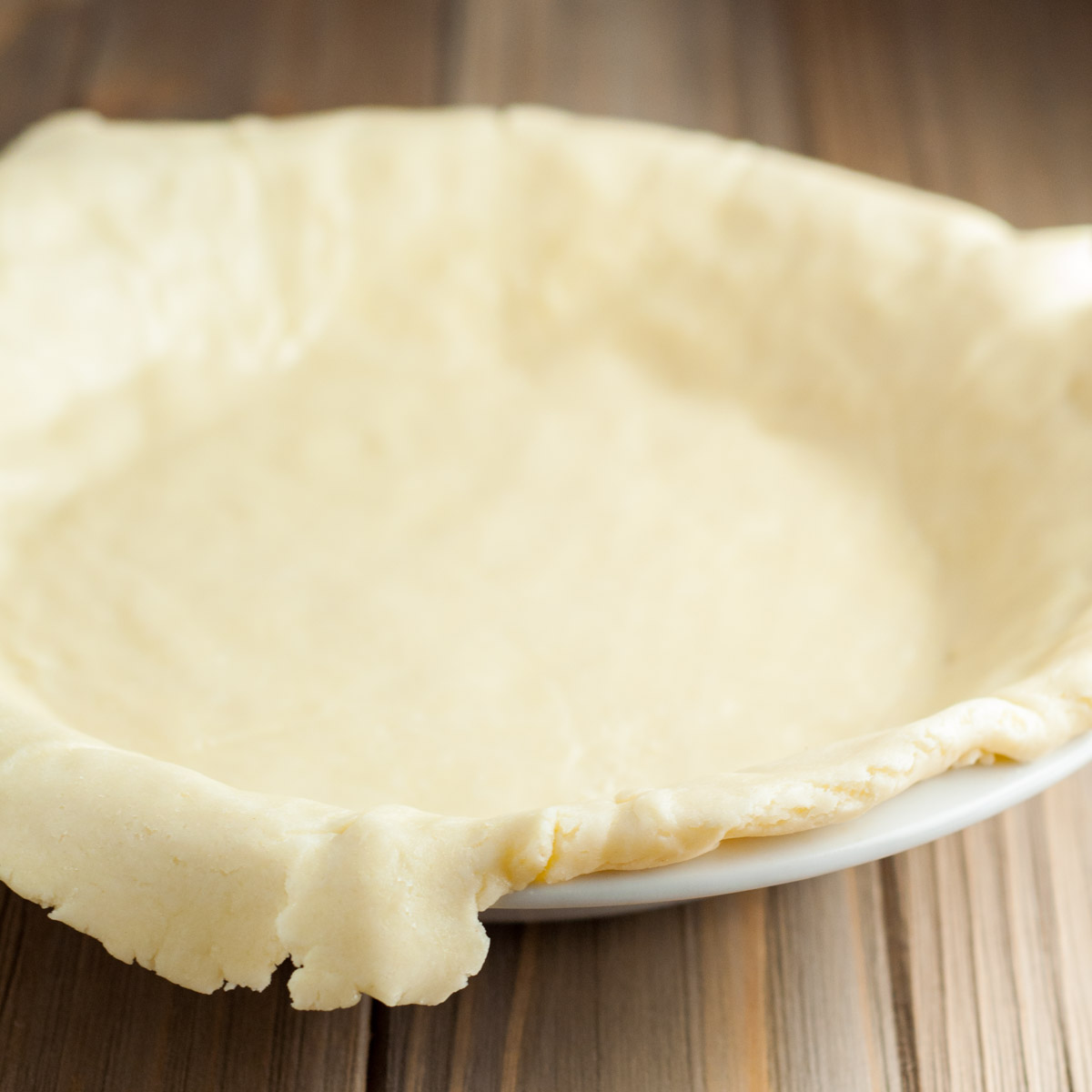
- Once the dough is turned over in the pie dish use kitchen scissors to trim off excess dough around edges. If some edges need more dough to fold under, press on some of the clipped-off pie dough.
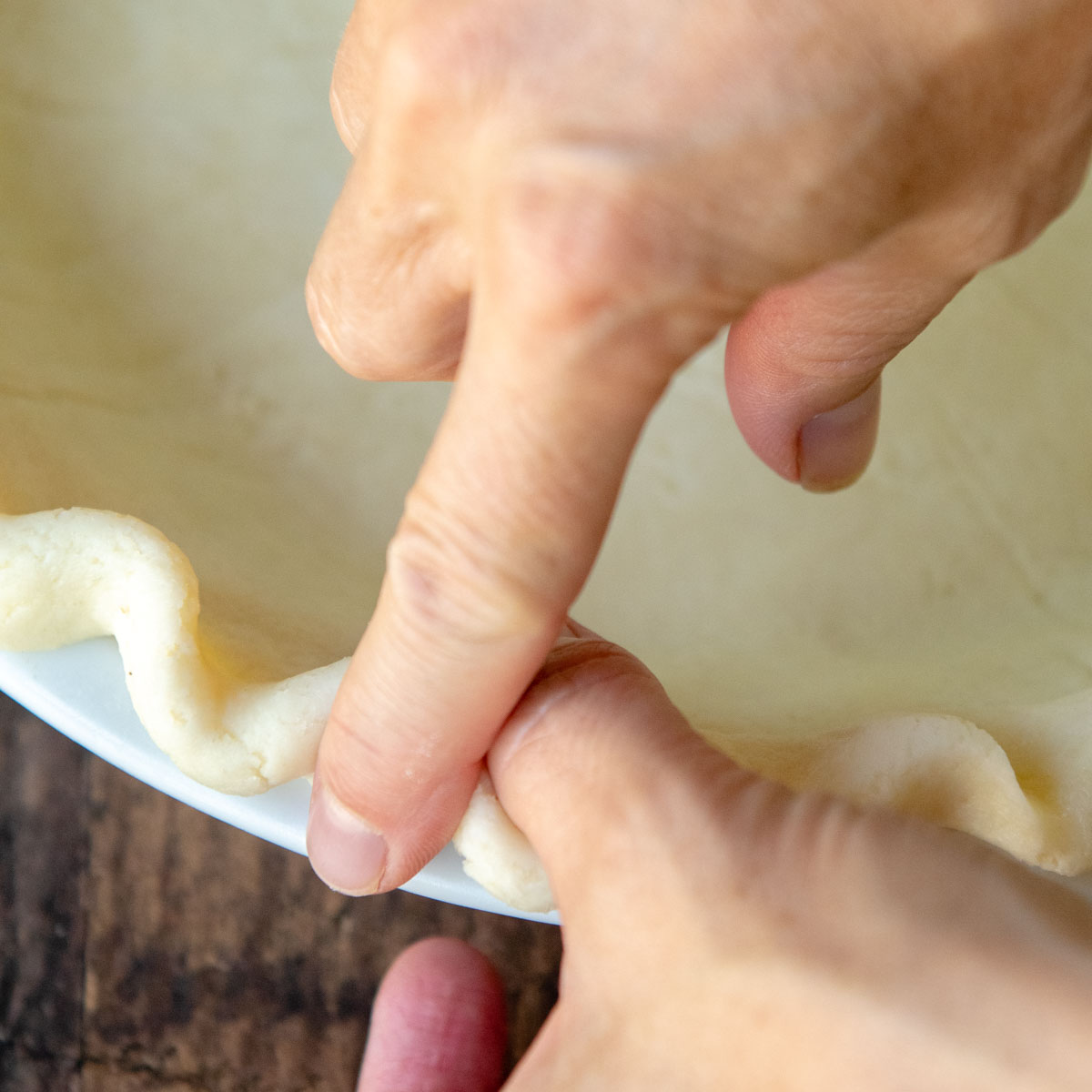
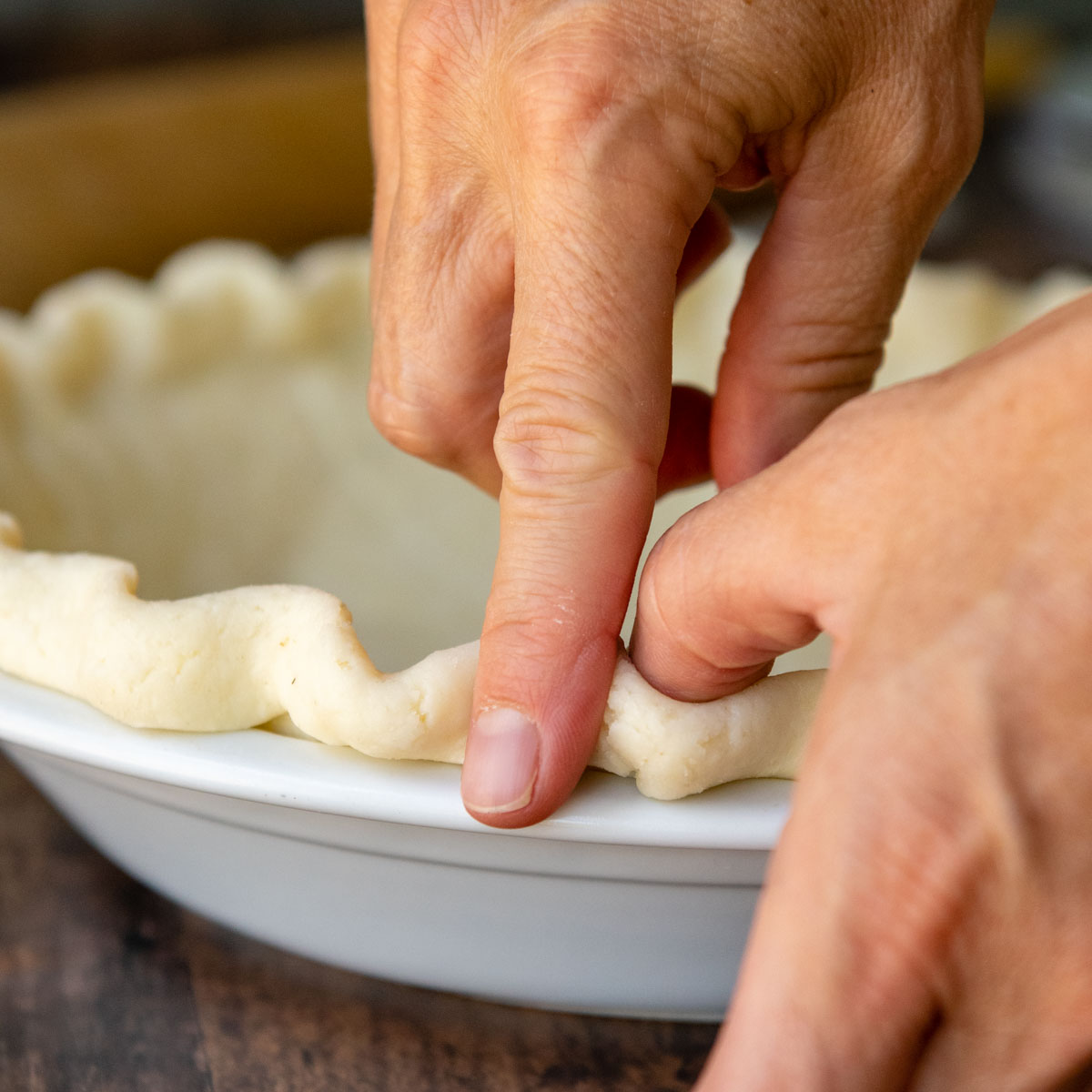
- Use two fingers to flute into a decorative. For a shiny crust brush the exposed edges with an egg wash before adding filling.
Baking Methods
Once the dough is rolled out and shaped in your pie pan, move the dish to the freezer for 15 minutes or up to 1 hour. When the dough is chilled and firm, add the pie filling and bake according to the recipe.
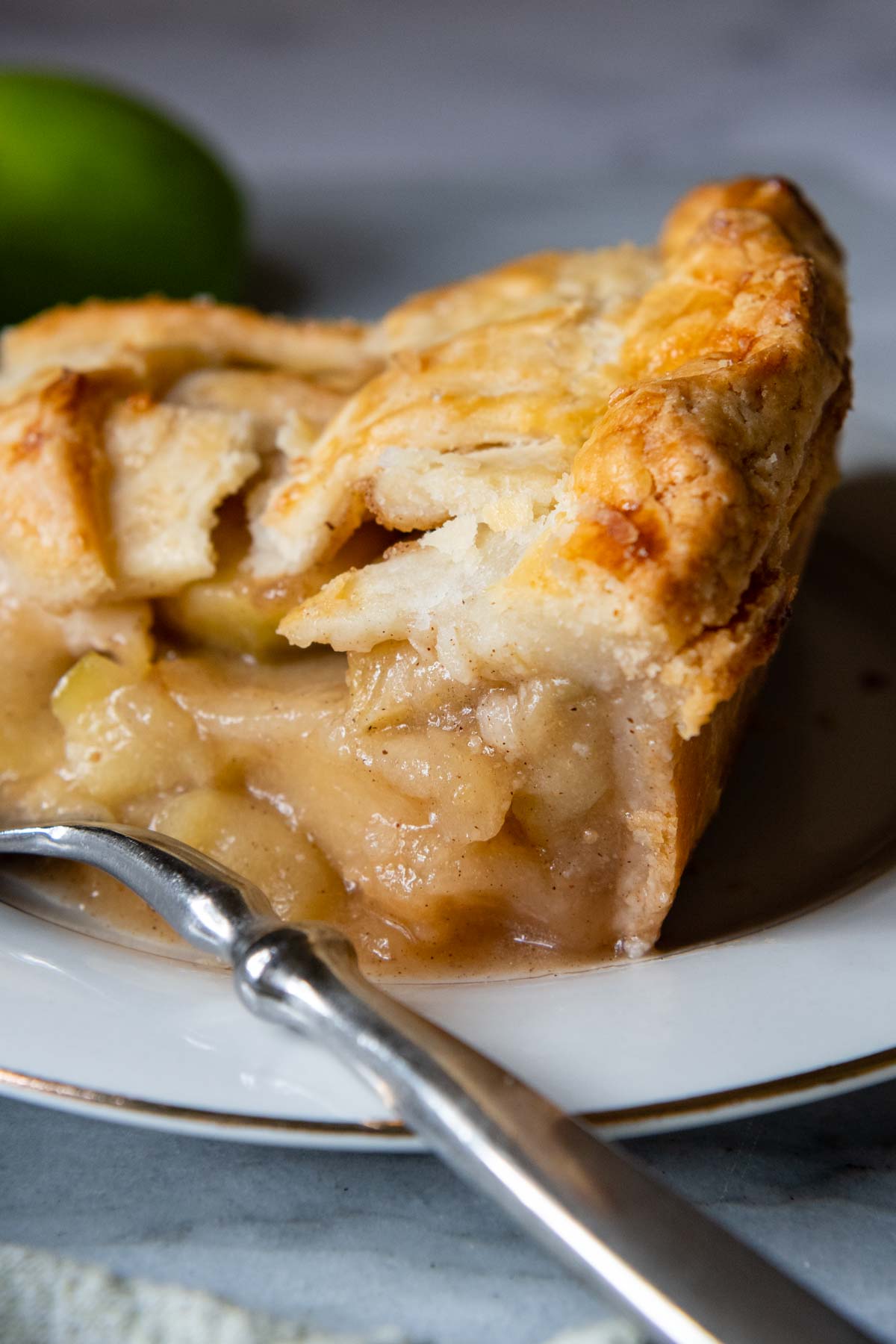
- Double or Lattice Crust – This recipe yields enough for single crust pies, so you would have to double the ingredients and divide into two discs to refrigerate. For a lattice top, follow the tutorial on this homemade gluten-free apple pie recipe. For a double crust, invert the top crust over the filling and trim edges, if necessary. Seal the top and bottom edges together, tucking under, and then use your finger and thumb to make a decorative edge.
- Partially Baked Crust – Some recipes call for a partially baked crust before filling. Preheat the oven to 375ºF. Place a pie weight on the bottom of a chilled crust or line the bottom with a piece of parchment paper and top with dried beans. Bake on the middle rack for 15 minutes, rotating halfway through.
- Blind Baked Crust – Before filling, preheat the oven to 375ºF. Place a pie weight on the bottom of a chilled crust or line the bottom with a piece of parchment paper and top with dried beans. Bake on the middle rack for 25 minutes, rotating halfway through, and protecting the edges. For a browner bottom crust, remove the pie weight for the last 10 minutes baking.
Note About GF Flours
I’ve tried this recipe with three different store-bought gluten-free flour blends. Below are my pie crust making and tasting notes using three popular flours, but also check out the comments below to see what else has worked for readers.
- Recommended: Cup 4 Cup Gluten Free Flour – I’m a huge fan of this flour for gf pie crusts and all baking. It rolls out well and yields a flaky, tender texture. Plus, the taste is so much like regular flour, no one suspects it’s gluten free.
- Bob’s Red Mill Gluten-Free 1 to 1 Baking Flour – This flour was very easy to work with and rolled out well. However, the texture was a bit more chewy, not as flaky, and slightly more dense than Cup4Cup. The flavor had an off-putting aftertaste.
- King Arthur Measure-for-Measure Gluten-Free Flour – I had the hardest time with this one. The dough was dry so I had to add more liquid to get it to bind together. The baked texture was chewy and dense, probably from the starch to liquid ratio being off.
Save this recipe to your pinterest board!
Let’s be friends on Pinterest! I’m always sharing great recipes!
Did you make this recipe? I love hearing from you! Leave a star rating and comment below the recipe card. It helps others when searching for recipes and I appreciate feedback from our community. You will always hear back from me! -Melissa

Best Gluten-Free Pie Crust (Flaky, Tender, Easy To Roll)

Ingredients
- 8 tablespoon (113 g) unsalted butter, cut into small cubes and frozen for 10 minutes
- 2 ½ tablespoons ice water
- 1 ½ tablespoons sour cream
- 1 ½ teaspoon apple cider vinegar
- ¾ PLUS ⅔ cup (194 g) gluten-free flour, I highly recommend Cup4Cup gluten-free flour
- 1 ½ teaspoon granulated sugar
- ½ teaspoon salt
Equipment
Instructions
Food Processor (OR Stand Mixer with Paddle Attachment)
- Place the cubed butter in the freezer for 10 minutes. Mix together the cold water, sour cream, and vinegar in a small bowl. Place the liquids bowl in the refrigerator until you are ready to use.8 tablespoon unsalted butter, 2 ½ tablespoons ice water, 1 ½ tablespoons sour cream, 1 ½ teaspoon apple cider vinegar
- Pulse or mix on low speed the flour, sugar, and salt together until mixed.¾ PLUS ⅔ cup gluten-free flour, 1 ½ teaspoon granulated sugar, ½ teaspoon salt
- Process the butter into the flour mixture until well incorporated, evenly dispersed, and without large chunks.
- Add the liquids to the food processor or stand mixer and combine until the flour becomes moistened and small dough clumps appear. Tip: To check if you have enough liquid, clump and flatten a small bit of dough. If it doesn’t stick together, is crumbly, or breaks apart easily, add a small dash of ice water. Pulse a few times and recheck. The dough should come together easily.
- Turn the dough onto a large sheet of plastic wrap and flatten into a thick 1" disk. Wrap tightly and refrigerate for at least 1 hour or freeze for 30 minutes. Before rolling out, let sit on counter 5 minutes so it is easier to work with.
By Hand Method:
- Mix together the cold water, sour cream, and vinegar in a small bowl and place in the fridge until ready to use. Freeze the butter for 10 minutes until very cold.
- In a large bowl whisk together the gluten-free flour, sugar and salt.
- Use a pastry blender, fork, or fingers to cut and knead butter into the dough until it is well incorporated throughout.
- Add half the liquids and knead with fingers or a fork. Pour in the remaining liquids. Knead until the dough starts to come together and the liquids are well mixed with flour.
- Turn the dough onto a large sheet of plastic wrap and flatten into a thick 1" disk. Wrap tightly and refrigerate for at least 1 hour or freeze for 30 minutes. Before rolling out, let sit on counter 5 minutes so it is easier to work with.
How To Roll Out Crust:
- I find rolling in a silicone pie bag works best because the dough doesn’t stick, no additional flour is needed, and it’s easy to shape. If you don’t have one, use two large pieces of parchment paper. Plastic wrap may be used, but it has a tendency to stick to the dough more.
- Place the unwrapped dough disc in middle. Use a rolling pin to press and spread the dough from the middle out. Roll into a circle slightly larger than your pie dish. (See tips in recipe notes for rolling out crust)
- Remove the top paper, and invert into the pie plate. Remove the second paper. Tip: If the dough has warmed while rolling, it may be trickier to take the paper off. If this happens, leave the paper on, and stick the whole thing in the fridge for 5 minutes. Once the crust is chilled again it's much easier to pull off the paper. If the dough is too cold and the crust breaks, let it sit on the counter for a minute first before trying again.
- Trim off excess dough around the edges. If some edges need more dough to fold under, press on some of the clipped off pie dough. Tuck the overhang dough under to meet edge of pie dish. Using both forefingers, flute edges by pressing one down and one up next to each other.
- Wrap loosely with plastic wrap and place in freezer 15 minutes, or up to an hour, until chilled. Fill and bake according to recipe directions, or see recipe notes for a partially or fully baked crust.
Notes
Best tips For Rolling Out Crust
- If the dough is too cold it will be hard to roll and break apart. Let it sit on the counter for 5 minutes and try again.
- When you are rolling, press down in the middle and push the dough out from center. This will ensure the middle not being too thick, while edges are too thin.
- Rotate the pie dough as you are rolling so it forms a perfect circle. If one side is bigger than the other, cut some dough off and add it to the smaller side of the circle.
- While rolling, the dough may warm, which causes the parchment paper to stick. If this happens, place rolled pie crust, with parchment still on, in the refrigerator for 5 minutes so butter re-solidifies and releases from the paper.
- Once the dough is turned over in the pie dish use kitchen scissors to trim off excess dough around edges. If some edges need more dough to fold under, press on some of the clipped-off pie dough.
- Use two fingers to flute into a decorative. For a shiny crust brush the exposed edges with an egg wash before adding filling.
Dairy-Free
For a gluten-free dairy-free or vegan pie dough, plant-based butter sticks or shortening may be substituted, but will affect the taste and flakiness. I also recommend cutting the salt by half if using plant-based butter. Replace the sour cream with a dairy-free substitute.Storing / Freezing
Wrapped dough may be refrigerated up to 1 day. Longer than that, place the wrapped disc in a freezer ziplock bag to freeze for 1 month. Thaw in refrigerator overnight. Recipe adapted from America’s Test Kitchen: The How Can It Be Gluten Free Cookbook.This post contains affiliate links. My opinions are always my own. If you purchase a product through an affiliate link, I make a small commission – at no cost to you. Read full disclosure policy here.


WOOOOW this recipe is to die for. I haven’t had pie in many, many years because of my gluten intolerance. We doubled the recipe so we could make an apple pie with lattice top. I prepared it and my husband filled/cooked it. He egg-washed and precooked the bottom crust, filled it with the apple filling, and topped it with the lattice and egg-washed that as well. Maaaaaaan did it turn out amazing. Not too sweet, not too salty, nice and flaky— absolutely delicious. Tasted like a “real” (non gluten-free) pie from a bakery. Will be saving this one FOR SURE!
Hell yeah, Cat! I’m so happy you are just as big as a fan of this pie crust as well! Thank you so much for taking a moment to write. It’s appreciated!
Best,
Melissa
Love this pie crust! I tried several other gluten-free pie crusts this is the only one that rolled out so easily and didn’t fall apart. My search for a good gluten-free pie crust recipe has ended!
This makes me so happy! I’m glad you feel the exact same way I do!
Best,
Melissa
I have tried a lot of GF pie crust recipes..this is by far the best one ever. Easy and a wonderful flavor.
That is music to my ears! I’m so happy this recipe is such a success for you!
Best,
Melissa
I loved this recipe
So glad you enjoyed it!
Best,
Melissa
would never have believed it! this is an amazing pie crust.
That makes me so happy. Thanks Tricia!
Best,
Melissa
I was skeptical while making this and I found the dough very difficult to roll out. It was still so thick when I put it in the pie pan I was convinced it would be awful.
Wrong! The baked pie crust was one of the best I’ve ever made and I’m serious about pastry. Thanks for recusing me from a pieless future.
Hi Joanne,
I’m so glad it worked out for you! My sad pieless future was the reason I was so excited about this recipe. I’m so glad it can do the same for others!
Best,
Melissa
I posted a question and, (thank you again Melissa for emailing) and went ahead with directions as posted about adding xanthan gum to KA Measure-to-Measure that already has it in their mix). My Thanksgiving Pumpkin Pie was perfect and gorgeous. This is my now go-to crust FOREVER! The combination of ease of preparing and rolling out along with the texture made for a perfect pie-making experience. Wish I would have made double to freeze half…..that will be my new plan
Hi Maggie,
So glad it worked out for you. I haven’t tried the KA Measue-to-Measure, but obviously others were frustrated about how much xanthan to add so that was their answer. I can’t wait to give it a try! So happy your Thanksgiving pie didn’t disappoint!
Best,
Melissa
I have my dough chilling in the refrigerator, but am concerned by the King Arthur flour substitution I made. Your directions and link to King Arthur is for their Measure – Measure which already has xanththin gum. You say to add an additional 1/2 teaspoon to the flour if using KA (Measure-Measure). Is this correct?
Hi Maggie,
King Arthur might have changed their mix, but the gluten free flour never had xanthan in it. If you have it on hand, just add it. It won’t hurt the pie crust, but will harm it if there isn’t enough in there. It won’t hold together and be harder to work with. Let me know if you have questions!
Best,
Melissa
how is 3/4 cup plus 2/3 cup = 61/2 ozs of flour
Hi Peggy,
Some people like to weigh flour for more accuracy instead of using measuring cups. If the flour is weighed it would be 6 1/2 ounces. In measuring cups it’s 3/4 cup and 2/3 cup combined.
Best,
Melissa
This is the best GF pie crust I’ve ever made. I make it for my mother on special occasions and such a treat for her. I would love to know why though every time I have to clean my oven afterwards. It’s not the filling that bubbles out it’s the pie crust itself that secretes a clear liquid that covers the bottom of my oven, soooo strange. I make the recipe exactly to the directions and never fails it happens every time. Is it water or fat or what I can’t figure out. Has to be something to do with the GF flour chemistry and the butter it does not happen with wheat flour. Does this happen to anyone else?
Hi Michelle!
Thank you so much for taking the time to write. I am so intrigued by this! No, that has never happened to me, and I haven’t received any other comments about it. What kind of GF flour are you using? And just regular butter, not dairy free? And it happens with different types of fillings?
Best,
Melissa
I used cup4cup flour and unsalted butter. Made a blueberry pie awhile ago and an elderberry pie today. So frustrating so besides it being a lot of work just to make the pie I have to clean my oven afterwards 👩🍳😥
Hi Michelle,
I am still very perplexed by this, and I completely agree, I wouldn’t want to clean my oven every time I bake a pie! Since they were both fruit pies, I’m not sure it had something to do with this. Also, were the pie shells very cold before filling and baking? They should be refrigerated first to rechill the butter after working the dough, for best results.
To prevent the oven cleaning you can bake it with a foil lined baking sheet underneath. I do this anytime I bake a fruit pie because they often boil over.
Best,
Melissa
I haven’t enjoyed a decent pie since I was diagnosed with Celiac. I only tried once and as so frustrated with a GF pie crust I threw it out. My daughter has tried too but the texture was tough. This recipe worked beautifully and made a delicious, flaky top crust. I didn’t see that that this made only one crust until it was too late. I had another recipe I wanted to try so used that for the bottom. The bottom crust was a little too dense for my taste but it did the trick. I did use Bob’s Red Mill 1 to 1 Baking flour. Next time I’m going to make the double batch.
I haven’t looked but do you have a good Streusel recipe?
Hi Christine,
I am so appreciative of you taking the time to write because I know exactly how you feel! I loved baking pies before becoming gluten free and it was agonizing to not be able to bake like I used to. I was so excited to share this recipe and hopefully let others enjoy baking pies again! I have a grape pie recipe with a streusel topping, but it doesn’t have oats in it. You can find it here https://www.mamagourmand.com/concord-grape-pie/
Best,
Melissa
I am not an experienced baker. This recipe has always turned out perfectly. I even add cheeses and herbs.
That is so great, Sherri! I don’t care how experienced you are with baking, making a pie always feels like a sense of accomplishment, doesn’t it?
Best,
Melissa
Is there a dairy free option?
Hi Jocelyn, I haven’t tested it is dairy free, but I’m surmising you can replace the butter with all vegetable shortening without an issue. The sour cream in the recipe helps make it tender, so that could be replaced with a soy product such as sour cream, yogurt, or cream cheese. If you give this a try, I would love to know how it works out for you!
Best,
Melissa
Just curious why you didn’t use or recommend the ATK flour blend for this recipe?
Hi Patty,
Great question! I bake too much too deal with mixing together the flour. Plus, it gets expensive buying all those different types of flours. Cup 4 Cup is a great product right out of the bag, so I just go with that. When I first became gluten free, that’s what I used to do, but with all the flours on the market now, it doesn’t seem to be a necessity anymore.
Best,
Melissa
thank you Melissa!!!! I’ve made this pie crust time and time again. It never fails to turn out perfect. I’ve shared it many times with my gluten free friends. Excellent!!! 🙂
Thank you so much Veronique (beautiful name!) I’m so happy you love it as much as I do and I truly appreciate you sharing it with friends 🙂
Best,
Melissa
This recipe was amazing!!!! My daughter and husband have gluten allergies and I always make them separate pies because I don’t like the taste of the gf crusts, and for me the joy of the pie IS all about the crust. I used this recipe to make a fruit tart in a 10 inch cast iron pan with half frozen and half fresh berries. I had Bob’s Red Mill all purpose flour on hand and used that. It turned out marvelously!! You were right, I can’t taste the difference. It’s crispy and delish! I am so thrilled to have found your recipe!!! THANK YOU!
You are so welcome and thank you for taking the time to write. My mom does the same thing for me when we have family gatherings. She’s not GF, but always makes a GF version pie for me. However, since I passed on this recipe she just makes all the pies GF because she can’t tell the difference at all. I completely understand what a celebration that should be!
Best,
Melissa
I just want to say I LOVE this recipe!!! I have made coconut cream pies with it and as I text this message I’m making my Christmas meat pie. I love all your tips! I actual can get 2 crust out of this recipe however saying that I do find it a bit thin. So I think I may double the recipe next time to see which way I like it best. Thabk you so much for sharing this! So glad I found it!
Cheers
Sheri
Hi Sheri, Thank you so much for letting me know. That makes me so happy! You are very welcome and I am so happy to share gluten free recipes that people can be excited about 🤗
This is tasty but didn’t work for my purpose. I was wanting this to be my crust for chicken pot pie. Followed it to the letter and it would not drape over my casserole dish. Even though it was a smaller one. I really, really wanted this to work for me. The whole thing fell into my filling but I would try it for a pie.
Hi Jillian, Thanks for writing. You were using it for a top crust for the chicken pot pie? If so, I’m not exactly sure what happened because it should have worked fine. This is just a guess, but if pie crust is room temp or warm at all it, it will shrink a lot when you bake it. This happens a lot in a blind bake, without filling, because there is nothing to hold it in place. If it was draped over the top, it would have a tendency to have the same problem.
To fix this, make sure your filling ingredients aren’t warm before putting the crust on. Also chill or quickly freeze for the pot pie before baking so the crust is very cold. This will help tremendously with shrinking.
Another thing you can try is make a double recipe of pie crust. Place one as a bottom crust, one on top, and pinch them together to hold in place. Hope this helps!
Thank you, thank you! We learned this year that my husband has Celiac, and his favorite part of Thanksgiving is the pie! so I’ve been doing lots of experimenting the last couple months. I found your pie crust accidentally just this week, while looking for the ingredients of a different one, and I’m so glad I did! Not only did it taste and feel amazing, but it also was extremely easy to make. This recipe made us and our Thanksgiving pies so happy!
Allison, that is such a lifestyle adjustment. I’m so happy he was still able to enjoy his favorite part of Thanksgiving. I actually think this pie crust is easier to roll out than traditional pie crust. It’s very forgivable. Thank you so much for taking the time to let me know. 🙂
This recipe is amazing!! I followed the directions 100% as written and I ended up with this incredible,flakey and buttery crust! I used the Bob’s Red Mill 1:1 baking and it was perfect.
I did learn that the crust flakes off super easily so just be careful when taking it out of the oven.
But seriously, 5 ☆☆☆☆☆!
No one would have guessed it was gf.
Thank you for the recipe and taking the time to give step-by-step pictures 🙂
Eliana, I love reading stuff like this because I know EXACTLY HOW YOU FEEL. So many pie crusts were okay stand ins, but this is the first one that I ever felt tasted just a good as my mom’s pie crust growing up. You are so welcome, and I’m so happy to help! – Melissa
Thank you! Thank you! FINALLY a gluten free pie crust that handles and tastes like the a good old fashion pie crust. For the first time in YEARS my Thanksgiving pies were absolutely perfect! I used Cup4Cup for the first time and will definitely have to try it in other things and I weighed it out instead of measuring which worked great. I did have to make 1.5 batches to fit a deep dish pan without it rolling too thin but it was PERFECT!
Hi Danielle, You are so welcome! Nothing is worst than disappointing pie crust, especially on the most important pie day of the year! Thank you for letting me know. This truly makes my day 🙂
Hello and Happy Thanksgiving!
I am excited to make this. Just one question. I’m confused about the flour measurement. 3/4 and 2/3 cup (6 1/2 ounces) gluten free flour. I am using Cup 4 Cup.
Thank you in advance.
Hi Rachel, Happy Thanksgiving to you as well! It is 3/4 cup PLUS 2/3 cup together, which together weighs 6 1/2 ounces. Hope that helps and please let me know how it turns out!
Hi! My crust is currently chilling in the fridge and I can’t wait to try it! Before I found out I had celiac, I always made the most delicious crust with a splash of vodka in it to make it light and flakey. Is there a place in this recipe for that if it was cold or would it adversely react with the apple cider vinager?? Thanks!!
Hi Erica, I’ve substituted vodka before and it turns out great. Either do half vodka, half vinegar, or just all vodka. Works great! Enjoy!
Thank you! I’ll try that next time. By the way, everyone loved the crust on Thanksgiving. No one could tell it was gluten free!
That’s great! Thank you, Erica.
I’m a baker and have been trying various recipes for a GF crust and this is by far the best. Not one person who has tried it has noticed that it is GF and my celiac family members are in heaven! Thanks.
Hi Liz, I whole heartedly agree with you. Making pie crust was the most frustrating thing when I started eating gluten free. My mom makes this pie crust all the time now and she’s not even gluten free. She has the same experience – it doesn’t taste gluten free! I appreciate you taking the time to let me know you enjoyed it.
Hi – I’m wondering if by any chance you’ve tried Better Batter flour for this recipe? I am curious how it turned out. I have Better Batter on hand but will pick up one of the others if they are better. I’m a picky pie crust maker! Thanks for the recipe!!
Hi Renee, I haven’t tried Better Batter with this recipe in particular. However, I have tested out the flour before and personally I didn’t like it as much as Cup 4 Cup. I think it has more of that “gritty” taste and texture that gluten free flours can have. I think it’s fine to use in other baked goods, but since pie crust is primarily fat and flour, I wouldn’t use it for this. Hope that helps! – Melissa