


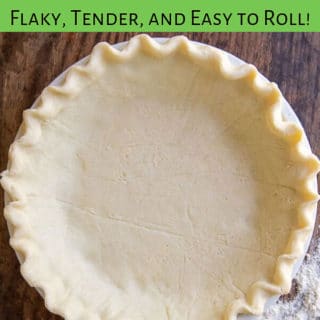
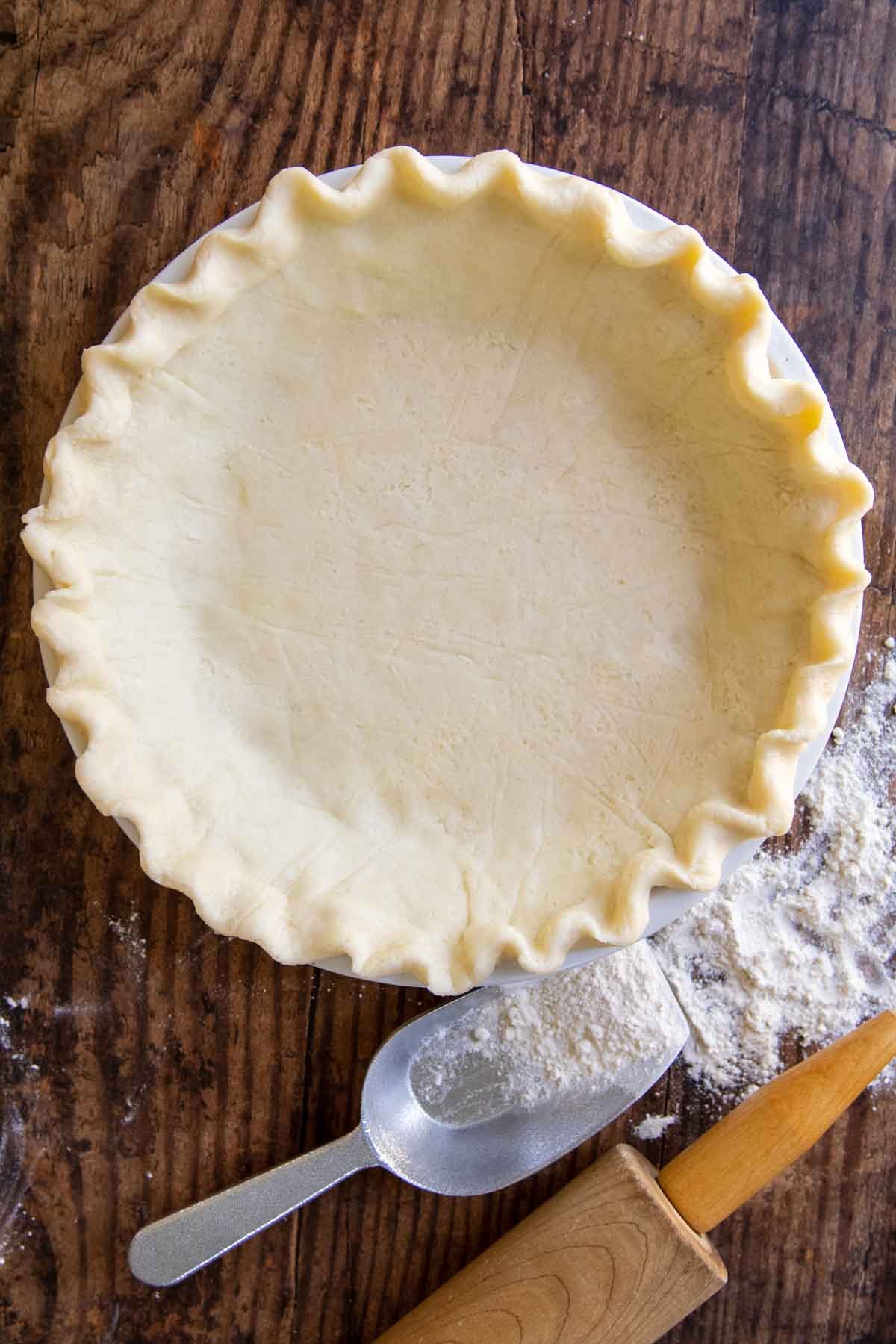
If you’re looking for a flaky, tender gluten-free pie dough (or pastry dough) that is fabulously easy to roll out, look no further. Not only is this the best tasting gluten-free pie crust, this detailed guide is also full of tips and tricks to help you make perfect GF crust at home. The secret? A tablespoon of sour cream! It tenderizes the dough to make it just as light as all butter pie crusts you grew up on.
Want to Save This Recipe?
Enter your email below & we'll send it straight to your inbox. Plus you’ll get affordable and easy gluten-free recipes delivered each week!
Legendary Gluten-Free Pie Crust Recipe – See Why!
I’ve always loved to bake, but the first time I tried making gluten-free pie dough I was in tears. What used to be so easy (pre-GF years), was now horribly frustrating with dismal results.
I had found other GF crust recipes to fill the void, such as press-in oatmeal pie crust that doesn’t require rolling or chilling. BUT, I was missing the perfect pie dough made gluten-free so I could finally enjoy the classics again, like an buttery, flaky crust to go with apple pie or a crisp bottom to pair with pumpkin filling.
Then a cookbook called America’s Test Kitchen: The How Can It Be Gluten Free Cookbook came along. Its revolutionary tips and tricks not only helped me enjoy beloved desserts again, but taught me to bake like a GF pro. It inspired this legendary soft, squishy homemade gluten-free bread recipe, and led me on a path of publishing my own gluten-free cookbook.
I learned making a gluten-free pie crust with sour cream and all butter was the essential ingredient I had been missing. It tenderizes the pastry dough by coating the starches, making a homemade GF pie crust that is light and flaky instead of dense and chewy.
Pie-making and I gladly reunited, and inspired me to create an entire gluten-free pie recipe collection I thought I would never enjoy again! I even use this recipe to make a from-scratch GF pot pie that has won over the toughest critics.
Not only is this crust the best tasting, but I also include many tips, hacks, the best flour to use, recommended equipment, how to make the dough using a food processor or by hand, and rolling tips. I’ll teach you have to make the best pastry dough with consistent results every time!
This is The Best GF Pie Crust Recipe!! My non-GF son-in-law raved about the crust & was shocked when I told him it was GF! I feel I have arrived in the baking world when I can make a beautiful pie! This. Is. It!! Thank you for a grand recipe!
—Julie
Free Guide! 5 easy tips for baking like a gluten-free pro!
Simple hacks for fail-proof gluten-free dishes every time!
Equipment To Make Your Life Easier
Technically it doesn’t require much to make a GF pastry crust. Basic requirements would be a bowl, fork, and rolling pin, so don’t the lack of “fancy” kitchen gadgets stand in your way!
However, if you have been frustrated with homemade pie crust recipes and are looking for consistent, easy results, some kitchen equipment can be a game changer! Below I explain why I recommend it for you to decide what is necessary, based on problems you may have experienced.
- Food Processor – If you find making homemade dough to be intimidating or complicated, using a food processor makes it extremely quick and easy. From start to finish, it takes about 10 minutes and the blade does a much better job working the butter into the dry ingredients than a fork or pastry blender would.
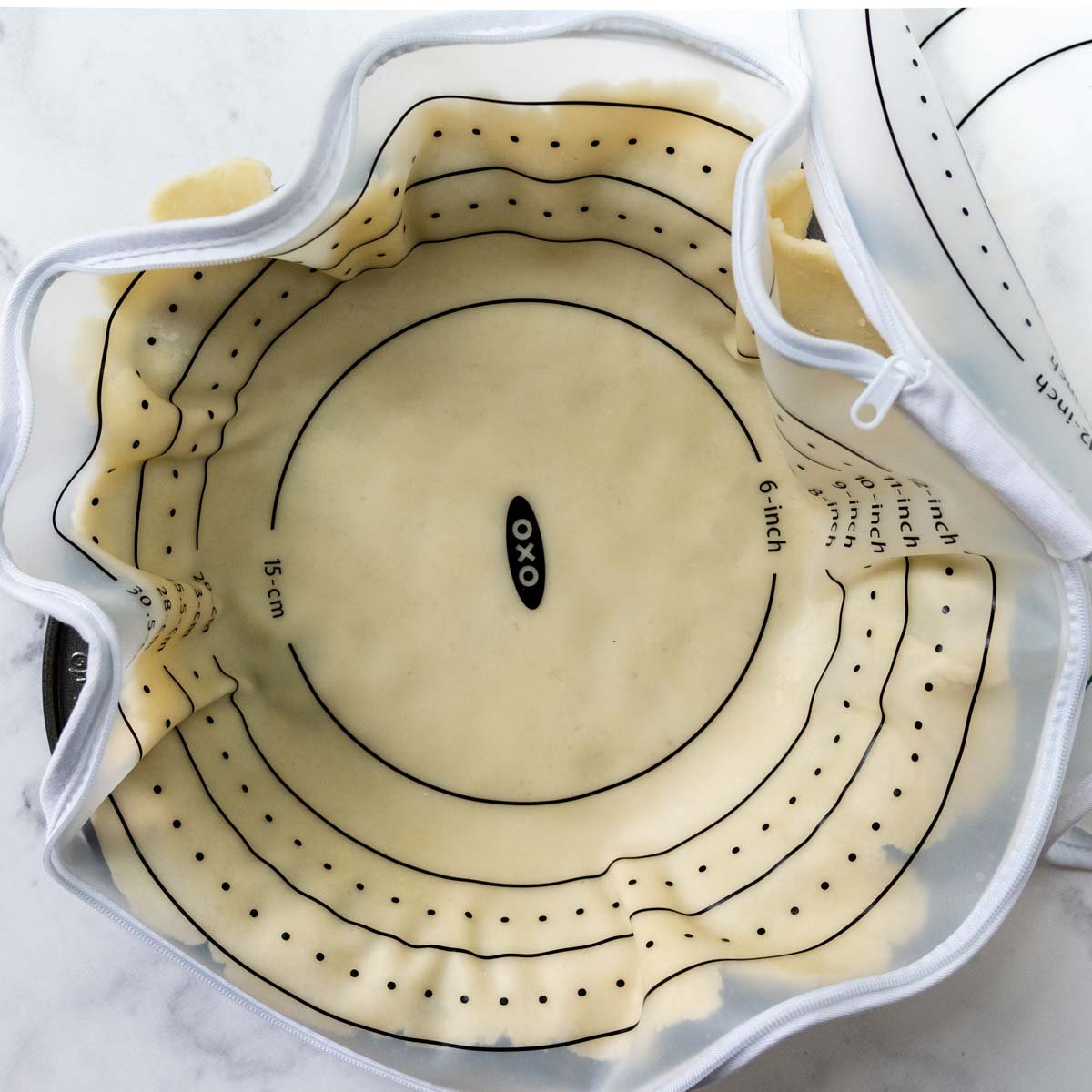
- Silicone Dough Bag – Struggle with rolling out dough? This affordable tool is a must! I used to roll out between two sheets of parchment or plastic, but it would consistently crease and the dough would get stuck in the ridges. (See rolling tips for how to fix this!) But, this bag makes it easy to roll, size correctly, and transfer to the pie plate.
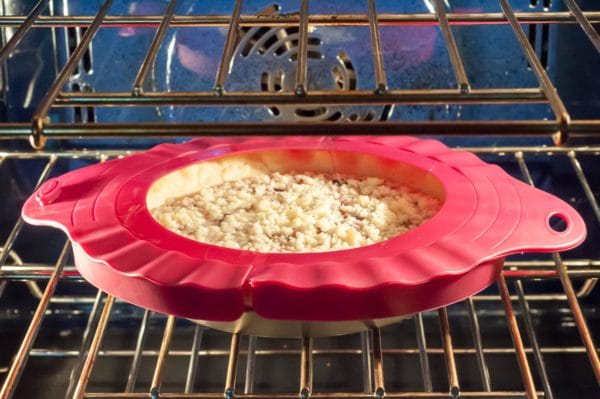
- Pie Shield – Since the edges are exposed during baking, they brown a lot faster than bottom crust. The cheap fix is using aluminum foil, but it hard to move the pie around to check on things. Using a pie shield really simplifies things.
- Metal Pie Pans – A common problem with GF pies is a soggy bottom crust. Fats have a harder time absorbing in GF starches, which often leads to a lack of flakiness or a soft bottom crust. Baking the crust in a metal pan conducts the heat better and faster, which guarantees the best results.
- Pie Weight – If you need to blind bake a pie (bake the crust without a filling first) or partially bake a pie (helpful for fillings with a lot of moisture), the crust should be weighted as it bakes. One way Place a piece of parchment on the bottom and fill with dried beans. However, I really like this pie weight because it doesn’t require parchment and it has holes so the heat can circulate to the bottom crust. Just put it on and bake.
Watch This Recipe
Let’s Make This Together!
(Below shows step-by-step photos and modified instructions. For the complete recipe, along with ingredient amounts, scroll down to the recipe card.)
Prep the ingredients
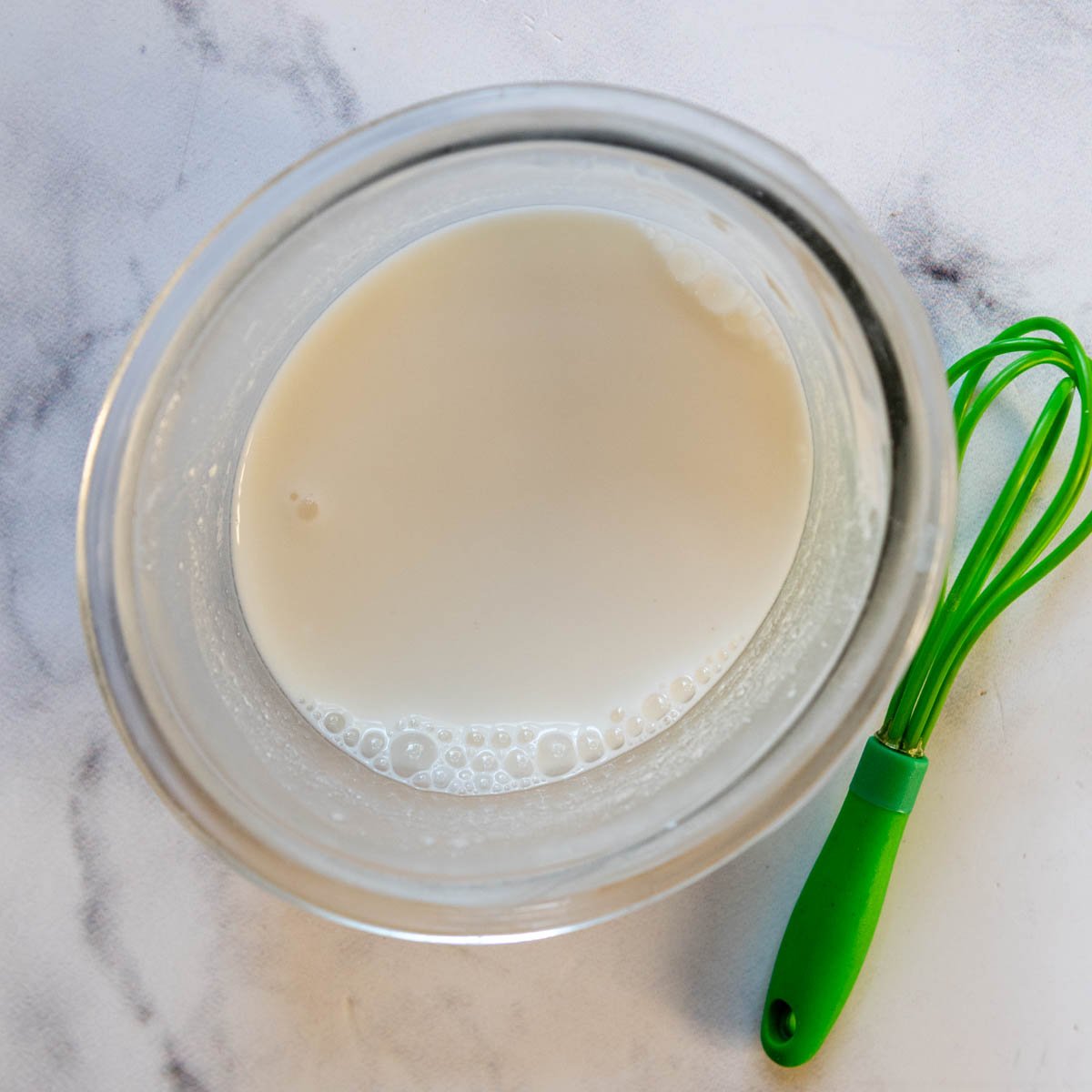
The key to a flaky, all-butter crust is very cold ingredients. Whisk together the cold water, sour cream, and vinegar in a small bowl and place them in the fridge until ready to use. Chop up the butter and freeze briefly, about 10 minutes.
Time to mix
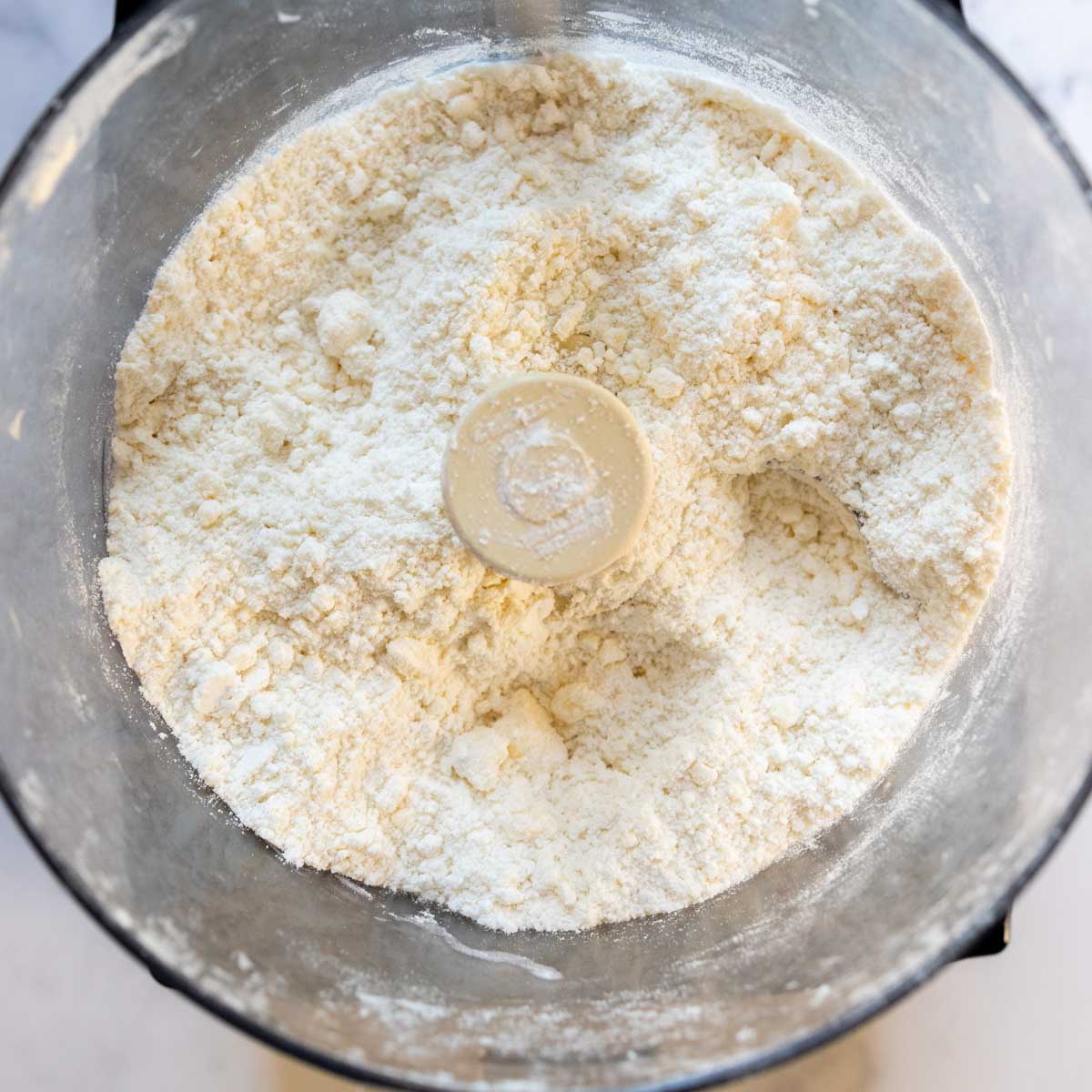
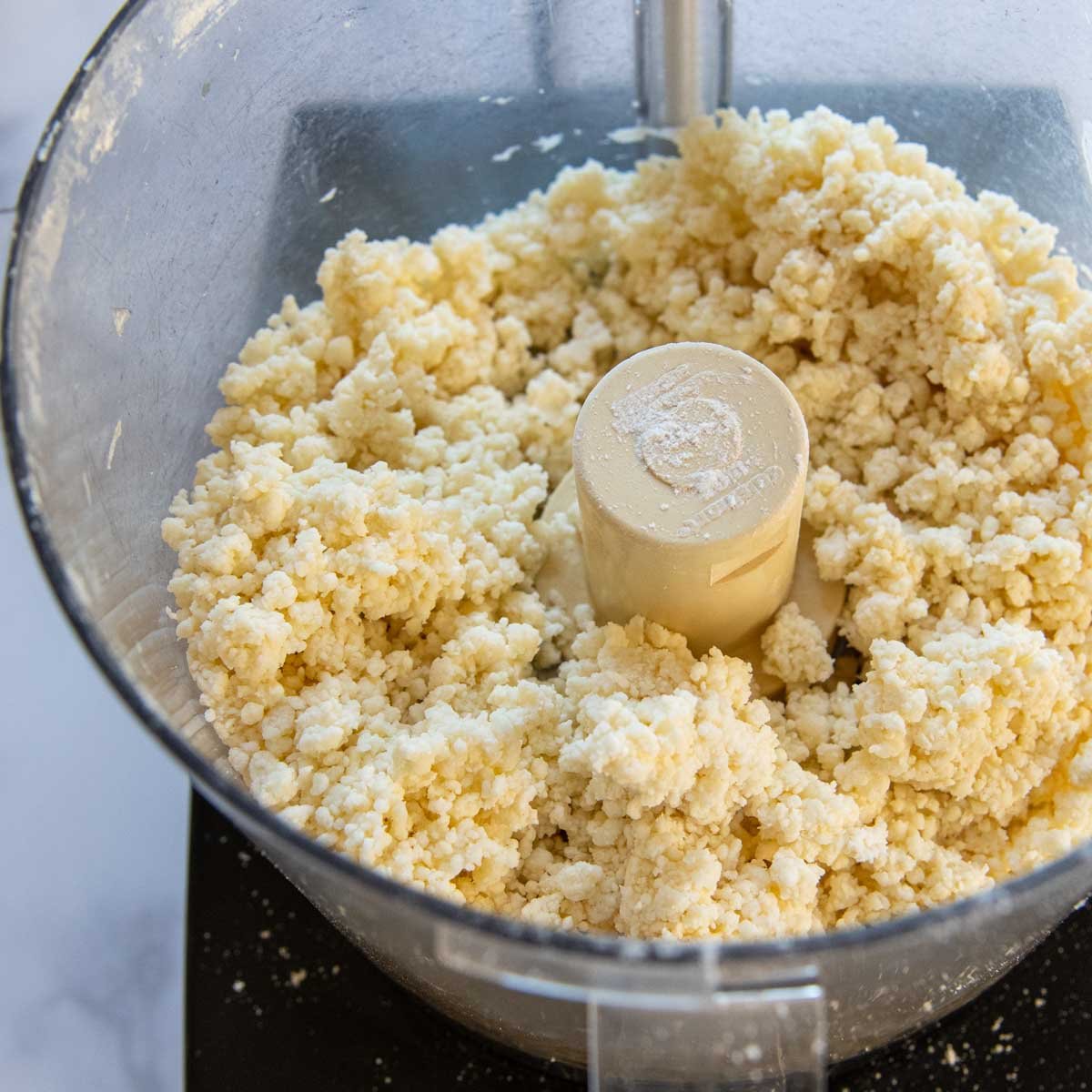
First put the dry ingredients in and mix together. Add the partially-frozen butter and work into the flour with a pastry blender or pulsing in a processor until it’s evenly incorporated and sandy looking.
Finish with wet ingredients
Finally, add the liquids and work in until the dough is moistened and small dough clumps appear.
Pro Tip: To check if you have enough liquid, clump and flatten a small bit of dough. If it doesn’t stick together, is crumbly, or breaks apart easily, add a small dash of ice water. Pulse a few times and recheck. If the dough is too wet or sticky, add a dash of flour. Pulse a few times and recheck.
Wrap and chill
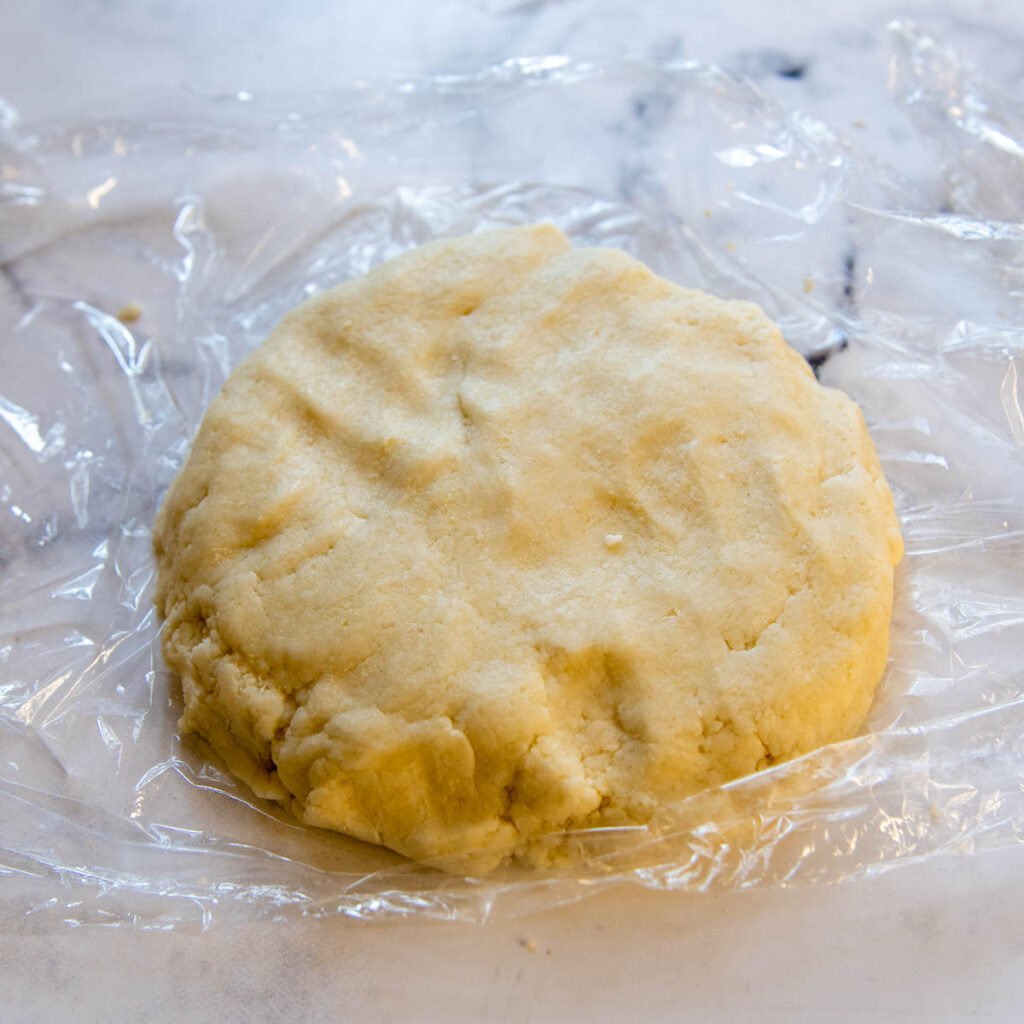
Now it’s time to chill and rest the dough before rolling. Lay a large piece of plastic wrap on the counter, transfer the dough onto it, and shape into a disc, about 1 inch thick. Wrap tightly and refrigerate for 1 hour or freeze for 30 minutes.
Pro Tip: Wrapped pie crust dough may be refrigerate for 1-2 days. If storing longer, place the wrapped disc in a freezer ziplock bag and freeze up to 1 month. Thaw in refrigerator overnight.
Easy Tips For Rolling With Success!
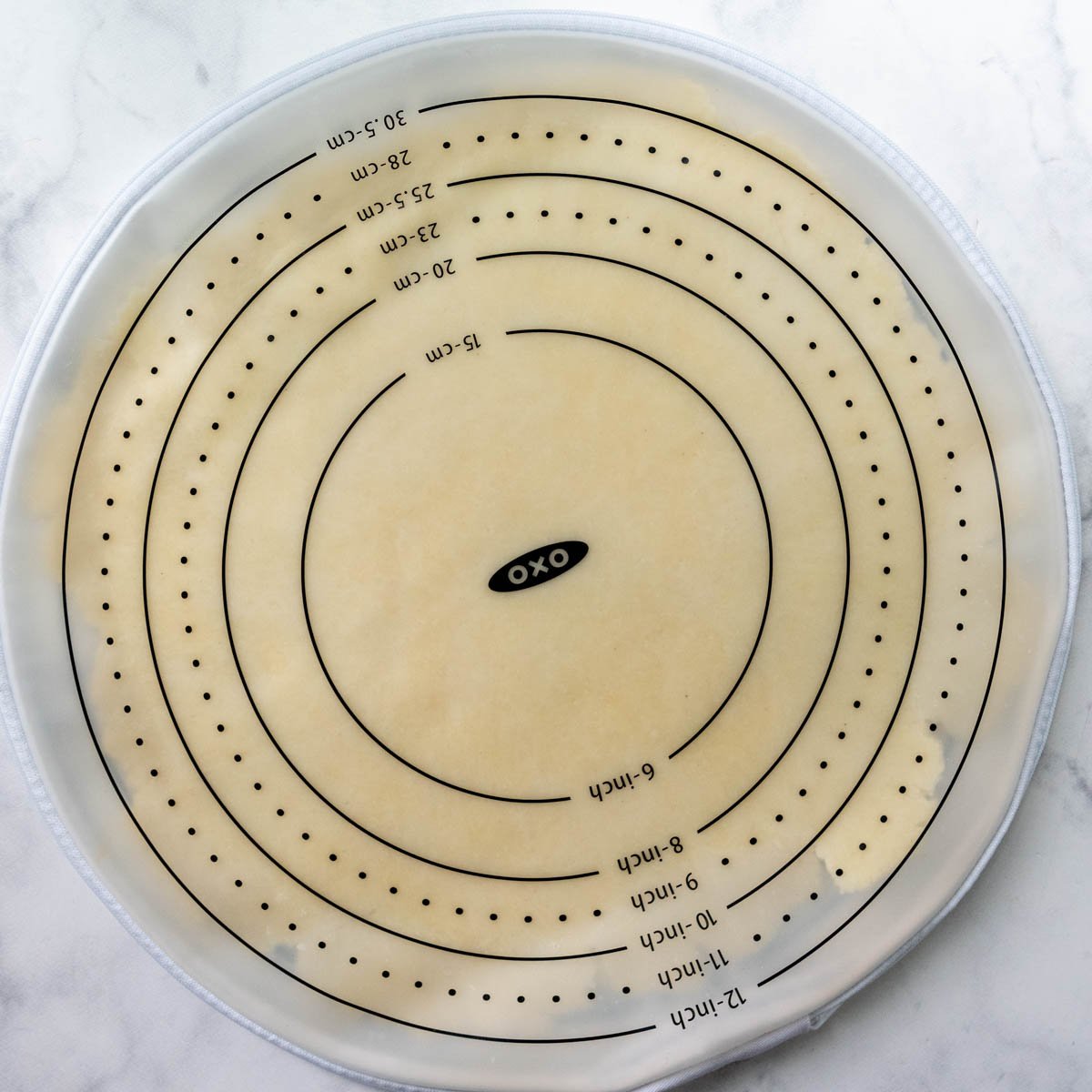
- I find rolling in a silicone pie bag works best because the dough doesn’t stick, no additional flour is needed, and it’s easy to shape. If you don’t have one, use two large pieces of parchment paper. Plastic wrap may be used, but it has a tendency to stick to the dough more.
- If the dough is too cold it will be hard to roll and break apart. Let it sit on the counter for 5 minutes and try again.
- When you are rolling, press down in the middle and push the dough out from center. This will ensure the middle not being too thick, while edges are too thin.
- Rotate the pie dough as you are rolling so it forms a perfect circle. If one side is bigger than the other, cut some dough off and add it to the smaller side of the circle.
- While rolling, the dough may warm, which causes the parchment paper to stick. If this happens, place rolled pie crust, with parchment still on, in the refrigerator for 5 minutes so butter re-solidifies and releases from the paper.
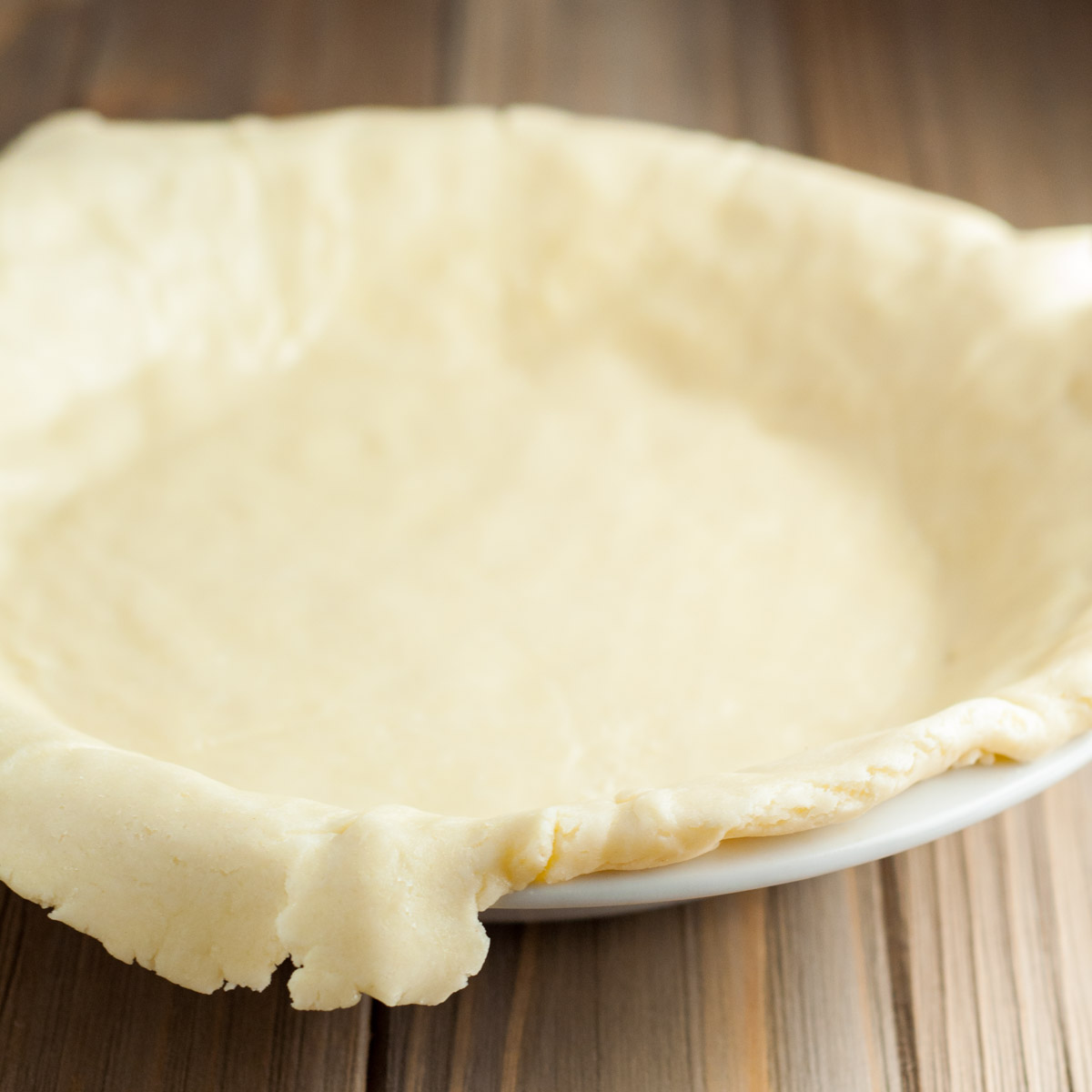
- Once the dough is turned over in the pie dish use kitchen scissors to trim off excess dough around edges. If some edges need more dough to fold under, press on some of the clipped-off pie dough.
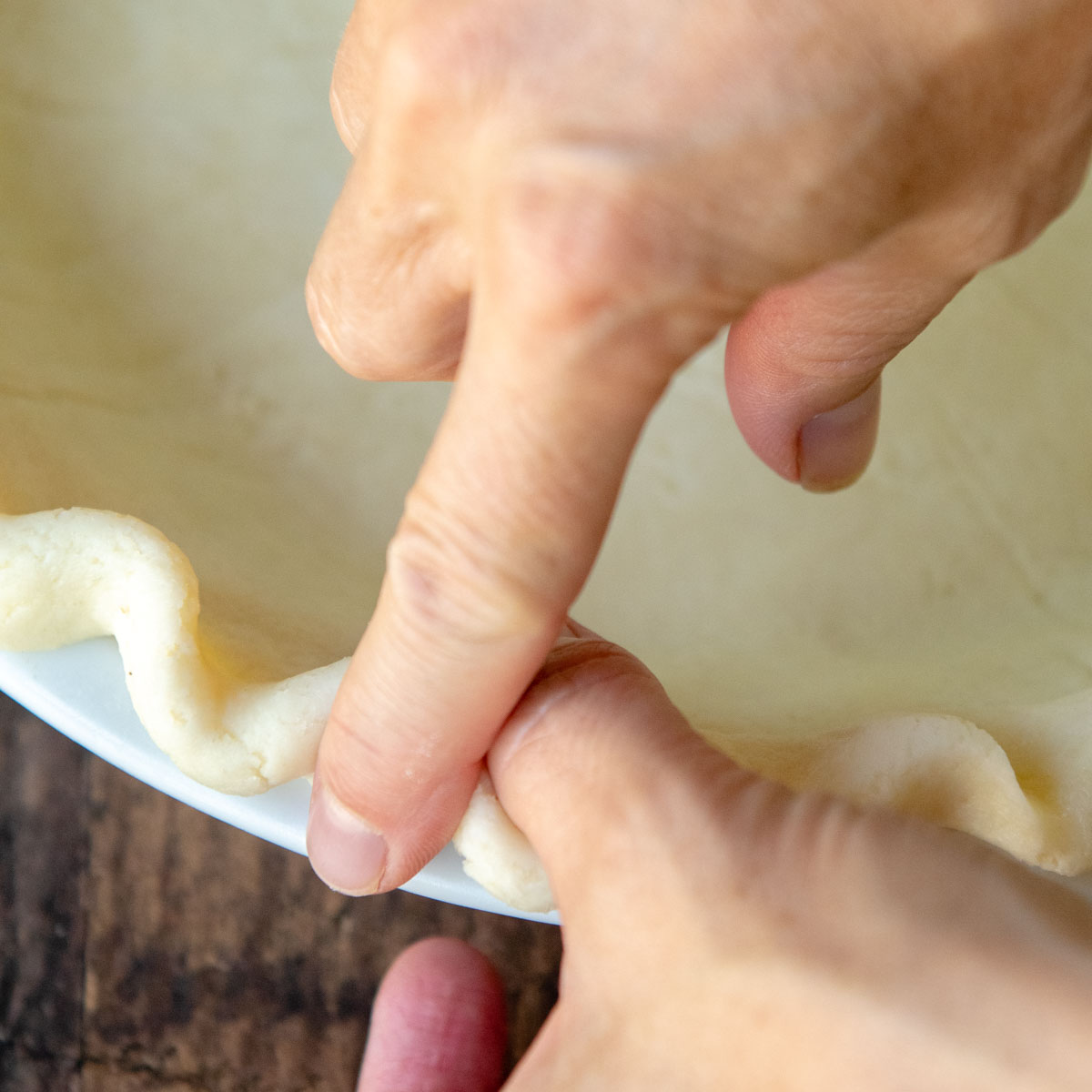
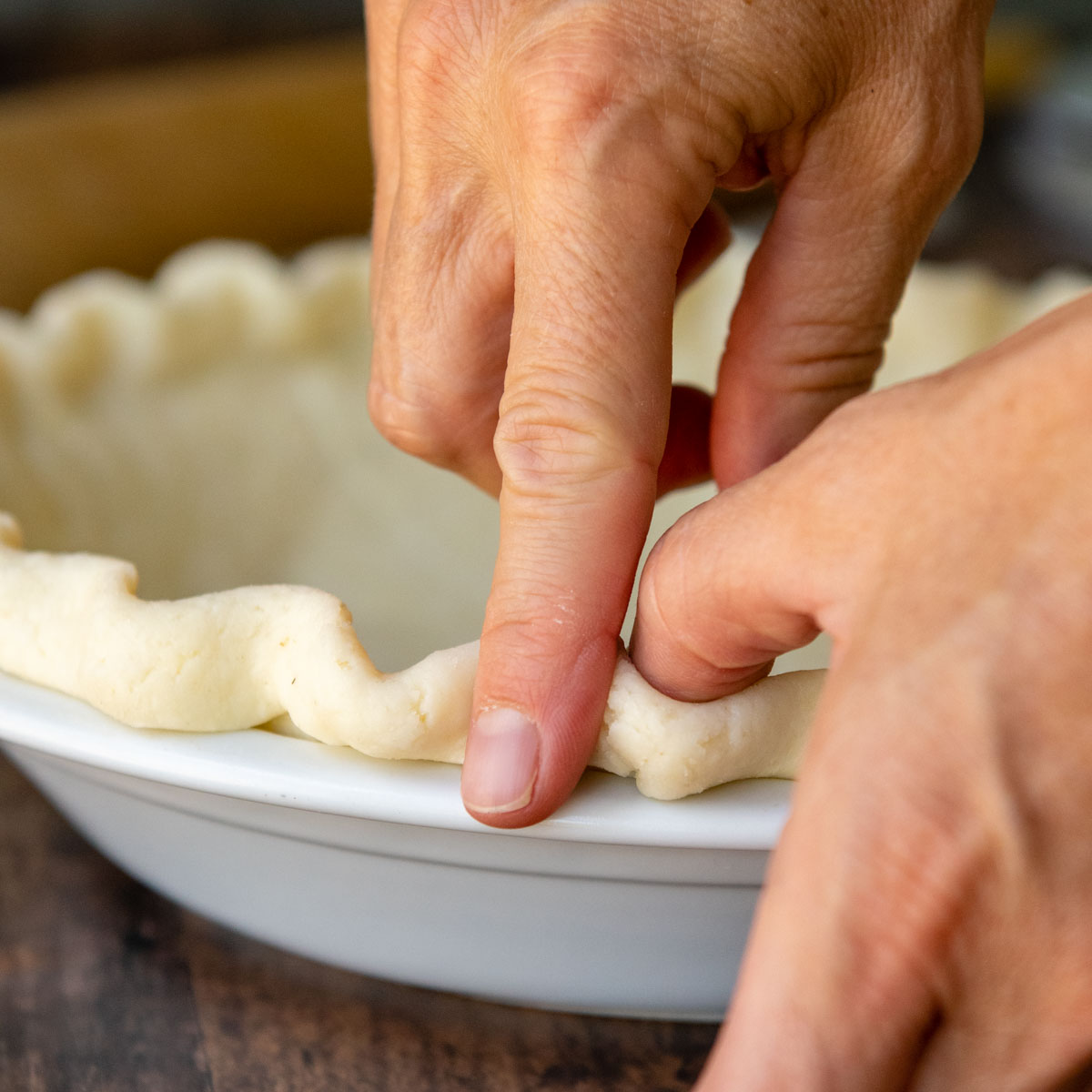
- Use two fingers to flute into a decorative. For a shiny crust brush the exposed edges with an egg wash before adding filling.
Baking Methods
Once the dough is rolled out and shaped in your pie pan, move the dish to the freezer for 15 minutes or up to 1 hour. When the dough is chilled and firm, add the pie filling and bake according to the recipe.
- Double or Lattice Crust – This recipe yields enough for single crust pies, so you would have to double the ingredients and divide into two discs to refrigerate. For a lattice top, follow the tutorial on this homemade gluten-free apple pie recipe. For a double crust, invert the top crust over the filling and trim edges, if necessary. Seal the top and bottom edges together, tucking under, and then use your finger and thumb to make a decorative edge.
- Partially Baked Crust – Some recipes call for a partially baked crust before filling. Preheat the oven to 375ºF. Place a pie weight on the bottom of a chilled crust or line the bottom with a piece of parchment paper and top with dried beans. Bake on the middle rack for 15 minutes, rotating halfway through.
- Blind Baked Crust – Before filling, preheat the oven to 375ºF. Place a pie weight on the bottom of a chilled crust or line the bottom with a piece of parchment paper and top with dried beans. Bake on the middle rack for 25 minutes, rotating halfway through, and protecting the edges. For a browner bottom crust, remove the pie weight for the last 10 minutes baking.
Note About GF Flours
I’ve tried this recipe with three different store-bought gluten-free flour blends. Below are my pie crust making and tasting notes using three popular flours, but also check out the comments below to see what else has worked for readers.
- Recommended: Cup 4 Cup Gluten Free Flour – I’m a huge fan of this flour for gf pie crusts and all baking. It rolls out well and yields a flaky, tender texture. Plus, the taste is so much like regular flour, no one suspects it’s gluten free.
- Bob’s Red Mill Gluten-Free 1 to 1 Baking Flour – This flour was very easy to work with and rolled out well. However, the texture was a bit more chewy, not as flaky, and slightly more dense than Cup4Cup. The flavor had an off-putting aftertaste.
- King Arthur Measure-for-Measure Gluten-Free Flour – I had the hardest time with this one. The dough was dry so I had to add more liquid to get it to bind together. The baked texture was chewy and dense, probably from the starch to liquid ratio being off.
Save this recipe to your pinterest board!
Let’s be friends on Pinterest! I’m always sharing great recipes!
Did you make this recipe? I love hearing from you! Leave a star rating and comment below the recipe card. It helps others when searching for recipes and I appreciate feedback from our community. You will always hear back from me! -Melissa

Best Gluten-Free Pie Crust (Flaky, Tender, Easy To Roll)

Ingredients
- 8 tablespoon (113 g) unsalted butter, cut into small cubes and frozen for 10 minutes
- 2 ½ tablespoons ice water
- 1 ½ tablespoons sour cream
- 1 ½ teaspoon apple cider vinegar
- ¾ PLUS ⅔ cup (194 g) gluten-free flour, I highly recommend Cup4Cup gluten-free flour
- 1 ½ teaspoon granulated sugar
- ½ teaspoon salt
Equipment
Instructions
Food Processor (OR Stand Mixer with Paddle Attachment)
- Place the cubed butter in the freezer for 10 minutes. Mix together the cold water, sour cream, and vinegar in a small bowl. Place the liquids bowl in the refrigerator until you are ready to use.8 tablespoon unsalted butter, 2 ½ tablespoons ice water, 1 ½ tablespoons sour cream, 1 ½ teaspoon apple cider vinegar
- Pulse or mix on low speed the flour, sugar, and salt together until mixed.¾ PLUS ⅔ cup gluten-free flour, 1 ½ teaspoon granulated sugar, ½ teaspoon salt
- Process the butter into the flour mixture until well incorporated, evenly dispersed, and without large chunks.
- Add the liquids to the food processor or stand mixer and combine until the flour becomes moistened and small dough clumps appear. Tip: To check if you have enough liquid, clump and flatten a small bit of dough. If it doesn’t stick together, is crumbly, or breaks apart easily, add a small dash of ice water. Pulse a few times and recheck. The dough should come together easily.
- Turn the dough onto a large sheet of plastic wrap and flatten into a thick 1" disk. Wrap tightly and refrigerate for at least 1 hour or freeze for 30 minutes. Before rolling out, let sit on counter 5 minutes so it is easier to work with.
By Hand Method:
- Mix together the cold water, sour cream, and vinegar in a small bowl and place in the fridge until ready to use. Freeze the butter for 10 minutes until very cold.
- In a large bowl whisk together the gluten-free flour, sugar and salt.
- Use a pastry blender, fork, or fingers to cut and knead butter into the dough until it is well incorporated throughout.
- Add half the liquids and knead with fingers or a fork. Pour in the remaining liquids. Knead until the dough starts to come together and the liquids are well mixed with flour.
- Turn the dough onto a large sheet of plastic wrap and flatten into a thick 1" disk. Wrap tightly and refrigerate for at least 1 hour or freeze for 30 minutes. Before rolling out, let sit on counter 5 minutes so it is easier to work with.
How To Roll Out Crust:
- I find rolling in a silicone pie bag works best because the dough doesn’t stick, no additional flour is needed, and it’s easy to shape. If you don’t have one, use two large pieces of parchment paper. Plastic wrap may be used, but it has a tendency to stick to the dough more.
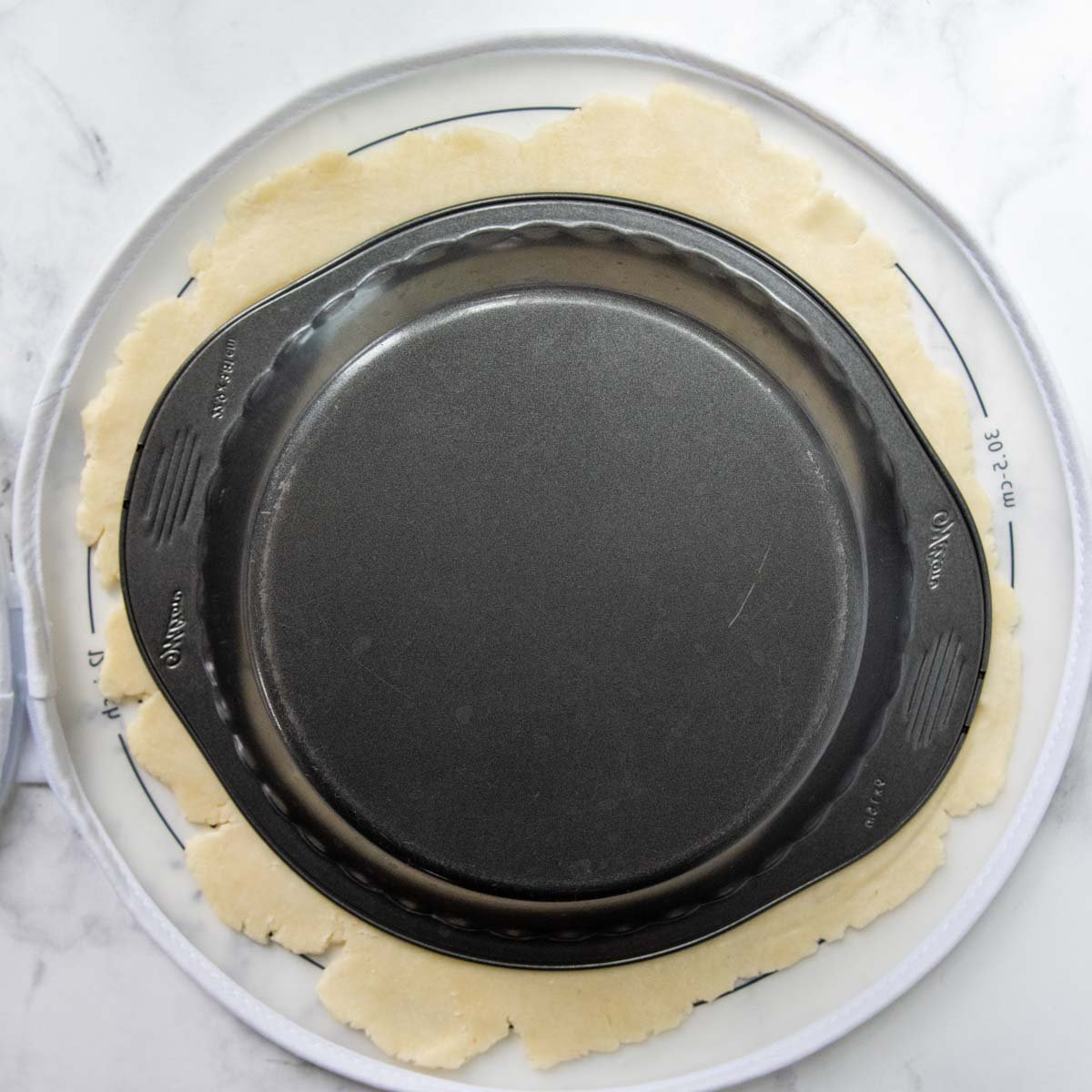
- Place the unwrapped dough disc in middle. Use a rolling pin to press and spread the dough from the middle out. Roll into a circle slightly larger than your pie dish. (See tips in recipe notes for rolling out crust)
- Remove the top paper, and invert into the pie plate. Remove the second paper. Tip: If the dough has warmed while rolling, it may be trickier to take the paper off. If this happens, leave the paper on, and stick the whole thing in the fridge for 5 minutes. Once the crust is chilled again it's much easier to pull off the paper. If the dough is too cold and the crust breaks, let it sit on the counter for a minute first before trying again.
- Trim off excess dough around the edges. If some edges need more dough to fold under, press on some of the clipped off pie dough. Tuck the overhang dough under to meet edge of pie dish. Using both forefingers, flute edges by pressing one down and one up next to each other.
- Wrap loosely with plastic wrap and place in freezer 15 minutes, or up to an hour, until chilled. Fill and bake according to recipe directions, or see recipe notes for a partially or fully baked crust.
Notes
Best tips For Rolling Out Crust
- If the dough is too cold it will be hard to roll and break apart. Let it sit on the counter for 5 minutes and try again.
- When you are rolling, press down in the middle and push the dough out from center. This will ensure the middle not being too thick, while edges are too thin.
- Rotate the pie dough as you are rolling so it forms a perfect circle. If one side is bigger than the other, cut some dough off and add it to the smaller side of the circle.
- While rolling, the dough may warm, which causes the parchment paper to stick. If this happens, place rolled pie crust, with parchment still on, in the refrigerator for 5 minutes so butter re-solidifies and releases from the paper.
- Once the dough is turned over in the pie dish use kitchen scissors to trim off excess dough around edges. If some edges need more dough to fold under, press on some of the clipped-off pie dough.
- Use two fingers to flute into a decorative. For a shiny crust brush the exposed edges with an egg wash before adding filling.
Dairy-Free
For a gluten-free dairy-free or vegan pie dough, plant-based butter sticks or shortening may be substituted, but will affect the taste and flakiness. I also recommend cutting the salt by half if using plant-based butter. Replace the sour cream with a dairy-free substitute.Storing / Freezing
Wrapped dough may be refrigerated up to 1 day. Longer than that, place the wrapped disc in a freezer ziplock bag to freeze for 1 month. Thaw in refrigerator overnight. Recipe adapted from America’s Test Kitchen: The How Can It Be Gluten Free Cookbook.This post contains affiliate links. My opinions are always my own. If you purchase a product through an affiliate link, I make a small commission – at no cost to you. Read full disclosure policy here.


Thanks for the recipe! I’ve become a big fan of sweet rice flour and sweet potato flour, both from the Asian grocery. Also Birch Brothers paleo pancake mix from Costco, my family didn’t like the pancakes but I’ve been putting it in cookies and muffins (mixed with the sweet rice flour) and getting amazing results. Nobody believes it’s gluten free.
You’re welcome Joy! I have tried that pancake mix from Costco. At first I liked it then I felt like it has a strange aftertaste so I ended up pitching it. I wish I hadn’t now because that’s a great idea to use it as a GF flour. 🤦♀️So did you use this recipe with the sweet rice flour and sweet potato flour? If so, how much xanthan gum did you use?
I would like to know when you cup4 cup. and also mine was very wet and could not roll it out. what could I have done
This is absolutely the best tasting pie crust I’ve ever made! Because I was in a hurry to get a quiche on the table for dinner, I didn’t roll out the dough. Instead I pressed it into the pie pan and then baked it at 400 for 10 minutes while I gathered and mixed ingredients for the filling. Made my usual quiche filling and baked it for another 40 minutes. Crust was perfect, golden brown and flaky. Thanks for this awesome recipe!
Hi Sandra, I’m so glad you like it. I think having a great tasting gluten free pie crust is essential. It was the thing that frustrated me the most when I first went gluten free. I’m more than happy to share, what I believe, to be the best one out there! Thanks for the tip about the quiche. I’m going to try that.
I noticed recipes for gluten free pie crusts are usually for a single pie shell and blind baked, am I able to make the pie dough for an apple pie with both bottom and top crust without having the bott9m crust turn to mush?
Hi Victoria, Most definitely! I double this recipe all the time and use it for a double crust. In my oven, I haven’t had any problems with the bottom layer not cooking, but I know ovens can vary. Here’s a trick to absolutely make sure your bottom crust is cooked:
Place a foil lined baking sheet in your oven as you preheat it (425ºF). Assemble the pie and place it on baking sheet and bake for 25 minutes. Reduce oven to 350ºF, rotate baking sheet, and continue baking until pie is done about 30-40 minutes longer. I always use a pie shield to make sure my top crust doesn’t get overly browned.
Hope that helps. Enjoy!
This crust is amazing! I made this crust and filled with homemade cherry pie filling and NO ONE knew it was gluten free. I will keep this recipe and use for years to come!!! The crust is definitely difficult to roll out and making a lattice design took a lot of patience and well worth the time and effort.
Wow, this really makes me happy and super impressed! I’ve never attempted the lattice with GF pie crust. Way to go! I have a new goal now. Sometimes as I’m rolling it out I have to stick in the freezer for a few minutes so it gets cold again. Warm GF pie crust is challenging to roll. Thanks for writing!
This is truly the best GF crust ever. My search is over. Thank you!
I’m so happy we agree! This recipe was a game changer for me.
Thank you for this post! I am going to try it tonight and will link it on my blog, flameboyantcooking.wordpress.com, if it works well with the dessert I’m planning. I love finding gluten free options for traditional recipes!
You are so welcome! I’m glad you like it and feel free to link to it. The best part about it is it doesn’t taste gluten free!
We made this today for the top of a chicken pot pie for some Gluten free friends. The report is that’s its delicious, flaky, and amazing! Give it a try.
We used King Arthur Gluten free all purpose flour that we had on hand. It needed to cook longer than the 30 minutes the pot pie recipe called for, but we just watched until it was browning.
Thanks for sharing, Rachel! I do agree that baking gluten free generally calls for a longer time. You don’t want to under bake because then you get that grainy taste. That’s good to know that King Arther substitutes well. My (non-gluten) free mom uses this recipe often to make pies and chicken pot pies and she always thinks it turns out great too!
I haven’t made this yet *I also hate when ppl comment on blog posts when they haven’t tried the recipe!! haha* – but ever since my son learnt he couldn’t have gluten I pretty much gave up baking! To think we might be able to have pies and quiches again! 🙂
Natasha, I know exactly how you feel! I’ve always been a huge baker and loved to make homemade breads and pasta. When I learned I couldn’t have gluten, I avoided even messing around with the GF version because I knew I would just be salty about how inferior they tasted. That is my whole goal of cooking / baking gluten free – to not be pissed off it’s not as good as the non-GF version 😏. BTW, when I go to blogs for recipes I look for comments from people who made it!
How would I alter the recipe for a double crust filled pie (say apple pie)?
Yes, just double all the ingredients. If you just adjust the servings in the recipe above to “16” it will show all the doubled measurements. I typically double the recipe because, even if I don’t need two crusts, I’ll just throw one in the freezer to use at a later time. Enjoy!
Which ingredients do u use to make your cup 4 cup four for the pie crust
I don’t make my own gluten free flour. The brand name of flour I use is called Cup 4 Cup gluten free flour. Here’s a link to it. When baking items that are primarily flour, like pie crusts and bread, it’s really important to use a high quality, great-tasting gluten free flour. I have tried almost all of them, and, in my opinion, Cup 4 Cup is by far the best. Hope that helps!
It’s very expensive.
The dough turned out soft ? I used King Arthur Gluten Free Flour + 1/2tsp Xantham Gum. I put it in the refrigerator for overnight. Any suggestions?
Hello, I haven’t tried using King Arthur GF flour before with this recipe, but it could be the xanthan gum that was the culprit. According to KA’s site, you have to add xanthan gum to their flour blend, but you add more for dough that needs elasticity, like bread, pizza crust, and a way smaller amount for dough that does not, like shortbread and pie crust. Maybe try using a flour that has it in it already (it always turns out for me using Cup 4 Cup), or you can read some of the comments and see what other readers have had success with. Thanks for writing!
magnificent recipe! Works right the first time. My life is much easier and my pies look divine.
I’m so glad! I made several recipes of this pie crust for our recent Thanksgiving, and you could tell no difference between the gluten free pies and regular. 🙂
I’m making a pie that requires a pre-baked crust. What temp and time should I cook the pie crust at?
Great question, I’ll add it to the recipe notes. 375ºF for 25-30 minutes, rotating pie halfway through baking. You might want to use some sort of pie shield for crust (see above blog post for example). Also when you’re baking a pie crust without filling in it, it’s a good idea to line bottom with foil and pour in some dried beans on top so the pie crust doesn’t puff up during baking.
Thanks for linking to my gluten free cake batter fudge!
No problem, it looks unreal!
Hi there!
Great recipe! but for me would be more accurate if the measurement of ingredients were made by the weight…sometimes may be more accurate, for instance with the flour or the butter…for me with cups and tablespoons gets confusing at some point. would you help me with that??
Thank you!
Regards from Chile
Hi Carla, Sure thing! I just fixed it for you. If you hit “metric” under the ingredient list it will convert it for you. Sorry about that! I’m trying to go through all my recipes and do the conversion. I will eventually. Promise!
Best,
Melissa
so is 2/3 +3/4 cup GF flour approx. 1 1/5 cups of flour?
approximately 1 1/2 cups, about 2 1/2 tablespoons shy of that 😀
thank you for responding. looking forward to making this today for pumpkin pies!
Can I use regular vinegar in place of the apple cider vinegar?
Yes, definitely. I’ve done it in a pinch many of times.
I can not use sour cream because of the lactose and milk proteins, is there a substitute that will work the same way with the recipe?
Hello,
If you can have yogurt or cream cheese, those would be a great substitutes. If not, just leave out the sour cream and use a tad bit more vinegar or ice water. Make the recipe as directed, but when it comes to adding the liquids you may need to add a splash more for the dough to come together. Enjoy!
Can i just use all purpose cup4cup flour or do you recommend a certain type?
Hi Emily,
I used the all purpose kind. Here’s a link for it on amazon, but a lot of times I buy it in bulk on Vitacost with coupon codes to get it even cheaper. It’s seriously the best gluten free flour. You can literally substitute it for any non-gluten free recipe and it always turns out, and never tastes sandy or off. Hope that helps!
Have you ever made a pie with a top crust? I’m just wondering If I can just do 1.5 of the recipe or something like that to make enough dough for both!! Thanks a bunch, can’t wait to try this recipe!! Making my first Pie on Monday!!
I already have Bob’s Red Mill gf flour, would that work?
You can use Bob’s Red Mill if that’s what you have. However, I find that flour to have a grittier taste and texture so it may not turn out as great. I prefer Cup 4 Cup (sell it at Target, Amazon) and King Arthur GF flour (grocery stores) is a good second choice.
Can you make this crust and freeze for 1 week then use?
Yes, I always make the crust ahead of time and freeze or refrigerate it. If you’re planning on using it more than 2 days in advance, freeze, otherwise you can keep it wrapped in the fridge. You can put frozen crust in the refrigerator the night before to thaw.
Could this recipe be used for quiche as well? So, will it work for savory dishes as well as sweet pies?
Yes definitely! I have used it for pies, quiches, chicken pot pie. Using a good quality GF flour is key, though, so it doesn’t taste gritty.
Have you ever tried doubling the recipie? Just wondering if it comes out the same making 2 crusts at once.
Hey Laura, I have and it works great!
Hi.
The link in your post for the silicone pie shield says it us unavailable.
Is there another store or website that sells it? I am gluten free and I use Cup4Cup flour and it is great!
I am not having much luck with breads or rolls using yeast? Do you have any suggestions. Can’t wait to try your pic crust!
Any help with breads/rolls I would be very appreciative!
Suzanne
Thanks for pointing that out. They must be out of stock with the holidays. Here is another one I found that seems very similar.
Honestly, I generally stay away from making gluten free yeast breads probably for the same reason you are having problems! When you make non-GF bread it gets smooth and easy to work with after kneading. Unfortunately gluten free bread does not. 🙁
For sandwiches, I buy Canyon Bakehouse bread and usually make these biscuits or cornbread if I am craving homemade bread. Hope this helps!
I am curious as to what gluten free flour you choose to use in the pie crust recipe. There are so many on the market.
Hi Dianne, I always use Cup 4 Cup for all my recipes. I find it’s the best for substituting into any recipe and doesn’t change the taste. I’ve seen Target now sells it, you can get it on Amazon, or I usually just buy a ton of it at once on Vitacost.
Can this be made with a pastry blender rather than a food processor.
Yes, for sure!