

How to Use Instant Pot

Beginners can learn how to use an Instant Pot in minutes with this easy how-to guide, tips, and directions. These easy Instant Pot instructions will take you from a beginner to an expert in no time!
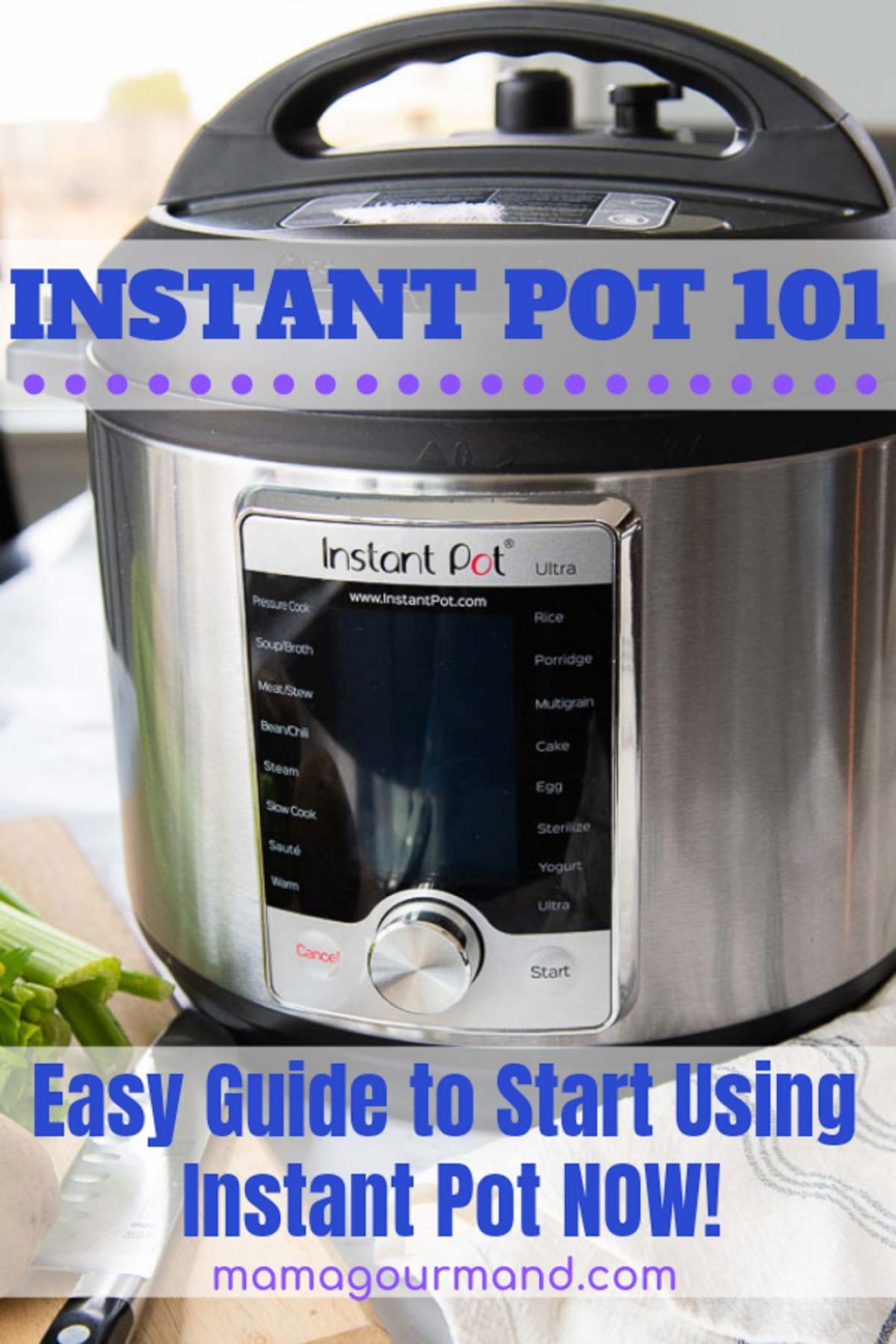
“You need an instant pot!” “I love my instant pot!” So, you got one.
Now you’re sick of staring at that brand new “life changing” appliance still sitting in its box.
I get it. It’s intimidating and it’s never really the right time to learn how to use it. What you need is a quick beginner’s tutorial to start using your pressure cooker and finally see what everyone is raving about.
Give me 5 minutes and soon you’ll be drinking the Instant Pot kool-aid!
Want to Save This Recipe?
Enter your email below & we'll send it straight to your inbox. Plus you’ll get affordable and easy gluten-free recipes delivered each week!
Beginners Instant Pot Basic Instructions
- Put ingredients in the inner pot. Some recipes will require to use SAUTE function first without the lid in place to sauté onion, garlic or brown meats in oil.
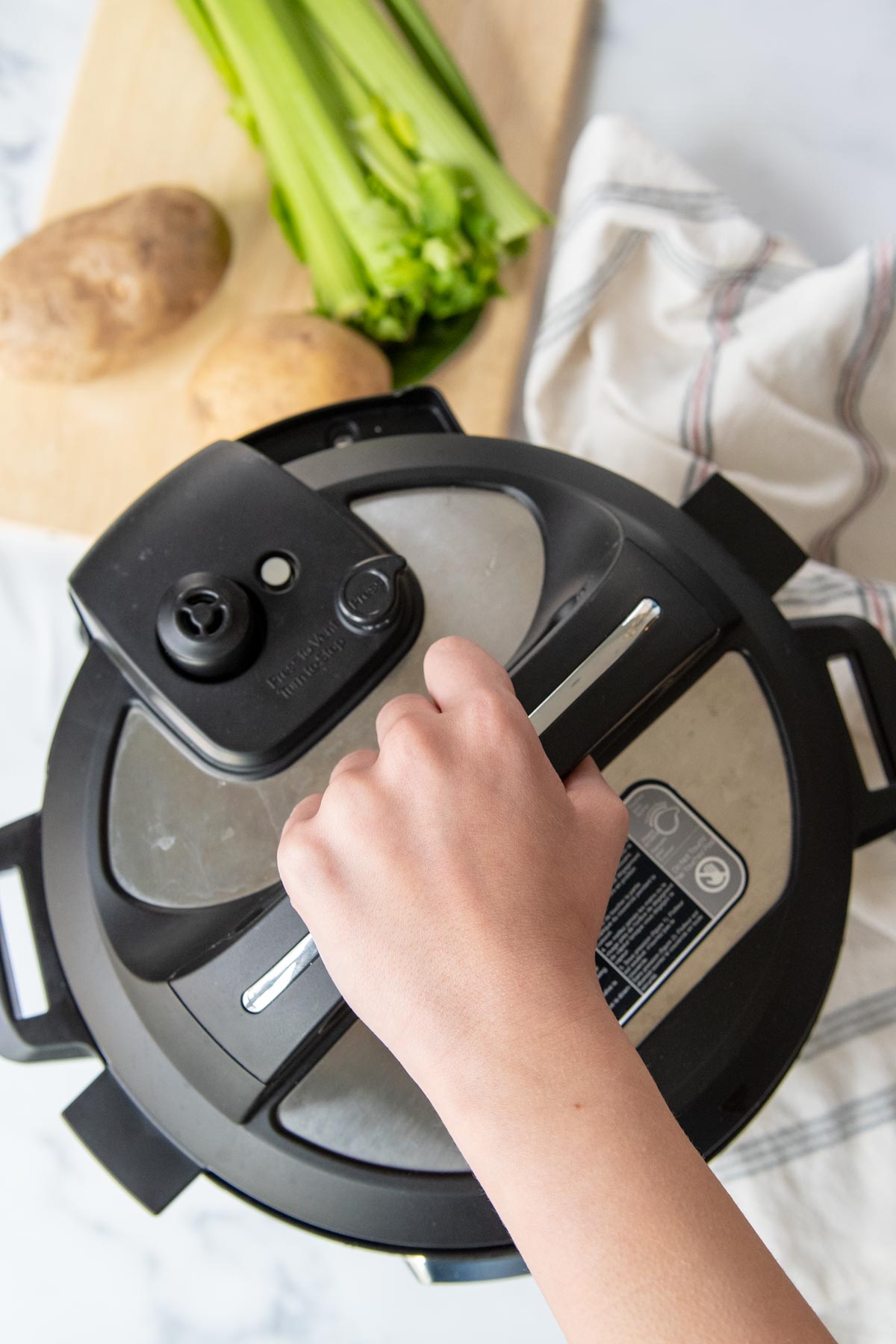
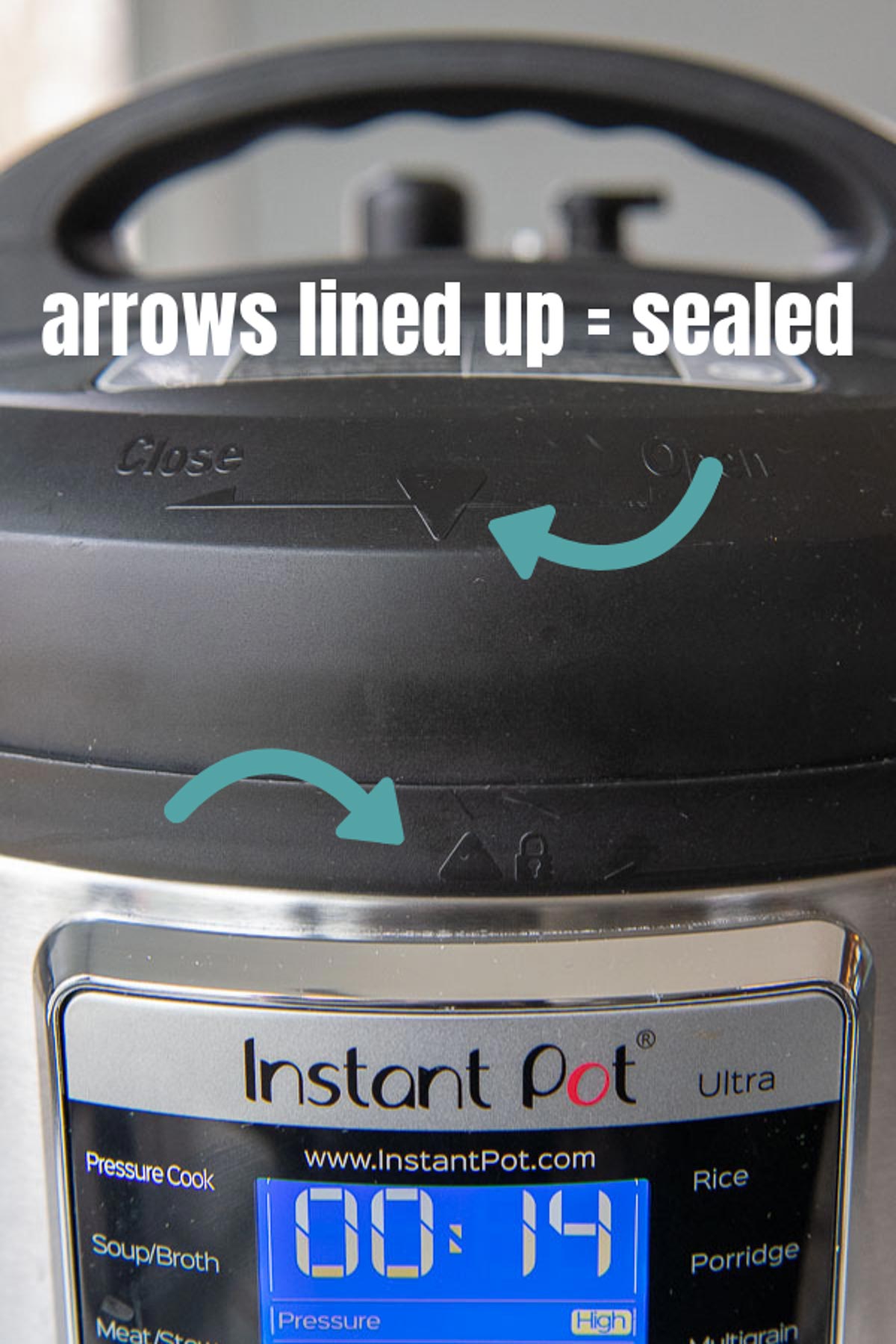
- Lock lid in place by turning clockwise. Make sure the valve at top is in SEAL position. (The valve automatically seals for some newer Instant Pot models.)
- Select MANUAL / PRESSURE and set the cooking time based on recipe. Hit START.
- First it will take 10-40 minutes for the ingredients to heat up and come to pressure. Once the pressure level has built the Instant Pot will beep once and cooking time will start counting down.
- After the set cooking cycle time has expired the pressure cooker will beep a lot and default to KEEP WARM. This is when you release the pressure in one of two ways highlighted below.⬇️
- Wait until the float valve drops, carefully remove the lid. If the lid will not turn, press pressure release valve again to let out any remaining pressure.
Free Guide! 5 easy tips for baking like a gluten-free pro!
Simple hacks for fail-proof gluten-free dishes every time!
What is Pressure Cooker Quick Release & Natural Release?
During cooking extreme pressure builds up inside the Instant Pot, which makes the food so tender, yummy, and delicious in such a short time.
In order to safely screw the lid off, the pressure needs to be released. The float valve comes down by either quick release or natural release, depending on the recipe and preference.
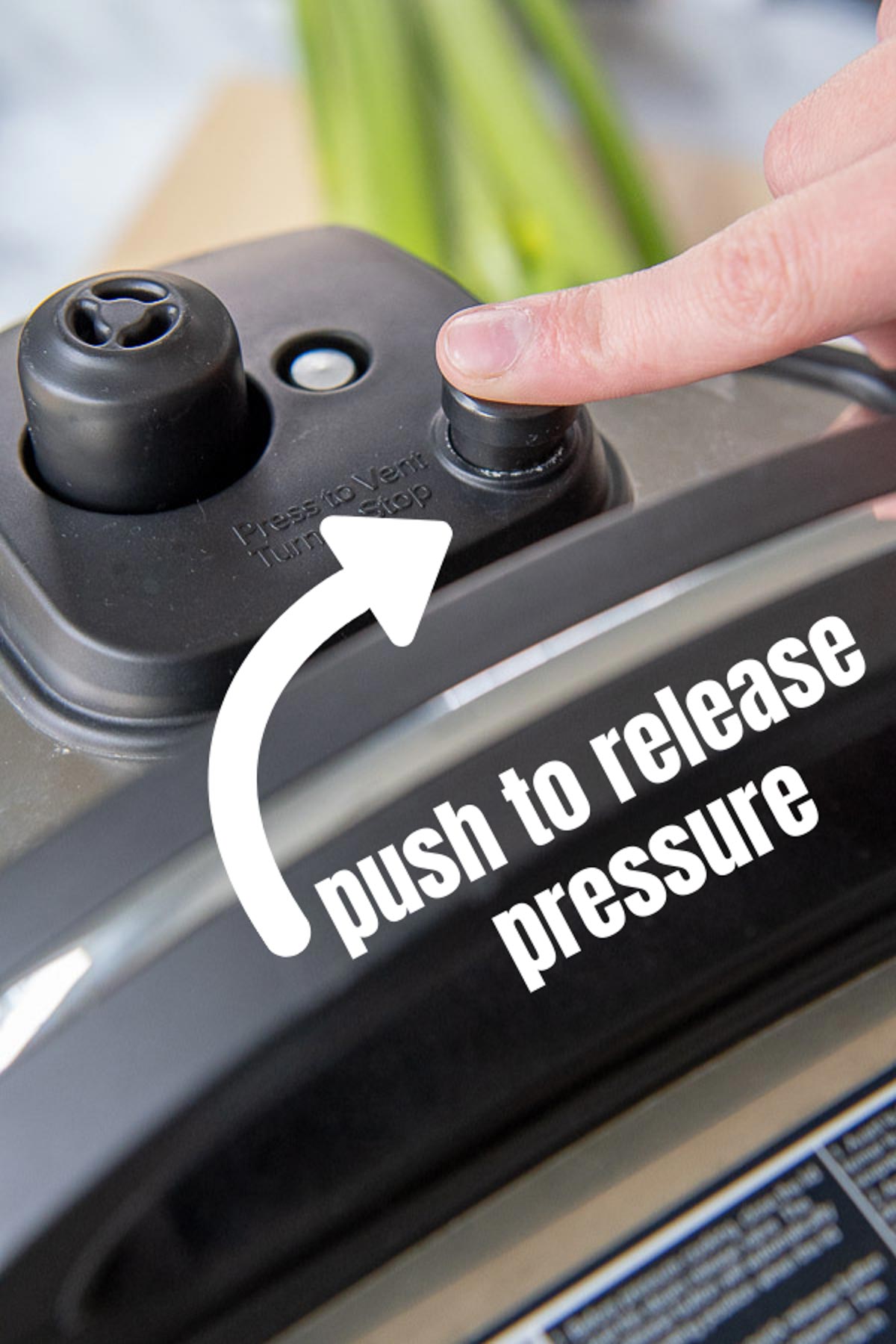
Quick Release (QR) – When the cooking time ends press or turn the button to release pressure. You do not need to hold it down. Some people use the handle of a wooden spoon to press it down and avoid risk of potential contact with hot steam.
Foods that can easily be overcooked will use quick release, such as vegetables, pasta, fish.
Natural Release (NPR) – Use natural release when your Instant Pot is very full (ie. soups), cooking meats, beans, or grains till tender.
After cooking completes your unit will either go to KEEP WARM, CANCEL, or turn off. Any of these are fine. The recipe will say, “Natural release for X minutes, then quick release” or it will indicate to just naturally release all the pressure.
Natural Release is leaving the pressure valve alone and letting the unit gradually release the pressure as it sits there. This can take 5-40 minutes, depending on the contents. You’ll know when it’s done because the lid will be able to screw off.
The more full the pressure cooker is, the longer it will take to come down to pressure.
Pressure Cooker Essential Tips
- Always have at least 1 cup of liquid in pressure cooker. Sometimes recipes will call for less if the ingredients contain a lot of water, like chicken, fruits, or vegetables.
- When pressure is released make sure valve is pointed away from people or kitchen cabinets.
- The valve will let off a little steam as the float lifts up and locks into place. This is normal and it will stop once the pressure cooker comes to full pressure.
- Don’t fill your Instant Pot more than 2/3 and make sure you are at or under 1/2 mark when cooking items that expand, like rice, dry beans, or pasta.
- Check the condensation collector between uses. That is where steam and liquid collects, so it will have to be dumped and cleaned periodically.
Instant Pot FAQ and Troubleshooting
The pot will not come to pressure
An electric pressure cooker takes varying time to come to pressure, depending on the contents and the amount of liquid. If the contents are very cold, such as frozen meat, it could take even longer.
If it has been over 20-30 minutes and it has still not come to full pressure there are a few things you can check.
- Quick release any pressure built up and carefully remove the lid. Is the sealing ring locked into place all around the inside of the lid?
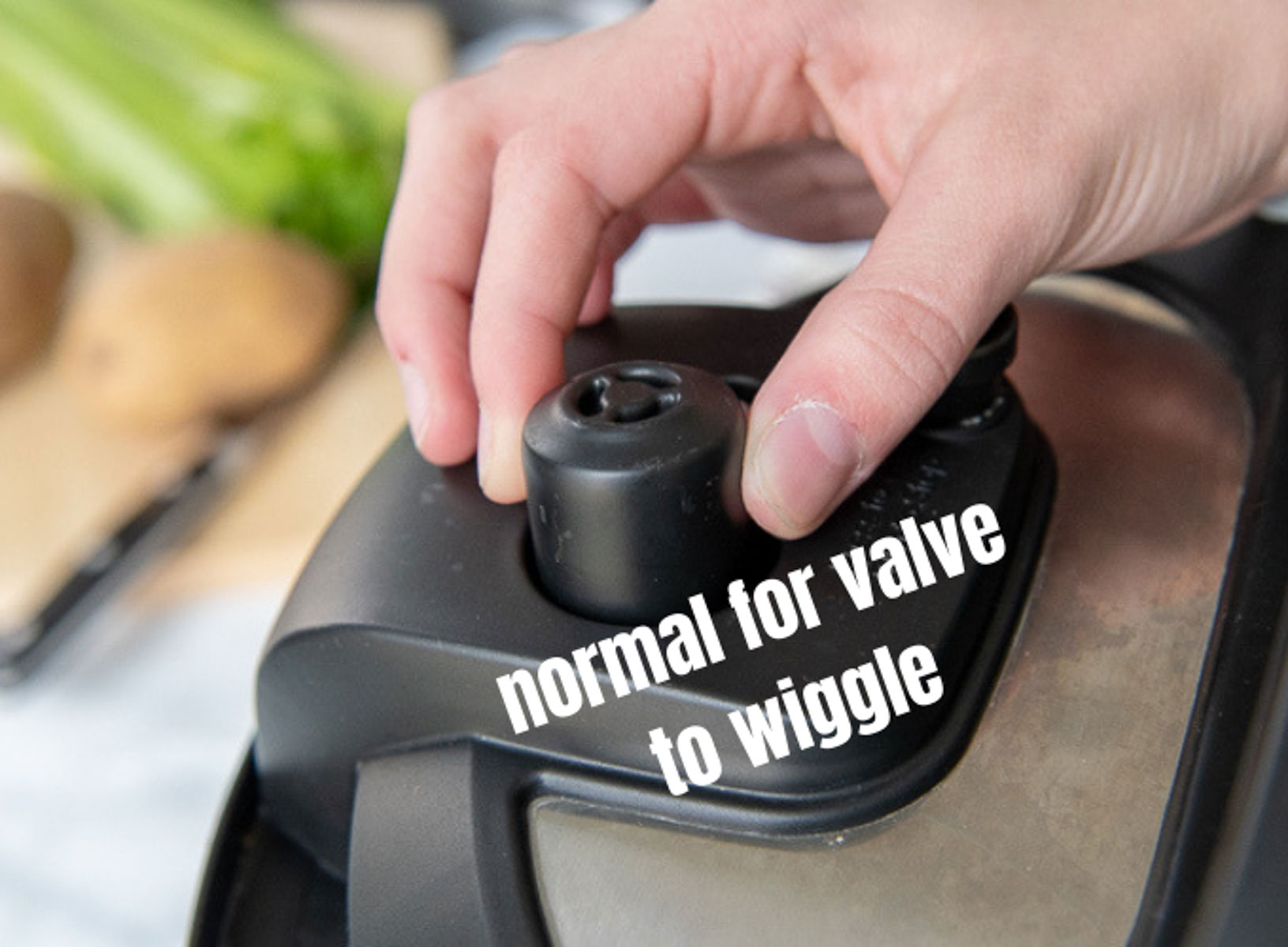
- Is the steam release valve on securely? The valve should have a little bit of wiggle to it, but not able to fall off easily.
- Is the inner pot too full? There is a maximum line marked on it, and it should not be more than two-thirds full.
How to release pressure
Some people use the handle of a wooden spoon to press down the valve and avoid risk of potential contact with hot steam. Point the valve away from people or kitchen cabinets. I try to point it towards my cooktop exhaust fan and have it running at full blast.
Why is steam coming out of the valve?
First double check the valve is in fact sealed. If it is, normally steam escapes from the valve while pressure is building. Once the Instant Pot has fully come to pressure, the valve will seal, and the steam will stop.
If steam is coming from the sides of the lid, it means it’s not sealed properly. Turn off the unit, quick release pressure, and check under the lid to make sure the silicone ring and float valve are properly in place and free of food particles.
Why is liquid sputtering out of the valve?
The Instant Pot is either too full (never fill more than 2/3) or it is what you are cooking inside. Foods that typically froth or foam are pasta, soups, applesauce, beans, grains, and potatoes. When cooking foods such as these make sure pot is not more that 1/2 full and adding 1-2 tablespoons of oil to the liquids help stop foaming.
Instant Pot stopped cooking and LCD says “BURN.”
Usually this means something you are cooking has deposited at the bottom and is overheating. I find this happens when I cook tomato-based foods. Release pressure, stir contents, and set cooking time for remaining time.
Can I cook frozen meats in an instant pot?
Yes, but some work better than others. Frozen chicken breasts work great, but large frozen solid roasts not so much.
Undercooked Meat / Pasta / Vegetables
You have two options. First, select SIMMER / SAUTE and finish cooking undercooked fruits, veggies, or pasta on that setting.
Alternatively, if your meat isn’t at proper temperature, or not as fall-apart tender as you’d like it, lock the lid in place, select HIGH pressure, and add additional cooking time. Remove cooked vegetables to keep warm while meat finishes.
Thinning or Thickening Sauces
Release pressure, remove lid, and select SIMMER / SAUTE. You can either simply let the sauce simmer and reduce without a lid on or mix together equal parts cornstarch with water and stir it into the sauce. I typically start with 2 tablespoons cornstarch mixed with 2 tablespoons water.
If the sauce is too thick add extra liquid to thin it out. It can be water, broth, or any other liquid called for in the recipe.
Learning Instant Pot Buttons
Although all the buttons can be intimidating, most are preprogrammed convenience settings (similar to a microwave’s popcorn setting).
Buttons such as MEAT, STEW, RICE, and BEANS still cook at HIGH pressure and have a preprogrammed time. Adjust the cooking time for these settings before you hit START.
Below are the buttons I use most frequently on the Instant Pot.
PRESSURE / MANUAL – Go to for all recipes that say “Cook at HIGH pressure.” Press it and hit +/- to adjust the time according to the recipe.
SAUTE / SIMMER – Use this button before and after pressure cooking. High SAUTE heat browns meat and softens veggies before adding liquid for pressure cooking. Low SIMMER or SAUTE heat thickens sauces or cooks pasta.
YOGURT – A button I use frequently for ridiculously easy and amazing yogurt. Click here for a full resource on making Instant Pot yogurt and to discover the best yogurt you’ll ever taste!
WHITE RICE – Used to cook rice, which is a default low pressure setting. If you do not have a “white rice” button, simply use low pressure instead of high.
DELAY START – Put the ingredients in and set a time to delay start with the proper settings required. The pressure cooker will turn on and start the cooking process at that time.
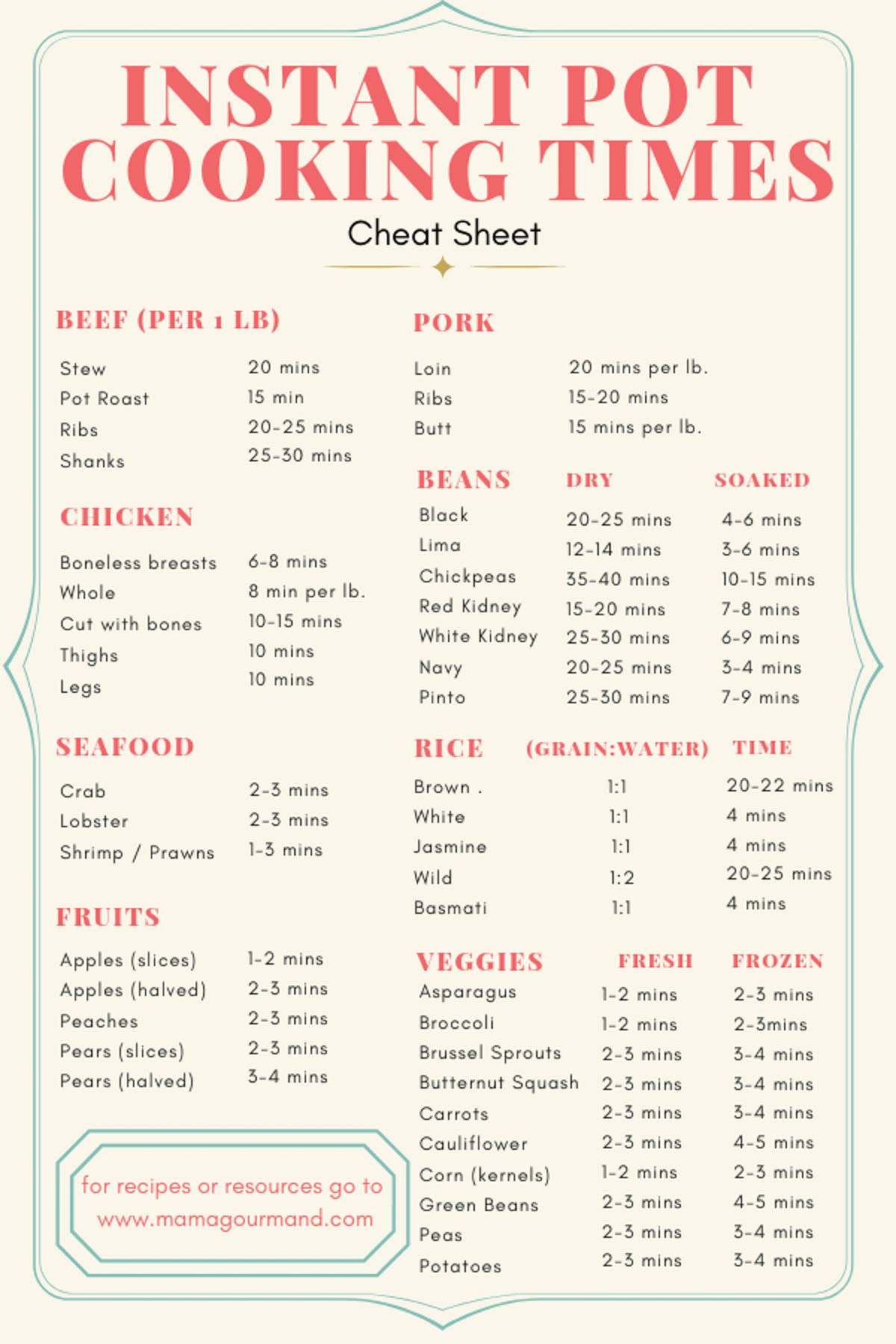
Instant Pot Cooking Times
Best Instant Pot Recipes

- Broccoli Cheese Soup – Thick, creamy, and healthy soup prepared in only 15 minutes!
- Cincinnati Chili – The perfect medley of unexpected spices served over spaghetti with piles of cheddar cheese
- Cilantro Chicken – Tender, seasoned cilantro chicken with a creamy, lime sauce
- BBQ Pulled Chicken – Takes two simple steps, five minutes to prepare an effortless dinner or party food
- Buffalo Chicken Chicken Chili – Award winning with the perfect amount of spice, a smooth creamy base, lots of tender chicken
- Corned Beef and Cabbage – Corned Beef brisket flavored with brown sugar, mustard, and apple juice
- Beef Stroganoff – Tender, fall apart beef in a creamy, comforting sauce.
- Zuppa Toscana – Better than Olive Garden’s, made in minutes!
This post contains affiliate links. My opinions are always my own. If you purchase a product through an affiliate link, I make a small commission – at no cost to you. Read full disclosure policy here.


Why do all my lights come on when I am trying to set the pot to cook and I cannot get them off
Very informative and helpful for me. Thanks for the post.
Of course! Happy to help!
Best,
Melissa
would like to have recipes
Hi Kathleen, Sure! Here are all my instant pot recipes! Let me know if you have any questions! Instant Pot Recipes
well went to cook chicken in the insta pot would not heat tried for about 2/1/2 hours to try to get to work but did not now it is nearly 11:00 p. m had to cook in a regular pot is it me or the pressure cooker?
Hi Janis,
I’m so sorry this happened! If it never came to pressure after that long, I think it is something with your pot. However, I don’t think it’s broken. Last night I went to cook something in the pressure cooker and a bunch of steam kept coming out and it never came to pressure. I hit CANCEL, let out any pressure so I could take off the lid, and then opened it up. It turned out my rubber ring was pushed down all the way on the. It must have gotten knocked loose with cleaning. If it doesn’t come to pressure it could be as something as simple as this. Perhaps today just try putting 2 cups of water in it, test it that way, and see if it works?
Best,
Melissa
How do you set the time?
Hi Betty Lou,
I’d love to help and I’ll try my best without being able to see your particular model. Once you are on the High pressure setting you press the knob to select it. The knob can then be used to move up and down in the settings. Move it to cook time and press the knob again. Then turn the knob up or down to the cook time amount you want, then hit START. Let me know if you have any other questions!
Best,
Melissa
Help it will not recognize the lid
Hi Carol,
I’d be happy to help, but I’m not exactly sure what you mean. You can’t get the lid on? There’s an error message with the lid?
Best,
Melissa
This appliance has me so frustrated I could scream. Tried fresh garden green beans. Turning the knob for time I could get 30 minutes or 12.i kept turning back and forth -it didn’t go in single increments.
hOW DO YOU MAKE THE SLOW COOKER GO TO HIGH TO COOK FASTER
Frannie
Hi Frannie,
Unfortunately the instant pot slow cooker function only cooks on LOW. To be honest, though, the slow cooker feature doesn’t work that great on the instant pot. A traditional slow cooker is better for that. If a recipe needs to be slow cooked, though, you can always convert the recipe and cook it at high pressure. What are you making? I’m happy to help!
Best,
Melissa
Love to have Instant Pot recipes and I want to become comfortable with my Instant Pot !!
Hey Debra,
It’s intimidating at first, but once you use it you will be fine! Let me know if I can answer any questions.
Best,
Melissa