


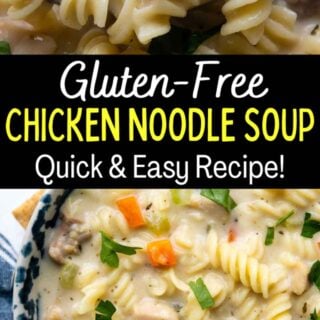
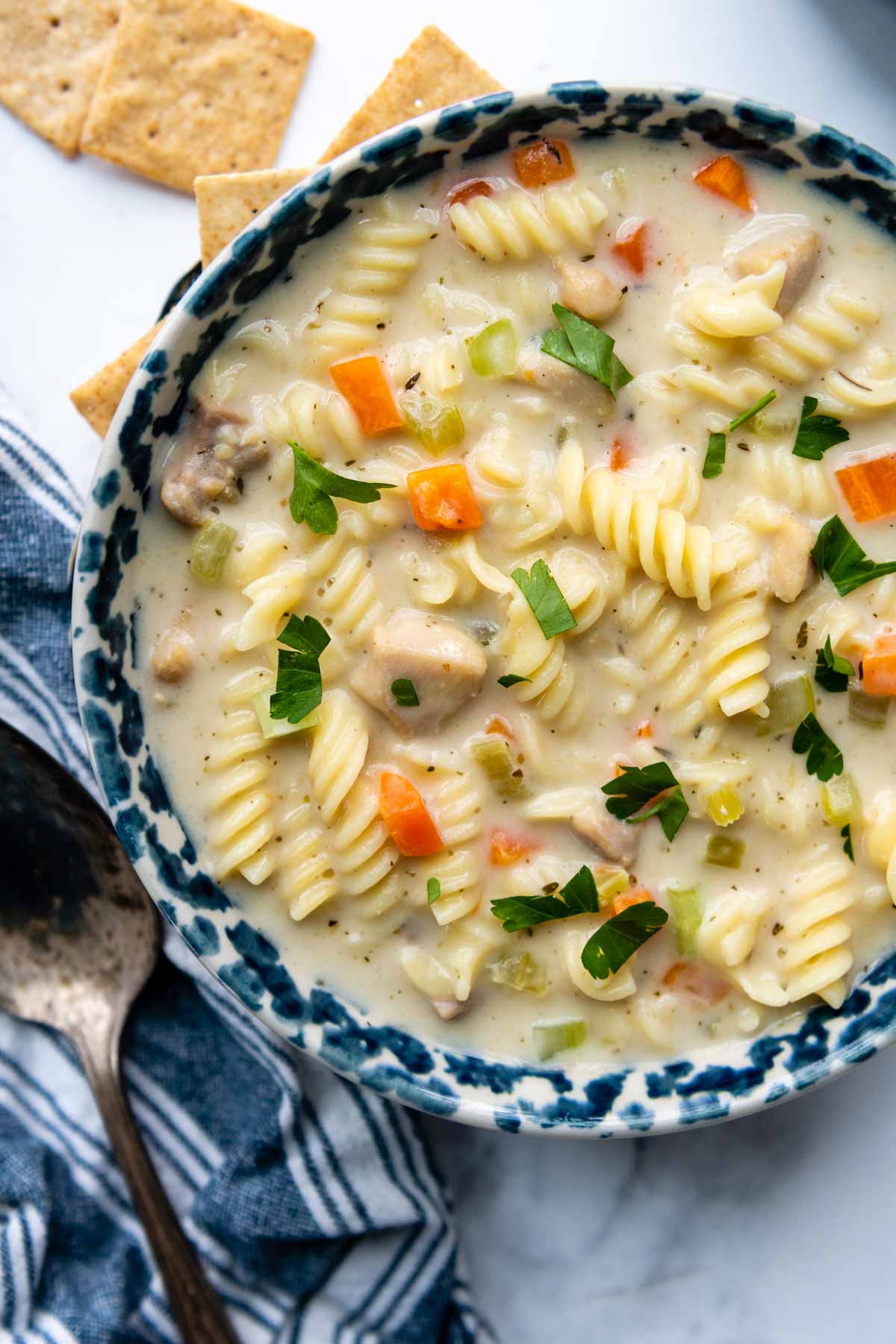
Looking for the best, homemade recipe for gluten-free chicken noodle soup recipe? You will love this quick and creamy twist on a classic. It’s chockfull of tender bites of chicken and veggies in a richly flavored, velvety broth, all made with readily-available and affordable ingredients!
Want to Save This Recipe?
Enter your email below & we'll send it straight to your inbox. Plus you’ll get affordable and easy gluten-free recipes delivered each week!
Best Gluten-Free Chicken Soup Recipe
When it comes to enjoying the best soups in my gluten-free collection, homemade recipes ensure your family can enjoy a allergen-safe and tasty meal. However, that shouldn’t mean a long list of expensive ingredients or extra in the kitchen.
This easy recipe for gluten-free chicken noodle soup is not only ready to serve in less than 40 minutes, but includes affordable ingredients you can pick up at your local grocery store. I like it because it’s heartier enough to serve as a meal on its own, especially with squishy soft gluten-free breadsticks thrown into the mix.
Besides the ease and affordability, what else makes this gluten-free chicken soup so special? The addition of evaporated milk adds a creamy element, which is my secret weapon for rich, velvety soups!
Also, this recipe eliminates any guess work on which GF noodles or substitutions are good for soup, how to avoid mushy noodles (the worst!) when serving and reheating. It’s all here!
Free Guide! Receive a Free Gluten Free Soups Cookbook
TOP 5 Highest Rated Recipes!
Ingredient Tid Bits
Adapt this recipe for homemade soup recipe based on your family’s preference. Leave out certain veggies or make additions, such as finely chopped onion or frozen peas.
- Chicken – Chicken thighs add the best flavor and are fool-proof for achieving tender, perfectly cooked bites. For alternatives, see the Best Chicken To Use For Soup section.
- Veggies – A classic combination of carrots, celery, and garlic, but finely chopped onions or peas may be added.
- Seasonings – I prefer to use pantry staples rather than buying fresh herbs, but this is a personal preference and can be modified. The recipe calls for salt, pepper, onion powder, dried oregano, and thyme. A bay leaf may be added or some recipes add a squeeze of fresh lemon juice at the end.
- Gluten-free all purpose flour – Adds a little thickness to the soup. However, if you prefer a thinner, liquidy soup it may be left out.
- Gluten-free pasta – There are various options for pasta noodles, so I added a section of alternative GF noodle options below.
- Evaporated milk – Since the water content has been removed, evaporated milk really adds a velvety taste. (Same trick used in my thick and creamy gluten-free potato soup) Substitute with whole milk, half and half, heavy cream, a preferred dairy-free milk or omit entirely for a more traditional old-fashioned soup.
Let’s Make This Together!
(Below shows step-by-step photos and modified instructions. For the complete recipe, along with ingredient amounts, scroll down to the recipe card.)
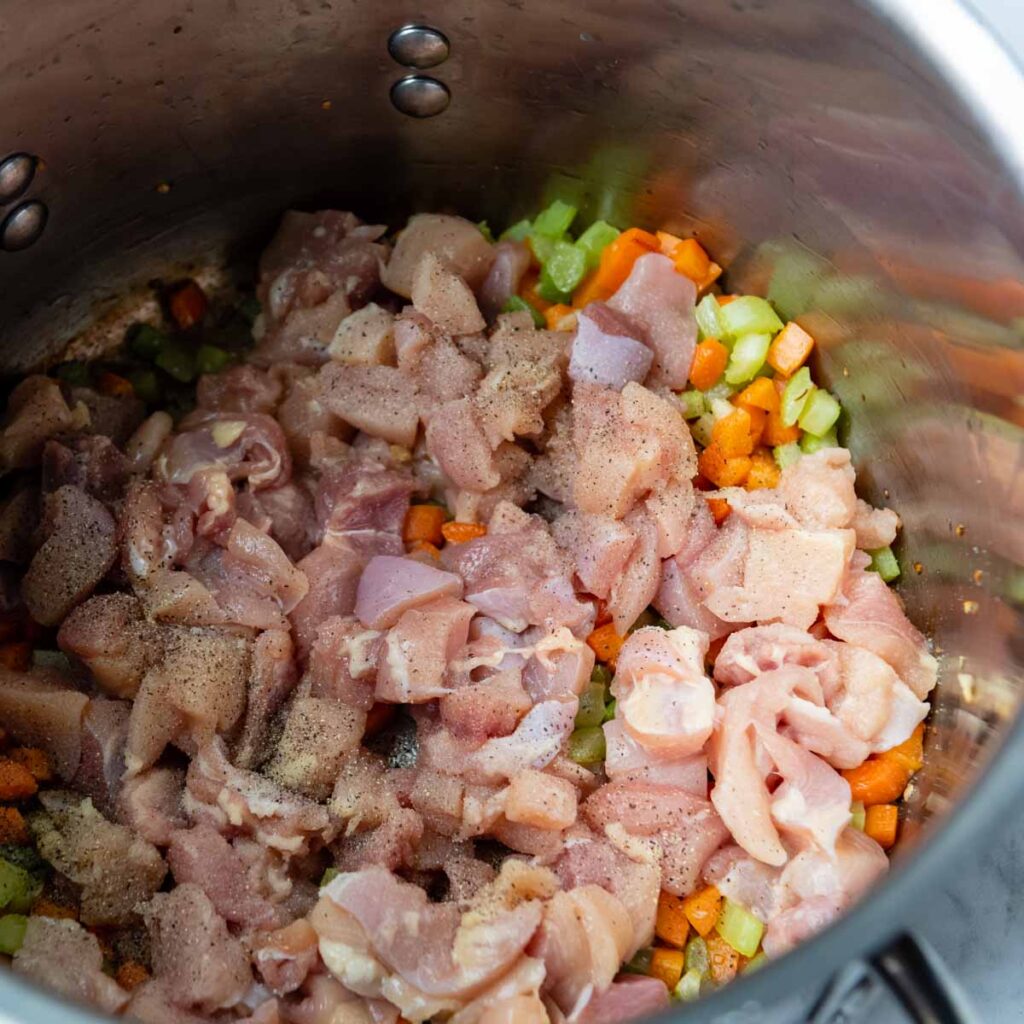
Start with the veggies and chicken
I like to sauté them in butter to add flavor and dimension. Cook for about 5 minutes. They won’t be all the way tender, but will continue to cook in the broth.
Add the bite-sized chicken pieces and sprinkle with salt and pepper. This is another ingredient you don’t have to cook all the way because it will finish in the broth. Are you loving the shortcuts?
A little thickening
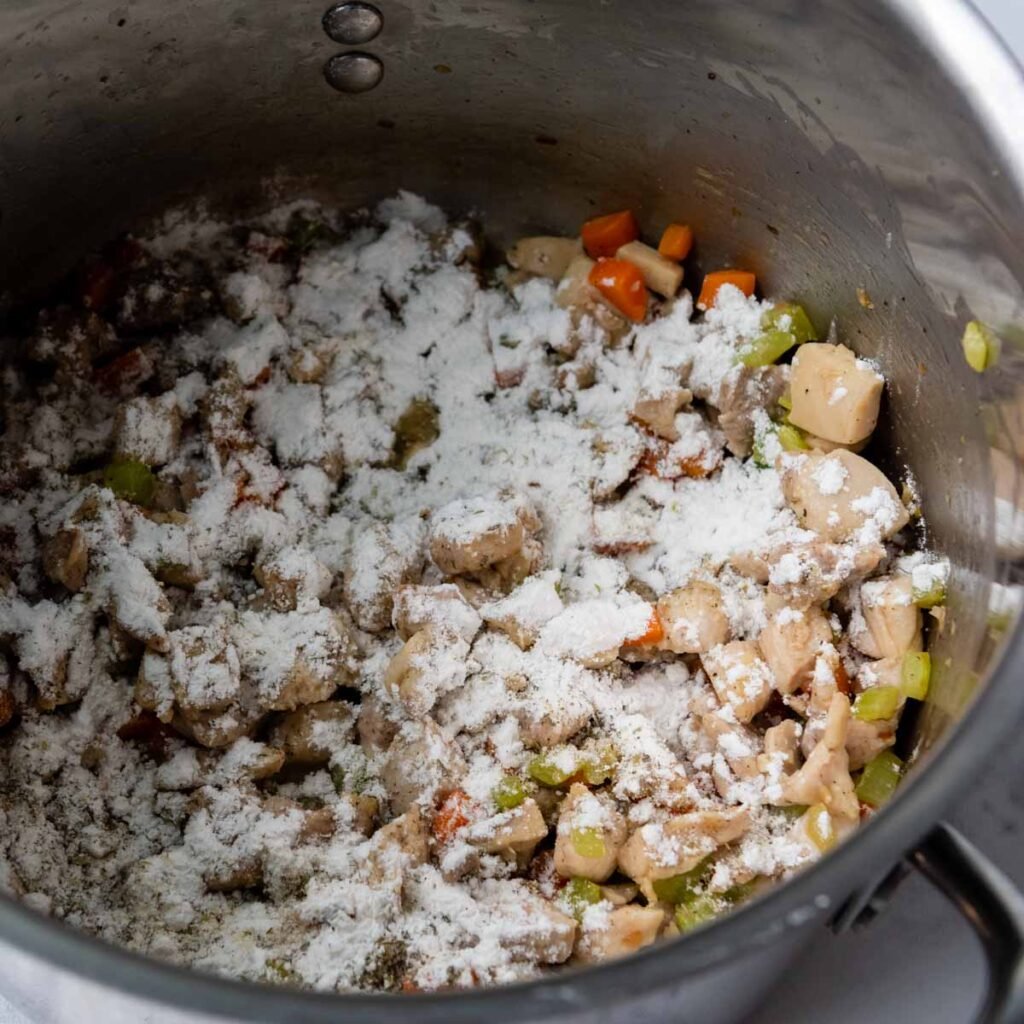
Stir in the gluten-free flour and seasonings to coat everything and then it’s time for the broth. Pour it in slowly while you scrape up the browned bits on the bottom of the pan. Bring the liquid to a boil.
Finishing touches
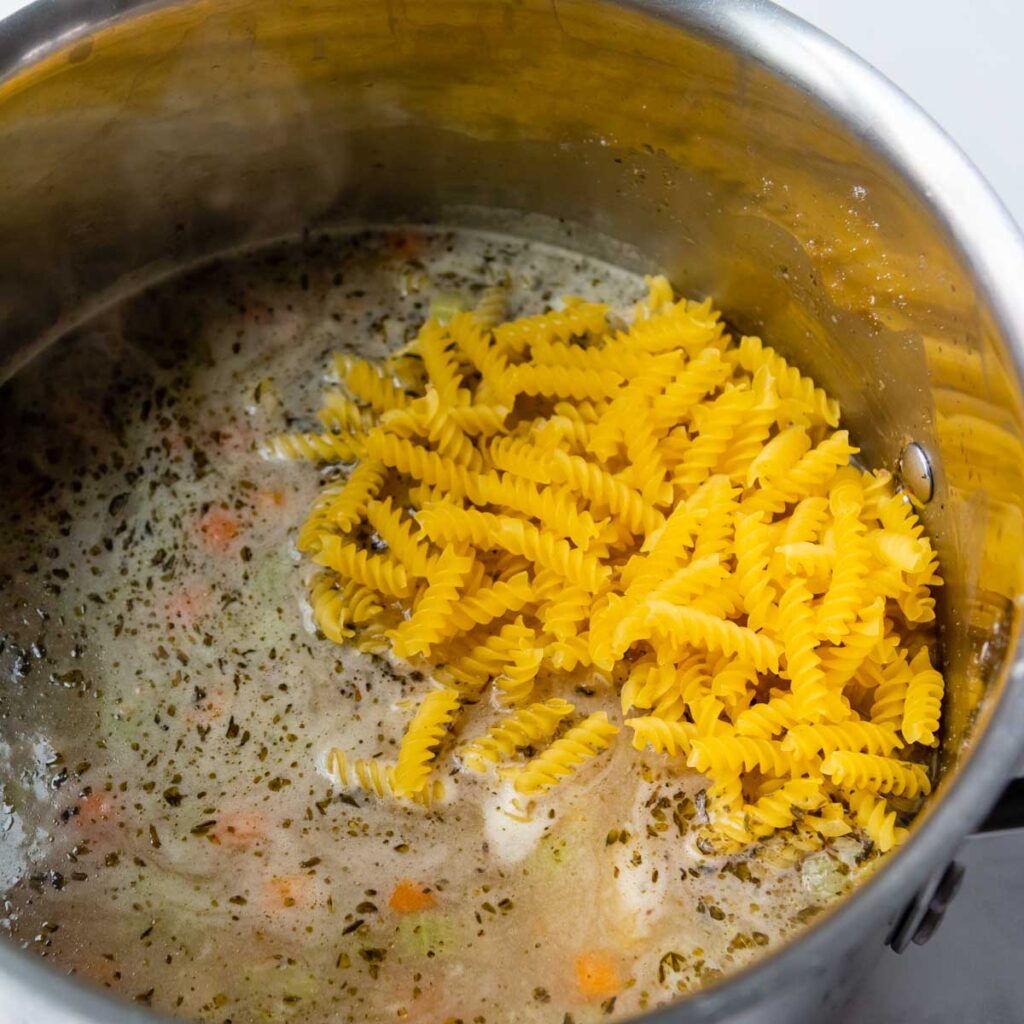
Now it’s time to add the GF pasta, but there’s an important notes about that. If you don’t think you will eat the entire soup recipe at once, it’s best to boil the noodles separately and add when ready to serve. As the soup is stored, the noodles really soak up the broth, considerably thickening the soup. Plus, they have a tendency to break down upon reheating.
Simmer and cook the noodles for about 6-7 minutes. It’s best to cook to just under al dente because they will finish cooking as they sit in the hot broth. Finally, stir in the evaporated milk for a touch of creaminess. Soup’s on!
GF Noodles and Easy Cooking Tips
When developing recipes, I like to use readily-available ingredients without sacrificing taste. Therefore, my favorite store brand (Barilla gluten-free rotini), if you want an authentic taste and texture pasta that can hold up to hot soups, I highly recommend grabbing gluten-free Rummo fusilli pasta online.
If you are looking for a more homestyle noodle, like egg noodles, or an alternative substitute, you have options. Keep in mind the cooking times will adjust according to what is on the package. For egg noodles try this amish-style GF noodles or Manischewitz GF Egg Noodles.
If you can’t for rotini or fusilli, GF elbow or penne pasta work, as well as fettuccine, broken in thirds, buckwheat, or rice noodles. Swap out the pasta with cooked rice or opt for a homemade gluten-free chicken and wild rice soup.
PRO TIP: When boiling gluten-free noodles for soup, do not cook for the full time as directed on the package, or by the time the soup is done they will be mushy. Boil for about 2 minutes less than “al dente” and they will finish cooking in the hot broth. This technique works perfectly when making our family-favorite GF Italian-style wedding soup recipe as well.
Best Chicken To Use For Soup
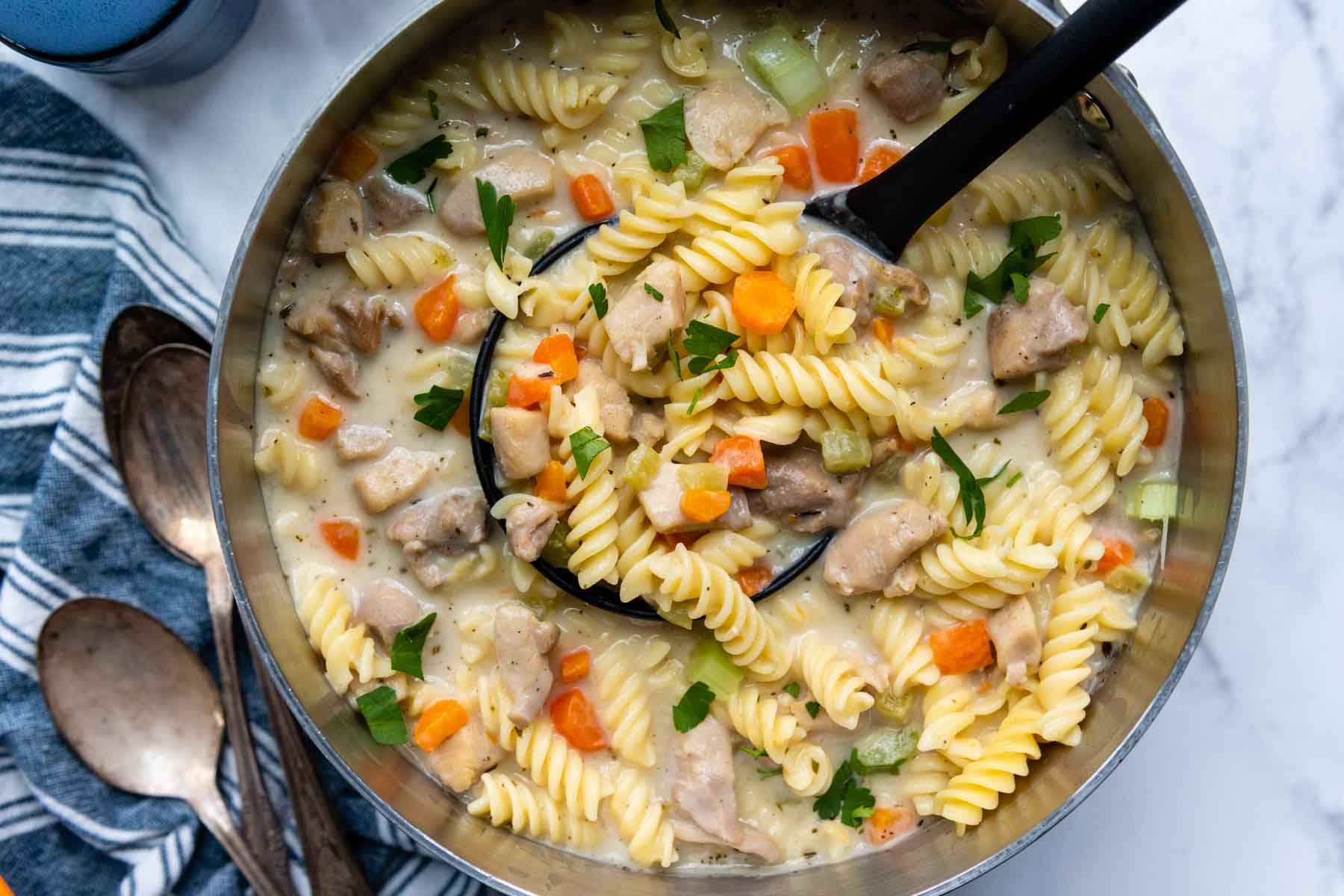
Using boneless chicken thighs is the best, no-fail method for achieving tender bites of chicken. Since thighs have a higher fat content, they are more tender and add extra flavor, where as breasts can be rather tasteless. I prefer this both in soups and when making our family-favorite gluten-free chicken and rice casserole.
Using thighs also eliminates the mistake of over-cooking chicken to the point of it being tough or rubbery. The fat breaks down to tenderize the chicken, whether it’s a short or extended cooking time.
If your prefer white meat, boneless chicken breasts may be used as well. Either precook them before adding to the soup or cook in the soup as the recipe directs.
Using rotisserie chicken is another great option. You will get a tasty combination of white and dark meat and skip the step of sautéeing the chicken first.
Save this recipe to your pinterest board!
Let’s be friends on Pinterest! I’m always sharing great recipes!
Did you make this recipe? I love hearing from you! Leave a star rating and comment below the recipe card. It helps others when searching for recipes and I appreciate feedback from our community. You will always hear back from me! -Melissa

Cozy Homestyle Gluten-Free Chicken Noodle Soup

Ingredients
- 3 tablespoons unsalted butter
- 3 medium carrots, diced
- 3 celery stalks, diced
- 3 garlic cloves, minced
- 1 ½ pounds boneless chicken thighs, cut in bite-sized pieces
- ¾ teaspoon salt
- ¼ teaspoon pepper
- ¼ cup gluten free all purpose flour
- 1 teaspoon dried thyme
- 1 teaspoon onion powder
- ½ teaspoon dried oregano
- 8 cups gluten-free chicken broth
- 12 ounces gluten-free rotini , see notes for alternatives
- 1 cup evaporated milk, see notes for dairy-free
Equipment
Instructions
- Heat a large stock pot over medium-high heat. Add the butter to melt and stir in the carrots, celery, and minced garlic cloves. Cook for 5 minutes.3 tablespoons unsalted butter, 3 medium carrots, 3 celery stalks, 3 garlic cloves
- Add the chicken and sprinkle with salt and pepper. Cook until no longer pink on the outside, about 4 minutes. Stir in the gluten-free flour and seasonings.1 ½ pounds boneless chicken thighs, ¾ teaspoon salt, ¼ teaspoon pepper, ¼ cup gluten free all purpose flour, 1 teaspoon dried thyme , 1 teaspoon onion powder, ½ teaspoon dried oregano
- Very gradually pour in the broth, stirring constantly and scraping up the browned bits on the bottom of the pan. Bring the broth to a boil.8 cups gluten-free chicken broth
- Now it's time to add the GF pasta, but there's an important note about that. If you don't think you will eat the entire soup recipe at once, it's best to boil the noodles separately and add when ready to serve. As the soup is stored, the noodles really soak up the broth, considerably thickening the soup. Plus, they have a tendency to break down upon reheating.12 ounces gluten-free rotini
- Once the noodles are added, lower the heat to a simmer cook for about 6 minutes, stirring occasionally. It's best to cook to just under al dente because they will finish cooking as they sit in the hot broth.
- Finally, stir in the evaporated milk and serve immediately.1 cup evaporated milk
Notes
Dairy-Free Modification
Making a dairy-free soup requires only a couple minor adjustments. First, instead of butter use dairy-free butter sticks or substitute 2 tablespoons olive oil. The evaporated milk may also be eliminated from the recipe. I particularly love adding a creamy element to soups, but I know that doesn’t work for everyone. If you do want to add a bit of creaminess, consider non-dairy heavy cream, sour cream, or room temp cream cheese (about 2 ounces).Best Way To Store and Reheat
The pasta absorbs the broth upon sitting, which can quickly thicken the soup and reduce the amount of liquid. If you don’t think you will eat the entire recipe at once, it’s best to boil the noodles separately and add when ready to serve. If the noodles have been added and you are ready to rewarm leftovers, add additional broth or milk to the pan to thin it to a desired consistency. Taste and adjust the seasonings when reheating as well, especially if a lot more liquid has been added.This post contains affiliate links. My opinions are always my own. If you purchase a product through an affiliate link, I make a small commission – at no cost to you. Read full disclosure policy here.


This soup recipe is DIVINE!!! Tastes like a cozy childhood memory! and it’s so creamy and yummy and easy to make! My whole family was IN LOVE with it when I made it! Definitely a recipe I’m coming back to make again and I 110% recommend!
Wow, Sophia! Thanks so much for sharing this. Makes my day! Appreciate it.
Best,
Melissa
i wanted to make homestyle chicken and noodles with bone in chicken breasts that I had. This recipe worked well and was delicious!
i modified by cooking the chicken in the instant pot and then using the bones to make stock(30 min with 10 min rest before QR) while i cut up and sauteed the vegetables. Increased the flour 1/4 cup and decreased the stock used in the recipe by 1.5 cups(used the full 12 oz can of evaporated milk) I used Jovial Mafalda noodles cooked in the broth since I wanted creamy, but did undercook slightly–thanks for that tip. Added the chicken at the end, a splash of fresh lemon juice and some chopped parsley and voila! Thank you for providing this recipe to get me started.
So glad you found that the recipe worked well and was delicious. Thanks for sharing your experience, Kelly!
Best,
Melissa
We love it!!
Happy to hear, Cheryl! Thank you for taking the time to let me know!
Best,
Melissa
I love that you put the ingredients needed in the instructions! Thank you! I have just found you and have made the Wine Beef Stew and the chicken Noodle soup. Both were fabulous!
Thank you so much! This is on my dinner rotation this week. We love this soup!
Best,
Melissa
This chicken noodle soup is delicious!
Thank you so much, Pam! Glad you enjoyed it!
Best,
Melissa
What can be used for dairy free option? I don’t see it in the notes:(
Great point! Thanks for bringing that to my attention. It’s in there now!
Best,
Melissa
At what point should the chicken be shredded or cubed?
Hi Donna,
Oopsies! Thanks so much for pointing that out. You cut up the chicken in bite-sized pieces before it’s added to the soup. I fixed the recipe to show that now.
Best,
Melissa