


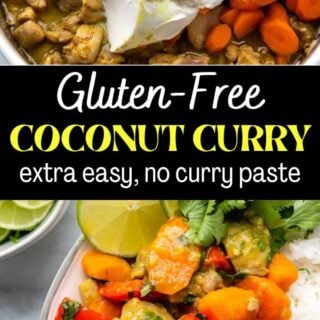
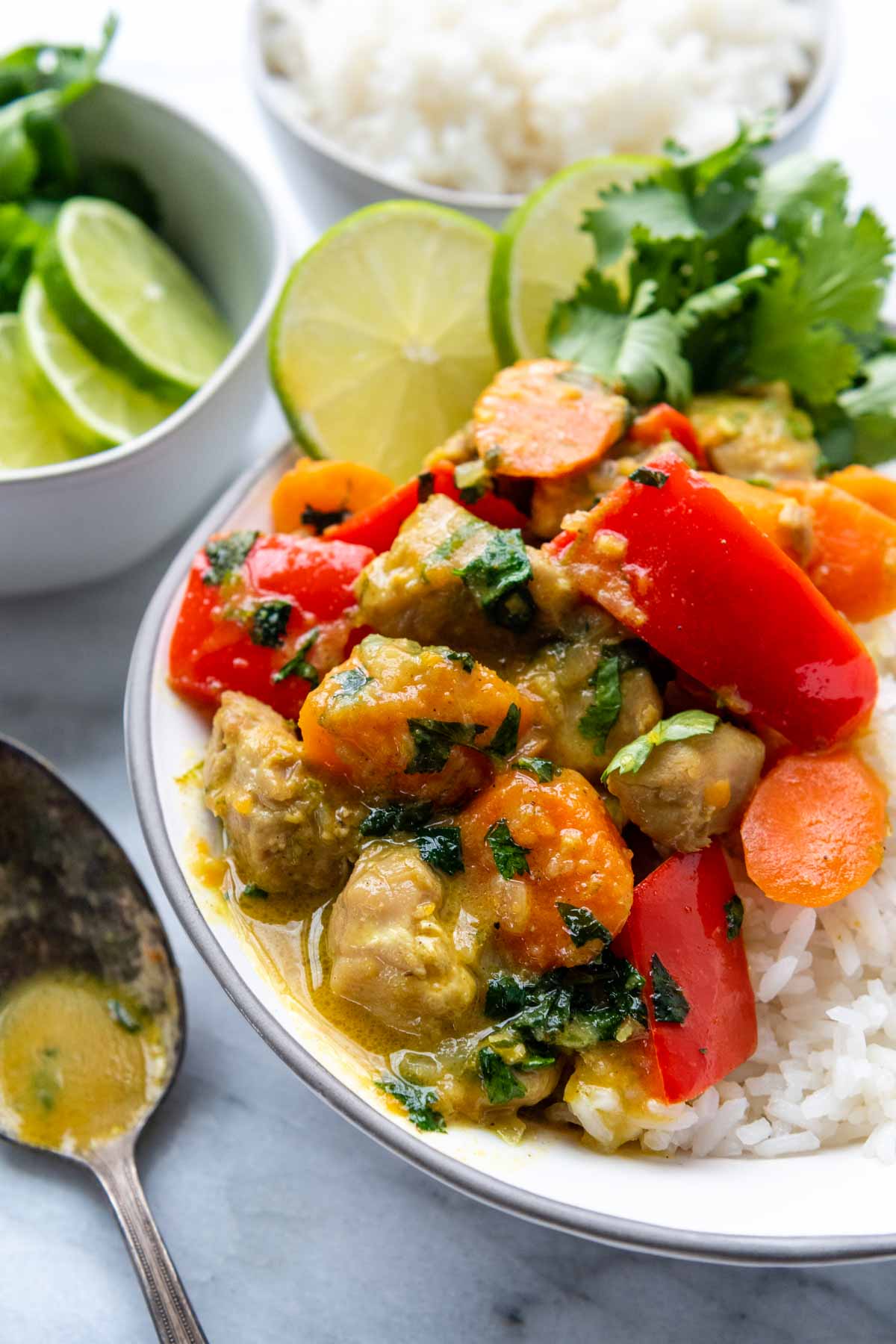
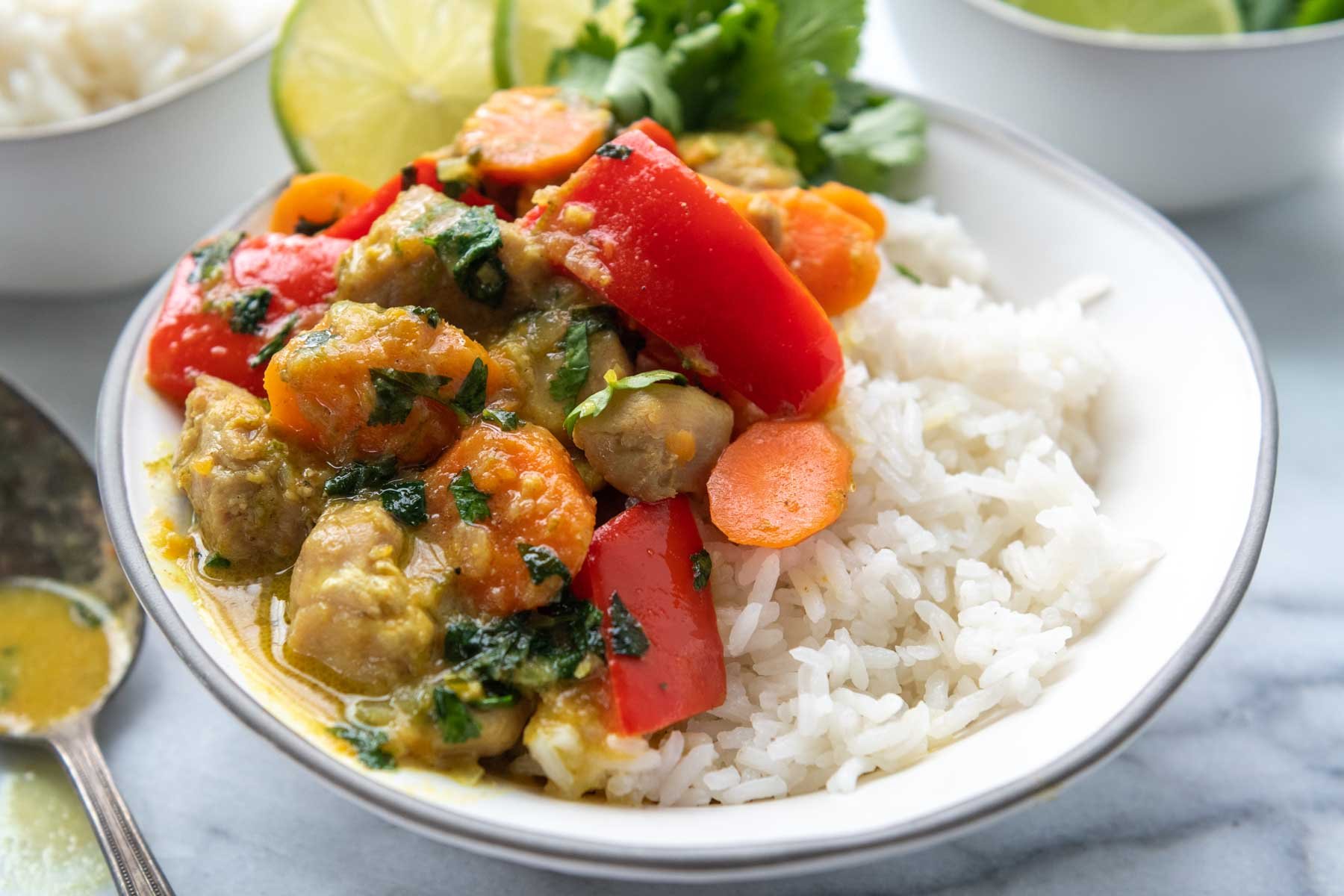
Want all the goodness and ease of flavor-packed Thai takeout made at home? My quick, easy gluten-free chicken curry is dinner without the fuss. It’s made without curry paste, in a creamy sweet and spicy coconut milk broth, with tender chicken, sweet potatoes, and carrots. Not only is this the weeknight dinner that satisfies the whole family, but it’s completely adaptable to different tastes and totally dairy-free.
Want to Save This Recipe?
Enter your email below & we'll send it straight to your inbox. Plus you’ll get affordable and easy gluten-free recipes delivered each week!
Easy Weeknight Gluten-Free Chicken Curry with Coconut Milk
As I’ve developed tons of easy weeknight gluten-free dinner recipes the focus has always been delivering on flavor while making the prep as streamlined as possible. Not only does my GF chicken curry recipe win over the whole family with a single meal, but comes in clutch when you don’t have a lot of time.
Besides being made with all dairy-free ingredients as well, this gluten-free curry is also made without curry paste. Everything you’ll need is widely available and affordable, so you don’t have to go searching around to find speciality ingredients.
The vegetables are added to the recipe in such a way to maximize texture. The potatoes and carrots become tender and slightly break down to thicken the sauce. The bell peppers are added towards the end of the cook time to stay crisp tender.
The honey boosts coconut milk’s sweetness, but it can be scaled down for a more savory curry. I like to leave out the spice entirely so everyone at the table can sprinkle in crushed red pepper or Sriracha to their liking.
Similar to another restaurant-worthy fave of ours, homemade gluten-free ramen with ground pork, you can prep chicken curry the same way every time or never have it the same way twice. It’s the curry that keeps on giving!
Free Guide! Receive a Free Gluten Free Dinners Cookbook
TOP 5 Highest Rated Recipes!
Ingredient Tid Bits
- Shallot – I prefer to use shallots because they are a little sweeter and more subtle than onions. A small thickly sliced red onion or 3 minced garlic cloves would also work for for this recipe.
- Fish Sauce – Although this is very pungent smelling, don’t be deterred. It adds a great umami flavor! Be sure to read the label because brands may contain gluten. I use Dynasty, but other gluten-free brands like, Red Boat, Thai Kitchen, and A Taste of Thai can be found in the international ingredient aisle.
- Veggies – Although the suggested combination of carrots, sweet potatoes and peppers adds sweetness to the dish, broccoli, spinach, cauliflower, butternut squash, tomatoes, or zucchini would work. Add them to the curry sauce based on how long they take to cook.
- Chicken – Chicken thighs add the best flavor and are fool-proof for achieving tender, perfectly cooked bites. For a vegan or vegetarian gluten-free curry replace with additional veggies or stir-fried tofu.
- Coconut Milk – Full-fat coconut milk replicates the flavor of a Thai curry, but regular heavy cream or lite coconut milk may also be used. It’s an absolute powerhouse ingredient for savory dishes. Another fave of ours is this quick coconut fish and tomato bake recipe.
- Aromatics – Minced ginger, lime juice, lime zest, honey, curry powder, and cilantro add robust flavor. If you aren’t a fan of cilantro, substitute with Thai basil or basil.
Let’s Make This Together!
(Below shows step-by-step photos and modified instructions. For the complete recipe, along with ingredient amounts, scroll down to the recipe card.)
Start with tender chicken bites
Everything will come together in this pot, so make sure you have enough surface area to brown the chicken, while the deepness can hold the coconut milk. When making curry it’s best to have all your ingredients prepped beforehand since it cooks up quickly.
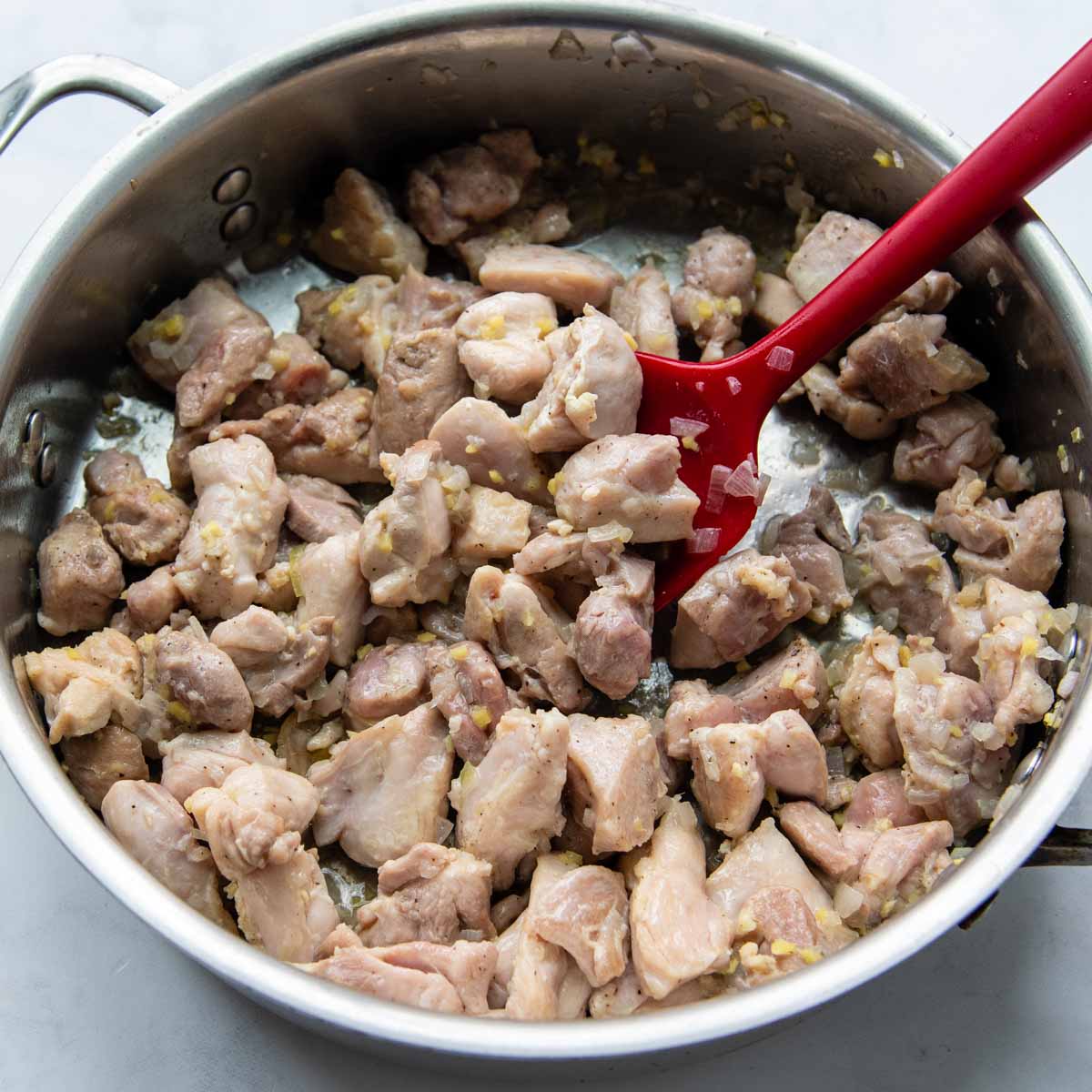
To the oil add the shallots, ginger, and chicken. Cook until the chicken is just opaque, but not cooked through. Using boneless chicken thighs, rather than boneless chicken breasts, means the meat will be moist and tender without risking overcooking.
Warning – trust the process
Add the fish sauce and curry powder. Just a heads up – at this point it smells awful (fish sauce), but trust the process! Cook for 1 minute and then stir in the carrots and sweet potatoes.
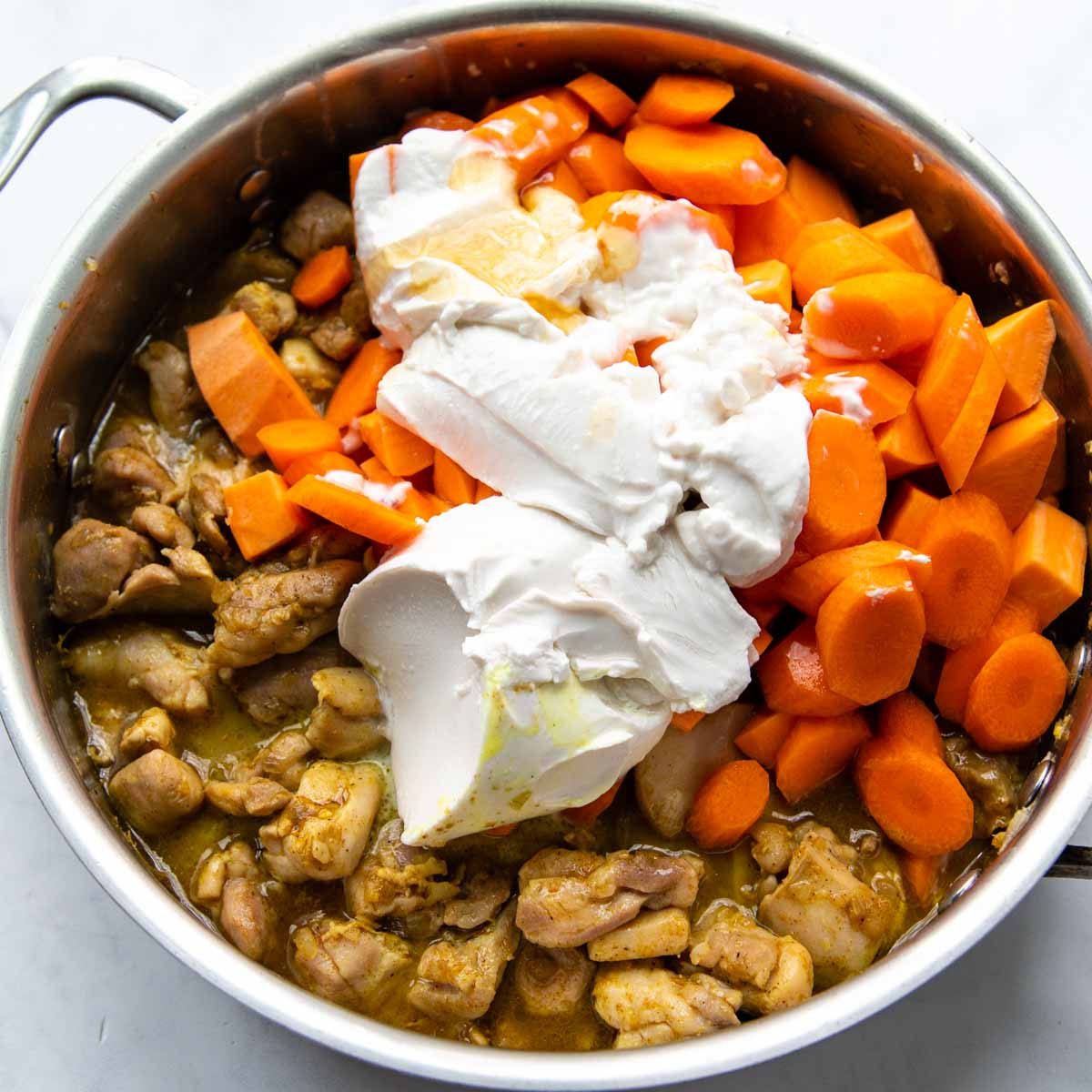
Lower the heat and stir in the honey and coconut milk. The coconut milk may be a combination of solid and watery liquid. Add it all to the pan and bring to a boil. Simmer for 10-12 minutes, until the potatoes are fork tender.
Not it’s time for the peppers to cook for just 5 minutes longer. Finish it all up with the flavor boosts – lime juice, lime zest, and fresh cilantro.
Best Way To Serve Gluten-Free Curry
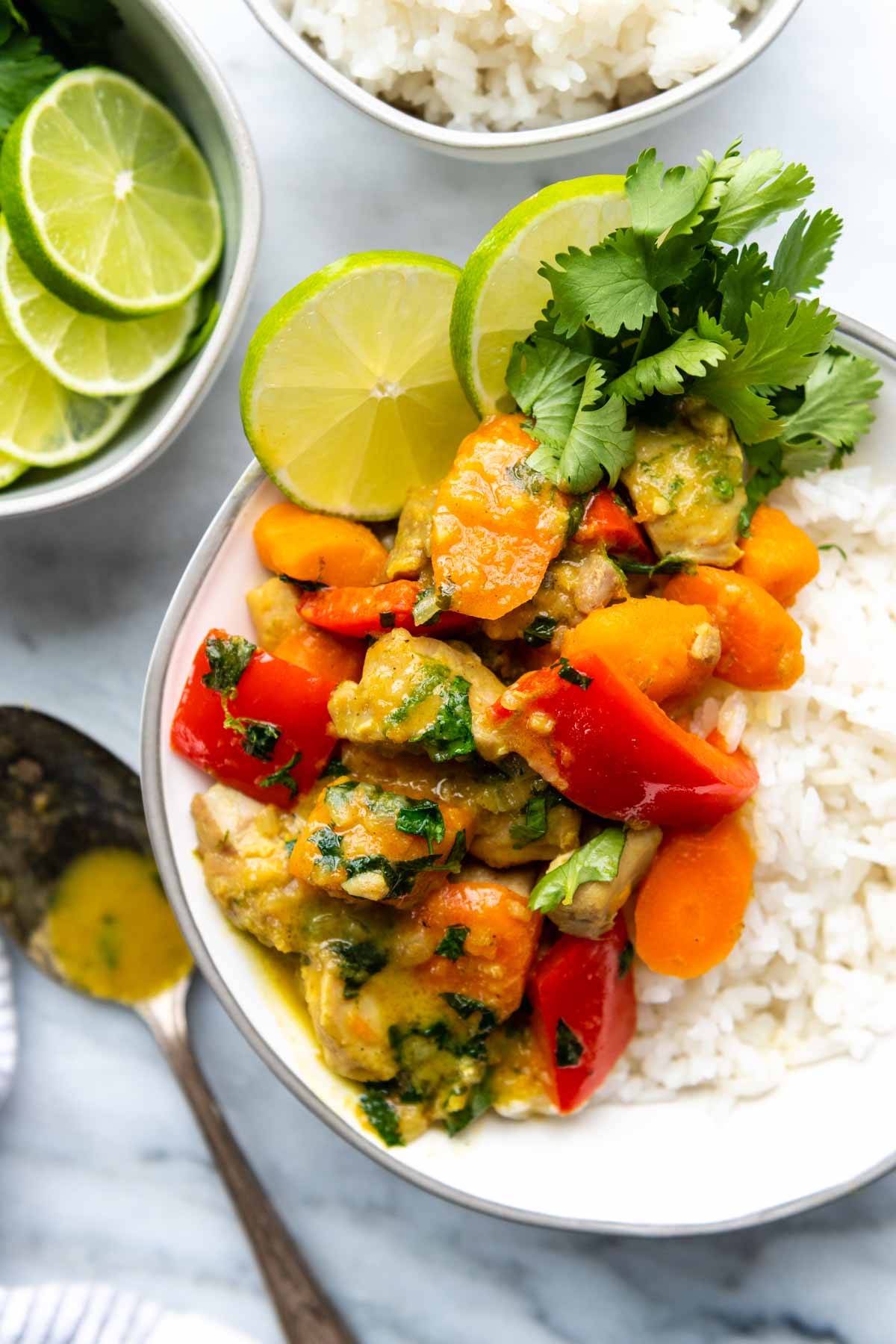
Don’t let that rich, flavorful coconut sauce go to waste! Add rice, such as white, brown, jasmine, basmati, or cauliflower rice to serving bowls and spoon the chicken curry over it.
We serve ours with Sriracha or red pepper flakes so everyone can adjust the spice to what works for them. For garnishes, I do additional fresh cilantro or Thai basil on top, along with chopped peanuts and lime wedges.
Save this recipe to your pinterest board!
Let’s be friends on Pinterest! I’m always sharing great recipes!
Did you make this recipe? I love hearing from you! Leave a star rating and comment below the recipe card. It helps others when searching for recipes and I appreciate feedback from our community. You will always hear back from me! -Melissa

Thai-Style Gluten-Free Chicken Curry with Coconut Milk

Ingredients
- 2 tablespoons (30 mL) oil, I use coconut oil
- 1 medium shallot, finely chopped
- 1 tablespoon (6 g) minced gingerroot
- 2 pounds (1 kg) boneless, skinless chicken thighs, cut in bite-sized pieces
- ¼ teaspoon salt
- ⅛ teaspoon ground pepper
- 3 tablespoons (45 mL) gluten-free fish sauce
- 2 teaspoons (4 g) curry powder
- 3 medium carrots, sliced on diagonal in ½-inch slices
- 1 medium sweet potatoes, peeled and cut in 1-inch pieces
- 14 ounce coconut milk
- 1 tablespoon (30 mL) honey
- 1 red bell pepper, seeded and cut in 2-inch pieces
- ⅓ cup (5 g) fresh cilantro, chopped
- 1 tablespoon (6 g) lime zest, zest of 2 limes
- 1 tablespoon (15 mL) lime juice
- rice, for serving
- optional Sriracha or crushed red pepper, for spiciness
Equipment
Instructions
- When making curry it's always best to have all your ingredients prepped beforehand since it cooks up quickly. This is also a good time to begin cooking the rice.
- Heat a large deep skillet over medium-high heat. Add the oil to heat, then the shallots, ginger, and chicken. Sprinkle the salt and pepper over everything. Cook and stir for about 4 minutes, or until the chicken is just opaque, but not cooked through.2 tablespoons oil, 1 medium shallot, 1 tablespoon minced gingerroot, 2 pounds boneless, skinless chicken thighs, ¼ teaspoon salt, ⅛ teaspoon ground pepper
- Add the fish sauce and curry. Warning – at this point it smells awful, but trust the process! It will delish! Cook for 1 minute and then stir in the carrots and sweet potatoes.3 tablespoons gluten-free fish sauce, 2 teaspoons curry powder, 3 medium carrots, 1 medium sweet potatoes
- Lower to medium heat and stir in the honey and coconut milk. The coconut milk may be a combination of solid and watery liquid. Add it all to the pan. Stir to combine and bring to a boil.1 tablespoon honey, 14 ounce coconut milk
- Lower the heat until the sauce is gently simmering. Slightly cover and cook for 10-12 minutes, stirring every few minutes. Cook until the potatoes are fork tender.
- Remove the lid and stir in the peppers. Simmer, uncovered, for 5 minutes, stirring occasionally. Lastly, stir in the lime juice, lime zest, and cilantro. Serve over rice.1 red bell pepper, ⅓ cup fresh cilantro, 1 tablespoon lime zest, 1 tablespoon lime juice
Notes
Suggested Modifications
- Vegetarian or Vegan – Omit the chicken and replace with additional veggies or extra-firm tofu. Before adding the tofu, slice in 1-inch strips and place between layers of paper towels with a baking sheet on top. Let it sit for 20 minutes to absorb liquid. After this, toss in cornstarch before cooking in the oil.
- Spicy – Usually red curry paste makes curries spicy. Since this recipe uses only curry powder, you can add in fresh chilies or stir in red pepper flakes.
- Vegetables – Besides carrots, sweet potatoes and peppers, any of these veggies can be added or swapped out. Add them to the recipe according to how much time they take to cook (potatoes longer, greens added at the end). Other suggested veggies are white potatoes, broccoli, spinach, cauliflower, butternut squash, tomatoes, or zucchini.
This post contains affiliate links. My opinions are always my own. If you purchase a product through an affiliate link, I make a small commission – at no cost to you. Read full disclosure policy here.


Tastes great! Really good recipe. I used half and half instead of coconut milk, but I would recommend coconut milk because I was a bit concerned about curdling the milk once I added the lime juice at the end. I used too much olive oil when sautéing the shallots and there was a fatty film on top since the Thighs had fat also. I wished I had used coconut oil for sautéing, which is what the recipe recommended. I think chicken breast would also work well with this, but the chicken thighs were so tender and delicious.
Thanks for your notes, Sam! I’m really glad you enjoyed the recipe.
Best,
Melissa